Wood Roach vs Cockroach: How to Tell Them Apart

A wood roach is a cockroach, but unlike a German cockroach, it normally lives outdoors rather than breeding in your home. A brown roach brought in with firewood may be a wood roach: look for pale edges behind the head, rather than the German cockroach’s two dark stripes.

A lone wood roach on the hearth usually needs removal, not a room full of spray. Confirm the identification first, especially if you’re also finding roaches in the kitchen, because that second problem needs its own plan.

Why Does a Roach Show Up on the Hearth in October?

Wood roaches shelter beneath loose bark and in damp outdoor debris. An armload of firewood can carry one straight to your fireplace. For Greater Cincinnati and Northern Kentucky homeowners bringing in wood in October, the first place to check is the remaining logs.

Finding one beside freshly carried wood suggests a hitchhiker. It doesn’t prove that the insect is a wood roach, but where you found it helps explain how it arrived.

Which Roach Is It? Check the Shield Behind the Head First

Which Roach Is It? Check the Shield Behind the Head First, surethingpc.com

Look at the markings behind the head before judging by color alone. Several cockroach species are brown, and their sizes overlap.

Feature Pennsylvania wood cockroach German cockroach American cockroach
Shield behind the head Mostly chestnut-brown with a pale, creamy or see-through edge Two dark parallel stripes Reddish-brown with a yellow marking behind the head
Length About 3/4 to 1 inch About 1/2 inch About 1 to 2 inches
Flight Males are strong flyers Adults have wings but do not fly Can fly, though they often run
Where you find it Under bark or in damp outdoor debris Kitchens, especially near appliances and sinks Damp areas, including basements and drains

Use size as a supporting clue, not a cutoff. An American cockroach is generally larger than a wood roach, but the size ranges overlap, so a measurement alone won’t settle it. A German cockroach is smaller and usually tan or light brown.

Flight helps narrow it down, though not by much. A flying brown roach near the hearth points toward an outdoor species, but American cockroaches can fly too, so check the markings before you decide anything.

Does a Lamp Test Tell You It Is a Wood Roach?

No, not by itself. A wood roach near a lamp may stay still or move slowly, while a German cockroach typically runs toward a dark crack when exposed to light.

Wood roaches are attracted to lights, particularly during their late spring and summer mating season. Watch the insect’s behavior if you can, but use it alongside its markings and the location where you found it. Don’t chase it around the room to test its reaction.

Can a Wood Roach Survive and Breed Inside a Dry Home?

Wood roaches usually cannot establish themselves in a dry home. They need moisture, and those that wander into a heated living room commonly die within days.

Why a lone visitor usually dies

A wood roach leaves a damp outdoor habitat when it comes inside on a log. Access to crumbs does not make a dry room suitable for it. One confirmed wood roach beside the fireplace is not evidence of an indoor infestation.

When eggs can develop indoors

Firewood stored indoors is the exception to watch. Wood roaches rarely reproduce inside, but eggs can develop in wood kept there for an extended period. Move stored logs back outside and bring in only what you expect to burn soon.

How Should You Store and Check Firewood Before It Comes Inside?

How Should You Store and Check Firewood Before It Comes Inside?, surethingpc.com

Keep the main stack outside, off the ground and well away from the foundation. The aim is to let the wood dry without giving insects a sheltered route against the house, and a stack pushed against the wall gives them exactly that.

Storing the stack outside

Leave room to inspect the wall behind the stack. Wood pressed against siding hides gaps and keeps damp material close to the building.

  1. Raise firewood off the ground so air can move underneath.
  2. Keep it away from siding and crawlspace vents.
  3. Stack loosely enough for air to circulate rather than trapping moisture.

The armload check at the door

Check the wood outdoors, especially beneath loose bark. That is easier than trying to catch an insect after it drops beside the fireplace.

  1. Look beneath loose bark without reaching blindly into hidden spaces.
  2. Shake loose debris off over the yard, not over the hearth.
  3. Set aside any piece carrying insects and leave it outside.

When Does a Roach Sighting Point to a Real Kitchen or Plumbing Problem?

Repeated sightings near the refrigerator or beneath a sink deserve more attention than one insect beside fresh firewood. German cockroaches can breed indoors, and warm hiding places near food and water support them.

  • More than one roach in the kitchen or bathroom
  • Dark specks in cabinets or along drawer edges
  • A persistent musty smell near suspected hiding places
  • Roaches returning to the same room after the firewood is removed

A slow plumbing leak can keep a cabinet base damp enough to support cockroaches. Check beneath the sink, and don’t assume cleaning up food will solve a moisture problem. Our guide to signs you might have a cockroach problem explains what else to look for.

When Should You Call a Professional, and What Should You Send Them?

Sure Thing Pest Control technician smiling in branded service van

Ask for professional identification if you find egg cases, see several roaches indoors or cannot tell which species you have. Repeated kitchen sightings should not be dismissed as visitors from the woodpile.

Send a clear photo with a coin nearby for scale, and note the room and exact location. Those details help a technician distinguish an outdoor visitor from a pest that may need targeted treatment. Mention any children or pets using the area so treatment precautions can be discussed.

Sure Thing Pest Control is locally owned and family-run, serving Greater Cincinnati and Northern Kentucky since 1997. We offer targeted Cincinnati cockroach extermination and kid and pet friendly treatments, along with ongoing scheduled protection through The Sure Cure. For repeated sightings or an uncertain identification, call 513.247.0030 or use our contact page to request a free estimate.

Frequently asked questions

How can I tell if it is a wood roach?

A wood roach is generally chestnut-brown with pale edges along the shield behind its head and its wings. A German cockroach has two dark parallel stripes behind the head. Size and behavior provide extra clues, but a clear photo is useful when the markings are hard to see.

Do cockroaches live outside?

Yes. Wood roaches normally live outdoors beneath bark and in damp plant debris. American cockroaches can also live outdoors, while German cockroaches are closely associated with indoor spaces.

Do tree roaches infest houses?

If you mean wood roaches, they rarely establish an indoor infestation because dry rooms do not provide the moisture they need. Eggs can develop in firewood stored indoors, however. “Tree roach” is an informal name, so confirm the species if sightings continue.

What do wood roaches eat?

Wood roaches feed mainly on dead plant material outdoors. They can eat other foods, including starchy scraps, but food alone will not let them thrive in a dry living room. Removing indoor firewood and checking damp areas addresses their habitat rather than just their food supply.
Professional Flea Exterminator: What It Costs in 2026

When autumn temperatures drop across Greater Cincinnati and the central heat kicks on in October, warm forced air and furnace blower vibrations trigger dormant flea pupae in carpets to hatch en masse. A professional flea exterminator eliminates this outbreak by combining targeted adulticides with kid- and pet-friendly insect growth regulators that break the reproductive cycle. While veterinary topicals protect pets from bites, environmental extermination targets the 95 percent of the flea population developing within flooring.

You turn your furnace on for the first chilly autumn evening, and within 48 hours your dog is scratching frantically while biting specks leap onto your ankles from the rug. If you have washed blankets and sprayed store-bought aerosols only to see pests return days later, the issue is structural rather than an isolated pet problem. Solving it requires treating the flooring cracks where immature insects develop.

Why Turning on the Furnace Triggers an Autumn Flea Surge

Homeowners often assume fleas die off when autumn air chills Southwest Ohio and Northern Kentucky. Firing up residential heating systems creates an artificial summer directly inside carpet pile and baseboard gaps. Late-summer humidity along the Ohio River basin provides ideal conditions for large flea populations in residential lawns. Pets pick up hitchhikers in late September, carry them inside, and shake eggs into carpets before those dormant insects wake up together weeks later.

Vibrations and Heat as Biological Emergence Triggers

Flea pupae do not hatch on a predictable calendar. Inside their protective cocoons, mature pupae wait until they detect cues signaling a host is near, particularly physical heat and vibrations. When forced-air heating cycles on, furnace blower motors send mechanical vibrations traveling through ductwork and subfloors. Paired with warm air blowing across the floor, this mimics the movement and body heat of a resting pet. Stimulated by these cues, pupae throughout the entire house exit their cocoons within 48 hours. If your home faces recurring seasonal pests, our general pest control solutions help identify structural vulnerabilities that harbor them.

Why Adult Fleas Represent Only Five Percent of the Problem

The biting adults leaping onto socks or crawling through fur make up roughly five percent of the total population inside the structure. The remaining 95 percent of the infestation lives entirely out of sight:

  • Eggs (roughly 50%): A single female flea deposits 40 to 50 eggs per day into a pet’s coat. Because the eggs are smooth and non-sticky, they roll off wherever your animal sleeps.
  • Larvae (roughly 35%): Slender, off-white larvae measuring between 3.0 and 5.2 millimeters hatch within days. They avoid light and crawl deep into carpet backing to feed on flea dirt.
  • Pupae (roughly 10%): Larvae spin dense silk cocoons that trap dust and carpet fibers, forming an armored shield that resists dry conditions and vacuuming.

Why Pet Drops and Regular Vacuuming Cannot Stop a Home Infestation

Why Pet Drops and Regular Vacuuming Cannot Stop a Home Infestation, surethingpc.com

Prescription veterinary drops and oral chews protect your animal, but relying on them alone turns your pet into walking bait. Adult fleas will keep emerging from the subfloor and biting until every last dormant cocoon finishes its cycle. That process drags on for months without environmental control. Many homeowners also find that outdoor grounds need defense, and pairing interior treatment with exterior Cincinnati tick control and extermination stops yard-based parasites from hitchhiking inside.

The Impermeable Silk Cocoon

Flea pupae encase themselves in a sticky silk cocoon that acts as a physical shield against conventional aerosol sprays and foggers. That protective shell is why over-the-counter bug bombs fail so consistently. The fog coats horizontal surfaces like tabletops without penetrating down to the backing of the carpet where pupae rest. Aerosols kill only the exposed adult fleas hopping across the carpet, leaving the protected pupal layer intact to emerge days later.

How Pets Become Living Bait Without Environmental Control

When an animal takes a systemic oral preventative or wears a topical medication, the flea must bite the pet and ingest blood to encounter the active compound and die. While this prevents fleas from establishing a reproductive colony on your dog or cat, it does nothing to stop hundreds of larvae developing in the floorboards. The pet gets bitten by freshly emerged adults day after day. In older historic homes across Cincinnati neighborhoods or houses with crawlspaces in Lebanon and Springboro, fleas overwinter safely in flooring gaps unless environmental treatments break the cycle on the ground.

How Insect Growth Regulators Break the Flea Lifecycle Safely

Eradicating an indoor infestation permanently requires attacking insect biology from multiple angles. Modern pest control relies on targeted chemistry designed to eliminate biting adults immediately while sterilizing the developing stages hidden inside structural cracks. Homeowners with questions about application methods and safety standards can review our frequently asked questions.

Adulticides Versus Insect Growth Regulators

Adulticides and Insect Growth Regulators (IGRs) serve two distinct purposes in residential treatment:

Treatment Component Primary Mode of Action Life Stages Targeted Speed of Impact
Fast-Acting Adulticide Disrupts the nervous system of mature insects upon direct contact or residual exposure Adult biting fleas (roughly 5% of total population) Knocks down active adults within hours of contact
Insect Growth Regulator (IGR) Mimics juvenile hormone pathways to block chitin synthesis and cuticle formation Eggs and developing larvae (roughly 85% of population) Halts reproduction permanently; stops larvae from spinning cocoons

The adulticide provides immediate relief from bites, while the IGR ensures that any new eggs laid by surviving fleas are sterile and developing larvae never mature into reproductive adults.

Family and Pet Safety Protocols During Application

Kid- and pet-friendly pest control comes down to proper chemistry and respect for drying times. Family members and pets must vacate the home during application and stay out for three to four hours until all liquid residual sprays have completely dried to the touch. Once dry, the synthetic formulation binds tightly to carpet fibers and baseboard substrates, meaning it will not transfer onto paws or skin. Technicians focus applications specifically on dark interception zones under furniture and behind baseboards, rather than broadcasting chemicals across open high-traffic walkways.

How to Prepare Your Home for Professional Flea Extermination

Preparation directly dictates how successful a flea treatment will be. If floors are cluttered and pet bedding remains unwashed, the residual barrier cannot settle evenly where pests live.

Pre-Treatment Cleaning Checklist

  • Strip all pet bedding: Strip pet bed covers and washable furniture throws the morning of treatment. Wash them in hot water and dry them on high heat. Heat eradicates all flea life stages instantly, ensuring clean fabrics return to a clean floor once the spray dries.
  • Clear the floors: Pick up loose items from closet floors and beneath beds to give the technician unobstructed access to carpet edges.
  • Vacuum wall to wall: Vacuum all carpeting, hardwood seams, upholstered furniture cushions, and beneath low-profile furniture. Vacuuming creates physical vibrations and warmth that trick pupae into emerging early, pulling them out of their cocoons so residual applications reach them.
  • Cover specialty items: Cover fish tanks and turn off aerator pumps during the application and drying window. Remove open food, pet food bowls, and water dishes from the floor.

Managing Vacuum Canisters and Pet Belongings

Empty your vacuum canister or seal and discard vacuum bags in an outdoor trash bin immediately after every cleanup. If you leave the canister sitting in an indoor closet, heat from the motor incubates and hatches a fresh wave of fleas right inside your home. While the home is being serviced, coordinate with your veterinarian to treat all domestic animals with an approved preventative so pets do not carry surviving fleas back into treated rooms. To learn how ongoing inspections prevent future flare-ups, explore our recurring pest control programs.

What to Expect During the Post-Treatment Pupal Window

Homeowners often panic if they see a flea a week after their home was treated. Understanding the biological timeline will help you navigate this transition period.

  1. Days 1 to 3 (Initial Knockdown): Active adult fleas on carpet surfaces contact the adulticide and die rapidly. Biting drops sharply.
  2. Days 4 to 14 (The Pupal Window): Expect to see a brief flare-up of freshly emerged adult fleas seven to fourteen days after a professional treatment. That is not a failure of the product; it is the final wave of pupae breaking out of their impervious cocoons, where they encounter the residual barrier and die before they can lay eggs. No chemical can penetrate the silk shell of a dormant pupa until it hatches.
  3. Days 14 to 28 (Lifecycle Collapse): Because the IGR has neutralized egg fertility and stopped larvae from developing, no new generation replaces the hatched pupae. The structural infestation collapses entirely.

Our technicians at Sure Thing Pest Control advise customers to vacuum thoroughly right before we treat and then daily for two weeks following the service. Daily vacuuming stimulates the remaining cocoons to pop open through vibration, forcing those final insects directly onto the dried residual barrier where they absorb the treatment and perish.

What Professional Flea Extermination Costs in 2026

What Professional Flea Extermination Costs in 2026, surethingpc.com

Hiring a licensed professional saves money compared to cycling through ineffective over-the-counter foggers and replacement pet bedding. According to home improvement resource This Old House in 2026, professional flea exterminator services typically cost between $75 and $400 per visit, with an overall national average of approximately $270. Professional insecticide spraying combined with insect growth regulators typically ranges from $150 to $350 per treatment.

Eradication Method Typical Cost Range Lifecycle Stage Targeted Long-Term Reliability
Consumer DIY Sprays and Foggers $10 to $75 Surface adults only (5%) Poor; fails to penetrate carpet backing or neutralize pupae
Professional Adulticide and IGR Treatment $150 to $350 All life stages (100% of cycle) High; disrupts reproductive hormones and eliminates emerging pupae
Whole-Structure Heat Treatment $300 to $500 All life stages simultaneously High; eradicates insects immediately but provides zero residual protection

Factors influencing your exact quote include the square footage of the home, the density of carpeting versus hard surfaces, and whether shaded outdoor harborage areas require exterior barrier treatment. Across our Cincinnati and Northern Kentucky service areas, our family-owned team tailors treatments to your specific property layout.

Frequently Asked Questions

Why do flea infestations suddenly flare up when the heat turns on in the fall?

Forced-air furnaces warm carpet fibers and generate mechanical vibrations through ductwork and subfloors that mimic host footsteps. This sudden shift in temperature and movement stimulates dormant flea pupae resting inside protective silk cocoons to hatch simultaneously, leading to an immediate indoor outbreak.

Can fleas survive in carpets if my dog is on a vet-prescribed preventative?

Yes. Veterinary topicals and oral preventatives only kill adult fleas that physically bite your pet, leaving the 95 percent of the infestation living as eggs, larvae, and pupae in carpet backing and subfloors untouched. Without direct environmental control, emerging adults will continue to bite both people and pets.

Are professional flea extermination treatments safe for dogs, cats, and small children?

Modern professional treatments utilize targeted adulticides and insect growth regulators that bind directly to flooring surfaces and remain kid- and pet-friendly once completely dry. Families and domestic pets vacate the property for three to four hours during application until the liquid residual barrier is dry to the touch.

Why am I still seeing fleas a week after an exterminator sprayed?

Pupae protected inside dense silk cocoons are impervious to liquid sprays until they emerge. Seeing newly emerged adults seven to fourteen days after treatment is normal; these insects absorb the dried residual barrier upon hatching and die before they are biologically capable of laying viable eggs.

How much does a professional flea exterminator cost?

According to cost data published by This Old House in 2026, professional flea services range between $75 and $400 per visit. Comprehensive treatments pairing an adulticide with an insect growth regulator typically average $150 to $350 depending on home size and infestation severity.

If recurring flea bites are disrupting your home this autumn, eliminate the source of the infestation at the floor level. Call Sure Thing Pest Control at 513.247.0030 or request a free estimate online to restore comfort to your home.

When Did Stink Bugs Come to Ohio? How to Keep Them Out

Brown marmorated stink bugs first came to Ohio in December 2007, when state entomologists confirmed the initial specimen in Franklin County. If you have wondered when stink bugs came to Ohio, that Franklin County detection marked the start of their statewide spread. These shield-shaped invaders swarm warm exterior siding across Southwest Ohio in mid-October before slipping through roofline gaps into attic insulation, where they remain dormant until winter heating wakes them up.

Standing in the driveway looking at dozens of mottled brown insects crawling along second-story trim is a common autumn frustration in the Ohio River Valley. These pests do not bite people or reproduce indoors. Left unaddressed before the first hard freeze, however, they settle deep into wall voids and crawl spaces until early spring.

When Did Brown Marmorated Stink Bugs First Reach Ohio

Homeowners asking when stink bugs reached Ohio usually remember when these shield-shaped pests never congregated on autumn siding. The brown marmorated stink bug (Halyomorpha halys) is native to eastern Asia and was first identified in the United States in Allentown, Pennsylvania, in September 1998, according to Penn State Extension entomology records. From that initial eastern foothold, the pest spread through shipping corridors and interstate transit.

The insect officially crossed into Ohio in December 2007, when the first confirmed specimen was collected in Franklin County. Once established in central Ohio, the population climbed quickly. According to data reported in 2026 by the Ohio Farm Bureau, brown marmorated stink bugs have established documented populations in at least 62 of Ohio’s 88 counties. They present a major seasonal headache for neighborhoods bordering open fields and deciduous tree lines.

The Spread Across the Ohio River Valley

The river basin climate in Southwest Ohio offers optimal breeding conditions for this pest. Female stink bugs lay clusters of 20 to 30 barrel-shaped eggs on leaf undersides throughout the summer. Larvae mature out of sight in farm fields and dense suburban tree canopies. When regional crops are harvested and deciduous leaves drop in October, those woodland populations lose their natural cover. Millions of adult stink bugs take flight across Greater Cincinnati, moving toward warm residential structures.

How to Identify the Invasive Marmorated Species

Adult brown marmorated stink bugs measure 0.5 to 0.67 inches long and display the classic heraldic shield shape. You can separate them from native bugs by checking three traits:

  • Banded antennae: Dark antennae feature distinct, alternating white bands.
  • Abdominal edges: Outer abdominal margins show alternating light and dark markings along the folded wing borders.
  • Smooth shoulders: Thoracic margins are rounded, lacking the sharp shoulder spines found on native predatory species.

Why Stink Bugs Swarm South Facing Siding in Mid October

Why Stink Bugs Swarm South Facing Siding in Mid October, surethingpc.com

Stink bugs do not choose surfaces by accident.

In mid-October across our Greater Cincinnati and Northern Kentucky service areas, daytime temperatures routinely reach 65 degrees while nights drop close to freezing. Stink bugs are cold-blooded insects whose activity depends entirely on exterior ambient heat.

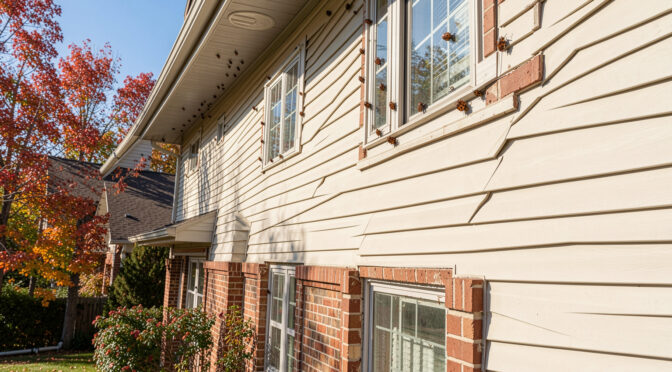
South- and west-facing siding absorbs afternoon sun. Dark vinyl siding holds onto that warmth, creating gentle thermal updrafts. Stink bugs land directly on these sun-soaked walls to keep their body temperatures elevated before nightfall. This gathering behavior precedes diapause, an overwintering dormant state where insects suspend development to survive freezing temperatures.

As siding cools at sunset, the bugs crawl upward toward architectural openings along eaves and trim. They simply follow heat gradients. A warm afternoon on the patio pulls pests out of the canopy and places them inches from attic entry points.

The Pheromone Myth and What Stink Bug Secretion Really Does

One common myth claims that squashing a stink bug releases an aggregation pheromone that calls hundreds of other bugs to the house. That confuses defensive stress fluids with natural grouping cues.

The foul odor released when an insect is crushed comes from scent glands between the legs on the underside of the thorax. This liquid contains trans-2-octenal and trans-2-decenal, compounds functioning as a bitter deterrent against birds and other predators. It smells pungent, similar to rancid cilantro. Natural aggregation pheromones, on the other hand, are airborne chemicals emitted by living bugs over long distances to coordinate winter shelter.

Trait Defensive Scent Secretion Aggregation Pheromone
Biological Purpose Deters predators when the bug is crushed or attacked Coordinates overwintering shelters with other stink bugs
Source Glands Thoracic scent glands between the legs Specialized abdominal glands
Attracts More Pests? No. Does not call or recruit additional insects Yes. Directs airborne adults toward sheltered cavities
Surface Impact Leaves greasy dark spots on trim and drywall Leaves no visible surface residue
Human Reaction Can irritate sensitive skin and mucous membranes Undetectable to human senses

Defensive Chemical Compounds Versus Aggregation Pheromones

Crushing an insect on your porch will not act as a beacon. The real issue is the oily secretion. Trans-2-octenal and trans-2-decenal can cause localized contact dermatitis or eye irritation in sensitive individuals. Indoors, this oily fluid stains painted drywall and fabrics with dark marks that standard soap rarely lifts.

The Real Consequences of Crushing Bugs Indoors

Crushing bugs inside causes lingering problems. The bitter odor settles into carpets and upholstery for days. Dead stink bugs inside walls or baseboards also provide an abundant food source for carpet beetles and dermestids during late winter. For practical steps on avoiding common pest mistakes, review our guide on the dos and don’ts of handling a pest problem yourself.

Are Black Stink Bugs Dangerous to People or Pets

Dark, near-black shield bugs on siding often make homeowners worry about aggressive biters. Ohio is home to several harmless native shield bug species alongside the brown marmorated variety.

The rough stink bug (Brochymena quadripustulata) and the predatory spined soldier bug (Podisus maculiventris) are common examples. Neither species bites people or pets. They have piercing-sucking mouthparts built exclusively for plant juices or garden grubs, lacking the physical structure to break human skin. They do not transmit diseases, nor do they chew structural wood or damage wall framing.

Species Appearance Diet & Behavior Risk to Structure & Family
Brown Marmorated Stink Bug Mottled brown, banded antennae, smooth shoulders Feeds on tree fruit and plants; invades homes in swarms No structural damage; significant indoor nuisance and odor
Rough Stink Bug Dark charcoal gray, rough, bark-like texture Feeds on tree sap; overwinters in loose bark None; harmless and rarely enters buildings
Spined Soldier Bug Mottled brown-black with sharp, pointed shoulder spines Predatory; eats grubs, caterpillars, and garden pests Beneficial to yards; does not invade attics or living areas

If a dog or cat swallows a stink bug, the insect contains no toxins. The bitter secretions will, however, often trigger temporary drooling or an upset stomach from the foul taste.

How Stink Bugs Move from Siding into Attics and Living Rooms

Stink bugs do not chew through wood siding or brick to enter a home. They slip through narrow gaps created by thermal settling or unsealed ventilation channels. Understanding their physical path shows why bug bombs fail to solve the source problem.

  1. Perimeter Landing: Insects swarm warm, sunlit siding during bright October afternoons.
  2. Structural Infiltration: As night temperatures drop, bugs crawl behind loose soffits, unsealed ridge vents, and fascia trim.
  3. Attic Harboring: Insects bury themselves under loose attic insulation, entering diapause inside cold structural voids.
  4. Winter Emergence: Running the central furnace in December warms upper wall voids and attic subfloors, tricking dormant bugs into waking early.
  5. Interior Entry: Believing spring has arrived, disoriented bugs crawl toward ceiling fixtures, bathroom exhaust fans, and window casings.

High Interception Zones on Upper Stories

Because stink bugs focus their flight paths on the upper half of residential homes, ground-level foundation sprays alone will not prevent an invasion. Primary interception zones sit where the roof meets the exterior siding, particularly along upper roofline transitions. Blocking these high pathways prevents insects from reaching structural insulation voids where exterior treatments cannot reach them.

Sealing Fascia and Louvers Before Freezing Weather

Physical exclusion is the most reliable long-term defense against fall invaders. Check our guide on winter home preparation tips for Cincinnati residents for structural sealing steps. Seal exterior gaps wider than a dime with durable materials:

  • Fasten bronze or stainless steel wire mesh behind attic gable vents and ridge openings.
  • Apply high-grade exterior silicone-acrylic caulk along fascia joints and second-story window trim.
  • Replace worn weatherstripping on upper doors and repair torn window screens before mid-autumn flights begin.

Safe Indoor Removal and Timed Exterior Barrier Protection

Sure Thing Pest Control white service van parked in a residential driveway.

Reaching for a standard vacuum cleaner or chemical fogger indoors creates secondary issues. Bug bombs fail to penetrate wall cavities, leaving piles of dead insects inside framing voids that draw carpet beetles. Sucking live bugs through an uncovered vacuum motor distributes the bitter scent into your living spaces for months.

The Nylon Stocking Vacuum Trap

Live bugs can be removed from walls and drapes cleanly with an easy wand adjustment:

  • Insert a knee-high nylon stocking into the vacuum extension wand.
  • Stretch the elastic band of the stocking back over the exterior rim of the wand nozzle.
  • Secure the cuff firmly around the wand using a heavy-duty rubber band.
  • Vacuum the pests directly into the mesh trap, keeping them clear of the internal motor and canister.
  • Slide off the stocking and submerge it in a bucket of soapy water to eliminate them without odor.

Timed Professional Exterior Barrier Treatments

Stopping stink bugs requires intercepting them on exterior building surfaces before they slip beneath the siding. Direct sunlight and UV exposure break down exterior surface treatments within several days to a week, meaning applications must be timed right as autumn congregation begins.

Our leadership brings over 80 years of combined pest control experience to Greater Cincinnati homes. Through targeted Cincinnati stink bug control and seasonal exterior applications, our licensed, background-checked technicians treat high-risk interception zones along upper exterior walls. This barrier neutralizes insects on contact as they land, stopping the overwintering cycle before pests reach your attic insulation.

If stink bugs are gathering on your siding this week, address them before freezing weather drives them into your attic. Submit a quote request on our contact page or call Sure Thing Pest Control directly at 513.247.0030 to arrange a free estimate for a seasonal barrier treatment.

Frequently Asked Questions

When did stink bugs come to Ohio?

Brown marmorated stink bugs were officially documented in Ohio in Franklin County in December 2007. They spread from their original 1998 US detection site in Allentown, Pennsylvania. Populations have now been documented across at least 62 of Ohio’s 88 counties.

Does squashing a stink bug attract more stink bugs to your house?

No. Crushing a stink bug releases defensive aldehydes like trans-2-octenal from its scent glands, not aggregation pheromones. It does not call more pests to the home, but it leaves a pungent odor and stains painted finishes.

Are black stink bugs dangerous to humans or pets?

Native black and dark shield bugs, including rough stink bugs and spined soldier bugs, are harmless to people and pets. They cannot pierce human skin and do not feed on structural wood. Swallowing one may cause a pet to drool or vomit briefly from the foul taste, but the bugs are non-toxic.

What causes the foul odor when a stink bug is disturbed?

Disturbed or crushed stink bugs secrete defensive organic chemicals, primarily trans-2-octenal and trans-2-decenal, from glands located between their legs on the thorax. This liquid serves as a deterrent to make the bug unpalatable to birds and reptiles.

What is the best way to remove stink bugs inside without causing an odor?

Push a knee-high nylon stocking into a vacuum wand, secure the cuff around the nozzle exterior with a rubber band, and vacuum the bugs into the mesh pocket. Submerging the stocking in soapy water neutralizes the insects without running defensive oils through the hot vacuum motor.

Rodent Exclusion: How to Seal Your Home for Winter

Rodent exclusion means sealing the structural gaps pests use to enter a building so you eliminate them at the source instead of just trapping individuals. A mature mouse can slip through an opening measuring one-quarter inch, roughly the diameter of a wooden pencil or a dime. Lasting perimeter exclusion requires replacing temporary expanding foam with chew-proof barriers like coarse knitted copper mesh and elastomeric sealants before freezing temperatures push wildlife indoors.

In the fall, rodents do not enter homes by accident. They follow rising drafts of warm air escaping through settling foundation seams or unsealed utility penetrations. Sealing those physical pathways is the only permanent solution.

Why October Is the Critical Window for Fall Rodent Exclusion

Autumn in the Ohio River Valley triggers an immediate survival shift for local pests. Field mice and Norway rats that spent the warm summer months outdoors face dwindling food and freezing nights. Dropping temperatures force them to seek heated basements and crawlspaces. According to property claim data reported by The Independent in October 2026, emergency rodent pest claims jump by 57% between September and October as cold weather sets in.

Waiting until late November or December usually means managing an active indoor colony rather than blocking an entry point. Scheduling seasonal winter pest control in Cincinnati during October allows foundation sealants and silicone compounds to cure against dry masonry before freezing winter weather arrives.

What Size Hole Can a Mouse Fit Through Around a Foundation

What Size Hole Can a Mouse Fit Through Around a Foundation, surethingpc.com

Homeowners often overlook hairline gaps because it seems impossible for an animal to fit through them. Skeletal structure, not body weight, determines entry. Rodentologist Dr. Bobby Corrigan explains in PCT Online that rodents have tapered muzzles lined with sensitive sensory nerve hairs that evaluate wall openings. Once the skull passes through a gap, the flexible spine and compressible ribcage slide right behind it.

The Quarter-Inch Rule for Field Mice

An adult field mouse requires a gap of only one-quarter inch. When checking a foundation, carry an ordinary wooden pencil. If the lead tip or eraser slips easily into a void around a pipe sleeve or siding joint, a mouse can enter. When an opening is slightly too narrow, rodents use their sharp incisors to gnaw through soft wood or mortar until they widen it.

Clearance Requirements for Norway Rats

Norway rats are larger than mice, needing an opening of roughly one-half to three-quarters of an inch wide, which is about the size of a quarter. Their powerful jaws easily shred light materials. When an unsealed utility sleeve leaks warm indoor air, rats chew through crawlspace vent screens or siding to widen the gap. Professional Cincinnati rodent control relies on heavy-gauge metal cloth and masonry backing rather than soft patches.

The Fall Perimeter Checklist for Foundation Gaps

Conduct a perimeter audit with a strong flashlight and a pencil to probe suspicious seams. Inspect ground-level openings first, moving methodically around the entire foundation across our Greater Cincinnati service areas.

Start with walkout basement entries and garage doors. Turn off the garage lights during the day and check for sunlight leaking beneath the door threshold. Even a quarter-inch gap invites mice inside. Pay special attention to the bottom corners of garage doors where the track meets the concrete; rodents chew through standard vinyl weatherstripping easily, so install reinforced door sweeps with integrated metal plates.

Next, inspect utility penetrations. Check the air conditioning refrigerant line set and natural gas entry points before looking at anything else. Mortar pulls away from these lines as older foundations settle. Escaping warm air drafts guide rodents directly to your basement or sill plates. Outdoor hose spigots and electrical conduit pipes also leave open channels behind decorative escutcheon plates.

Finally, examine the sill plates and mortar joints. Probe the mudsill where the wooden framing meets the foundation wall. In older neighborhoods like Lebanon and Springboro, lime mortar between fieldstones washes away over time, leaving deep pockets that run directly into crawlspaces.

Why Copper Mesh and Heavy Sealants Beat Expanding Foam

Why Copper Mesh and Heavy Sealants Beat Expanding Foam, surethingpc.com

The most common mistake homeowners make every fall is spraying yellow polyurethane expanding foam into a foundation hole and assuming the house is secure. Canned expanding spray foam used alone on an exterior foundation gap is useless against gnawing rodents. Mice and rats chew through cured foam in minutes, often using the shredded material to line their nests.

Reviewing the dos and don’ts of handling a pest problem yourself shows that exterior exclusion requires heavy materials designed for both rodent pressure and harsh weather.

Material Chew Resistance Weather Durability Best Structural Use
Standard Expanding Foam None (shredded in minutes) Degrades under UV sunlight Draft stopping only; never use alone for pests
Standard Steel Wool Moderate initially Rusts and dissolves in one wet season Temporary indoor emergency patches only
Knitted Copper Mesh High (cannot be gnawed) Will not corrode or rust in wet soil Utility penetrations, pipe sleeves, brick seams
Heavy Elastomeric Sealant High when paired with mesh Stays flexible through freezing winters Exterior masonry joints, conduit perimeters

The Problem with Canned Expanding Foam

Spray foam cures with porous internal air pockets. Rodents easily detect heat escaping through the cell structure and gnaw straight through it. If you use foam at all, treat it purely as a weather seal applied on top of tightly packed, chew-proof metal cloth.

Why Knitted Copper Mesh Outlasts Steel Wool

Hardware store steel wool works temporarily indoors, but Ohio River Valley humidity will rust and disintegrate ordinary steel wool within a single wet season. For exterior work, pack gaps with coarse knitted copper mesh or stainless steel wire cloth. These metals never corrode when exposed to wet winter weather, keeping tension inside the masonry void.

Backer Rods and Elastomeric Sealants

Pack narrow masonry gaps with closed-cell backer rods or copper wire, then seal the seam with a polyurethane or elastomeric compound. Standard caulk easily fails during winter freeze-thaw cycles, but high-grade elastomeric sealants remain pliable while locking in scent trails.

How to Seal Brick Weep Holes and Exterior Utility Conduits

Sealing exterior wall penetrations requires careful prep work. Closing gaps incorrectly traps wall moisture or leaves behind scent cues that bring rodents right back to the exact same seam.

  1. Scrub the masonry with an enzymatic wash. Rodents follow touch and pheromone trails along exterior ledges. Scrub the brick or pipe sleeve with an enzymatic cleaner to erase the scent highway, or incoming mice will spend hours gnawing relentlessly at the exact same seam.
  2. Clear deteriorated material. Use a stiff wire brush to pull out loose mortar, old spray foam, and dirt down to clean masonry.
  3. Install weep hole covers. Brick weep holes provide crucial wall cavity ventilation and drainage. Never caulk or mortar weep holes shut. Instead, install friction-fit stainless steel or copper weep hole inserts that maintain airflow while presenting an impenetrable barrier to rodent snouts.
  4. Pack utility gaps with copper mesh. For gaps around AC lines, gas pipes, and conduit, pack knitted copper mesh firmly into the void with a wooden dowel until it is packed two inches deep.
  5. Cap the repair with elastomeric sealant. Apply a thick bead of exterior elastomeric sealant over the packed mesh, tooling it flush with the foundation face to keep water out.

Closing these pathways stops pests before they reach your floor joists. For steps on dealing with animals already indoors, read our guide on how to get rid of a rodent infestation.

Why Interior Trapping Must Accompany Exterior Foundation Sealing

A serious mistake homeowners make is sealing exterior gaps while rodents are still inside the house. Municipal field trials published by PR Newswire in August 2026 demonstrated that physical perimeter management combined with integrated pest management reduced rodent activity by 43% over six months. Trapping rodents without physically sealing exterior structural gaps is an endless cycle of catching newcomers that walk through the same openings.

However, trapping them inside is equally dangerous. If you execute complete exterior exclusion while mice are nesting in the basement or attic, you trap them in wall cavities. Panicked rodents cut off from outdoor water will chew through interior drywall, baseboards, and electrical wiring. Exterior exclusion must always be paired with interior snap traps along baseboard runways to capture existing rodents quickly. Learn more about how professional rodent removal keeps your home safe.

When Structural Foundation Voids Require Professional Exclusion

Simple utility gaps around PVC pipes take an afternoon to fix, but complex architectural voids need specialized tools. Historic rubble and sandstone foundations common to Greater Cincinnati often have washed-out mortar across crawlspace bays that are impossible to reach from outside.

Rats and field mice are also agile climbers. They run up rough stone, downspouts, and low-hanging tree limbs to enter soffits, attic vents, and roofline joints. When gaps sit high on the roofline or deep within hidden crawlspaces, patchwork repairs fall short. Sure Thing Pest Control brings over 80 years of combined owner leadership. Our licensed, background-checked technicians complete over 40 hours of annual continuing education, setting up interception zones that stop pests outside before they enter.

For kid- and pet-friendly solutions that eliminate rodents at the source, review our residential pest control programs, including The Sure Cure. Request a free estimate through our contact page or call 513.247.0030 to protect your foundation this fall.

Frequently Asked Questions

What size hole can a mouse fit through around a home foundation?

An adult mouse can squeeze through a gap measuring one-quarter inch wide, which is roughly the width of a pencil or a dime. Because its skull is narrow and its ribs compress, any opening large enough for the head lets the rest of the body through.

Can mice chew through expanding spray foam?

Mice chew straight through cured polyurethane spray foam in minutes. Standard expanding foam dries into an airy, soft matrix that offers no defense against rodent incisors. It should only be used as a draft stop over tightly packed copper mesh.

Why should I use copper mesh instead of steel wool for exterior sealing?

Standard steel wool rusts and dissolves quickly in the damp climate of the Ohio River Valley. Knitted copper mesh will not corrode in wet conditions or soil contact. It retains its spring tension inside masonry voids, keeping a chew-proof barrier intact year-round.

Should I seal my foundation if I already hear mice scratching in my walls?

Do not seal the exterior without placing traps inside the living areas at the same time. Closing outdoor entry points while rodents are active inside traps them in wall voids, forcing them to gnaw through interior drywall, baseboards, and wiring to find food and water.

How do I seal brick weep holes without blocking drainage?

Never fill brick weep holes with caulk, mortar, or spray foam because trapped water will damage the wall assembly. Instead, install friction-fit stainless steel or copper weep hole inserts. These allow water and air to escape freely while blocking mice from entering.