To prevent wasps from coming inside, find their entry points around the roofline, check for an active nest, then seal unused gaps without blocking attic ventilation. If you have tried everything and still find wasps indoors, have a licensed technician check for a nest in a wall or attic before closing any openings.
Why Wasps Turn Up Inside in October
In Greater Cincinnati, young, mated paper wasp queens seek winter shelter as summer colonies wind down. An attic or sheltered roofline can provide that protection. Workers die as cold weather settles in; the young queens are the ones that overwinter.
Paper wasps are the wasps most often recorded around Hamilton County, according to a Hamilton County wasp reference page. Their nests have exposed, umbrella-shaped combs, often under porch ceilings or eaves. Colonies are annual, and old nests are not reused the following spring. Removing an abandoned nest does not close the opening a queen could use to get indoors.
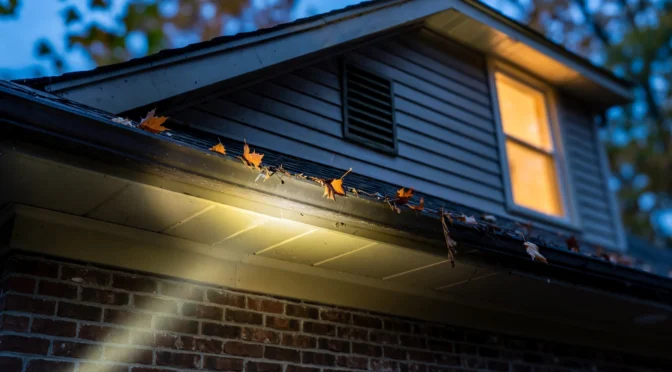
Walk the Roofline at Dusk Before the First Frost
Start outside at dusk with binoculars and a flashlight. Watch from the ground for wasps entering a particular opening, but keep your distance from active nests.
- Watch the eaves for repeated trips through the same gap. Mark that location for inspection, not immediate sealing.
- Check soffits, the horizontal panels beneath the eaves, for separated seams.
- Look for damaged vent screens and gaps along fascia boards at the roof edge.
- Inspect dormer joints and chimney flashing from the ground.
- Check openings around attic fans and utility lines.
- Plan repairs before cold weather. The first frost in Hamilton County usually arrives around October 22, most years between October 18 and October 30. This is a planning window, not a deadline that guarantees wasps are gone.
Soffits and Fascia Seams
Look where soffit panels meet the wall and where fascia boards join. A narrow separation can provide access even without an obvious hole. Repeated wasp traffic matters more than the apparent size of the gap.
Gable, Ridge and Attic Vents
Check for missing or torn screening without covering the vent itself. Attic ventilation must remain open; repairs should keep insects out while preserving airflow.
Dormer Joints and Chimney Flashing
Joints between different building materials can open as those materials move. Watch where siding meets roofing, and leave repairs around damaged flashing to someone qualified to protect the roof’s weather seal.
Other fall pests use some of these openings too. Our page on how stink bugs get into Ohio homes and how to keep them out covers their seasonal entry routes.
Check for a Nest Before You Seal Anything
Repeated indoor sightings deserve more attention than one wasp near an open door. Good Housekeeping’s August 6, 2026 article, quoting entomologist Jim McHale, identifies recurring wasps indoors and buzzing within a structure as possible signs of a hidden nest.
Before sealing, check from accessible areas without opening walls or disturbing insulation:
- Listen for buzzing near the affected room or attic access.
- Note where live or dead wasps repeatedly appear.
- Watch the corresponding exterior wall or roofline for activity.
If wasps keep appearing or you hear buzzing, leave the opening alone and arrange an inspection. Closing an active nest entrance can redirect wasps toward living space.
How to Seal Entry Points Without Blocking Attic Vents
Once active nesting has been ruled out or addressed, repair confirmed entry points on a dry day. Follow the sealant’s label for surface preparation and application temperature.
- Brush loose paint and dirt from the repair area. Do not disturb an occupied nest.
- Use weather-resistant caulk for suitable small seams. Use expanding foam only where appropriate for the opening and building material.
- Seal gaps around vent frames, not the ventilation openings.
- Repair damaged screening with a suitable material that preserves airflow. Ask a qualified contractor if you are unsure how the vent should function.
- Leave high or awkward roofline repairs to a professional. Binoculars help you inspect from the ground; they do not make ladder work safe.
Our guide to rodent exclusion and how to seal your home for winter explains broader exclusion work. Rodent repairs may need chew-resistant materials, so a wasp-sized seam repair is not automatically sufficient for mice.
Why a Sluggish Indoor Wasp Can Still Sting
A cold, slow-moving wasp can still sting if handled. Warm indoor air may make it active again, so do not assume a motionless wasp is dead.
If you can contain it without getting close, the method below works for a single wasp near a window or wall. A cold wasp still has a working stinger, so keep your hands out of its reach the whole time.
- Keep children and pets away. Do not pick it up or swat it bare-handed.
- Place a cup over the wasp, then slide a stiff card beneath the rim.
- Keep the card against the cup and release the wasp outdoors, away from the doorway.
- If you cannot do this safely, leave it alone and seek help.
Why Aerosols Into Attic Voids Are the Wrong Fix
Do not spray a wasp aerosol blindly into a wall or attic void. You may miss the nest, expose unintended areas and drive wasps toward the interior. Pesticides must be used according to their labels.
A licensed technician can identify the insect and locate the nest before choosing a treatment suited to the site. Ohio and Kentucky regulate professional pesticide applicators through their respective departments of agriculture. Ask how to prepare the space and what precautions apply to children and pets.
Our Cincinnati bee and wasp control service addresses stinging insect nests around homes and commercial properties.
Why October Sealing Protects You in a January Warm Spell
Cold weather does not necessarily clear sheltered wasps from a building. An overwintering queen may become active during a January warm spell. Fall exclusion helps prevent entry before that happens, but sealing alone will not remove a wasp already inside.
For ongoing prevention, our recurring pest control programs include The Sure Cure. Our page on winter pest control in Cincinnati and why protection matters all year explains why pest activity can continue through colder months.
Can a Pest Control Company Get Rid of Wasps in Your Attic?
Yes. A licensed technician can locate a nest and select an appropriate treatment. Exclusion helps prevent entry, but it is not a substitute for addressing an active nest inside the structure. Arrange professional help when:
- You suspect a nest inside a wall, soffit or attic.
- Wasps repeatedly appear indoors.
- Someone in the home has a history of severe sting reactions.
- A child or pet has been stung near a suspected nest.
Sure Thing Pest Control has been locally owned and family-run since 1997. Our two owners bring over 80 years of combined pest control experience. Our background-checked, licensed and certified technicians complete more than 40 hours of additional training annually.
We offer kid and pet friendly pest control in Greater Cincinnati and Northern Kentucky. For a free estimate on a suspected nest or repeated indoor sightings, call 513.247.0030 or describe the activity through our contact page. You can also meet the team.
Frequently asked questions
What will kill wasps instantly indoors?
No method should be treated as a guaranteed instant kill. If you can safely contain a single wasp with a cup and card, release it outdoors. Avoid spraying blindly into wall or attic openings; repeated indoor sightings need an inspection.
What smell will keep wasps away?
Do not rely on scent to keep wasps out of your attic. Repairing entry gaps and damaged screening provides a physical barrier that scent products do not. Check for active nesting before sealing.
Is it ever right to kill a wasp indoors?
There is no blanket rule that a wasp must never be killed. The immediate concern is getting stung while trying to handle or swat it. Paper wasps also eat caterpillars, so an outdoor wasp away from people does not automatically need treatment.
Do pest control companies get rid of wasps?
Yes. Pest control technicians can identify wasps, locate nests and recommend treatment suited to the location. Sure Thing Pest Control offers bee and wasp control and free estimates at 513.247.0030.
Is one wasp in the house an emergency?
One wasp indoors is not usually an emergency, and its presence alone does not prove there is a nest. Keep your distance and contain it only if you can do so safely. Repeated sightings or buzzing inside a wall call for an inspection; breathing difficulty or throat swelling after a sting requires emergency medical help.