Category Archives: Commercial Pest Control

Commercial Pest Management in Cincinnati: What Auditors Ask For

Commercial pest management is a written program that keeps pests out and records every check, including the empty ones. For a Cincinnati facility preparing for an audit, traps alone are not enough. Auditors typically ask for a current device map, dated inspection logs and proof that you corrected problems and reviewed activity over time.

If you have tried adding traps but sightings keep returning, check the entry route before adding another device. In Greater Cincinnati and Northern Kentucky, late October is a useful time to inspect loading docks as falling overnight temperatures push rodents toward shelter.

Why Late October Is the Walk-Through Window

Rodents are active year-round, but fall cooling and declining outdoor food make buildings more attractive. A loading dock left open during unloading provides access even when the rest of the building is well sealed.

Walk the building before cold weather settles in. If an audit is approaching, allow time to replace worn seals and verify that repairs hold rather than leaving defects for the week of the inspection.

Loading Docks and Overhead Doors Come First

Loading Docks and Overhead Doors Come First, surethingpc.com

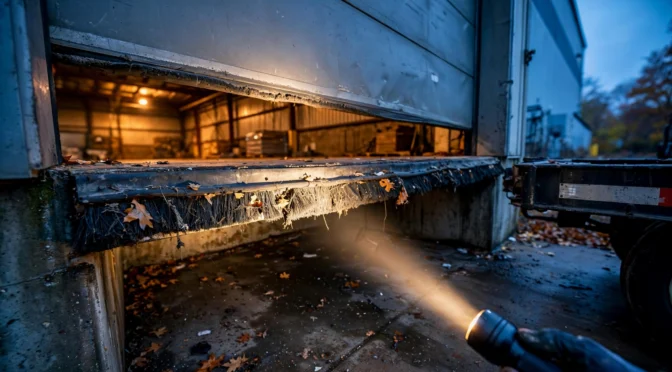
Walk the dock at night with a flashlight when freight traffic has stopped. Check closed doors closely, especially at the corners where seals pull loose.

  1. Inspect the full width of each overhead door’s bottom seal. Look for gaps between the seal and the floor.
  2. Check the ends of brush seals where the floor meets the door track.
  3. Inspect the gap where the dock leveler lip meets the pit, including nearby seals damaged by equipment.
  4. Check sweeps on personnel doors that open outside.
  5. Look for droppings along wall edges. Chewed material and greasy rub marks also warrant inspection.
  6. Record each defect’s location and date, including repairs completed during the walk.

Pay particular attention to corners and the space under the leveler lip. A seal that looks intact from several feet away may have an opening at one end.

Pipes, Conduit and Door Frames Are the Openings Most Walks Miss

Mice can pass through openings much smaller than most people expect. Rats also use gaps around utility penetrations, so an inspection that stops at the overhead doors leaves entry routes unchecked.

Follow utility lines where they enter the building, checking both sides of the wall where accessible. Inspect around exhaust housings and at the base of door frames. Treat each unsealed penetration as a possible entry point rather than judging it by how small it looks.

Use durable, rodent-resistant repairs appropriate to the opening, such as metal flashing or a cement-based patch. Foam alone is not a dependable rodent barrier. Exclusion means closing the route pests use, not simply placing a trap beside it.

How Often Stations and Traps Should Be Checked and Where They Go

Set the inspection frequency with your provider based on facility risk and audit requirements. Get the agreed frequency in writing. A workable schedule followed consistently is better than an ambitious one with missed checks.

  1. Document the inspection cadence for exterior stations and interior traps.
  2. Give each device a unique number that matches the site map.
  3. Review coverage near loading docks and mechanical rooms, using likely pest travel routes to guide placement.
  4. Ask your provider to assess poorly placed or redundant devices. An empty trap alone is not a reason to remove it.
  5. Compare the map with the floor whenever devices move and during scheduled program reviews.

A map cannot explain coverage if it shows stations that are missing or leaves installed devices unmarked. Correct those mismatches before reviewing activity trends.

For activity around the building, our Cincinnati rodent control service includes trapping and exclusion to address mice and rats at their source.

Why Bait Stays Out of Food and Storage Zones

Keep rodent bait out of food-contact and product-handling zones. In food and healthcare facilities, integrated pest management starts with exclusion and sanitation, supported by monitoring. Pesticide decisions must follow the product label and the facility’s requirements.

Multi-catch traps can monitor rodent activity without introducing toxicant where product is handled. Pheromone monitors serve a different purpose: detecting particular insect pests. Exterior bait stations may be appropriate away from product areas, with placement determined by a licensed technician.

Which Records an Auditor Asks to See First

Which Records an Auditor Asks to See First, surethingpc.com

Auditors typically ask for evidence of an ongoing program, not just a clean service ticket. Keep these records together so someone unfamiliar with the building can follow what was checked and what changed.

  1. Keep a site map that numbers every device and shows its actual location, with the date it was last verified.
  2. Keep the agreed inspection schedule and name the person responsible for each check.
  3. Record each check on a dated line with the checker’s initials, and write “no activity” for empty checks.
  4. Document each sighting or defect, the response and who verified completion.
  5. Review activity by device and area over time, and record the changes made in response.
  6. Keep dated descriptions of work performed, along with pesticide application records.
  7. Keep licensing documentation for every applicator. The Ohio Department of Agriculture regulates Ohio commercial applicators, and the Kentucky Department of Agriculture regulates Kentucky applicators.

Record problems even when they are fixed immediately. A sighting followed by a documented response shows how the facility handled it; repeated activity without review leaves the cause unresolved. Confirm record-retention requirements with the authorities and audit program that apply to your facility.

Which Logs Show a Trend, Paper or Electronic

Either format can support an audit when records are complete and retrievable. Electronic logging makes it easier to compare activity across quarters, but software does not replace a completed inspection.

Feature Paper log Timestamped electronic log
Completeness Requires a completed entry for every check Scanning can help track completed checks
Retrieval during an audit Requires organized, accessible files Search tools can retrieve dates or devices
Trend across quarters Usually requires manual compilation Reporting tools can chart activity
Corrective actions linked to a sighting Requires clear cross-references May link actions directly to the record

Before choosing a format, ask your provider to show how you would retrieve a device’s history and its corrective actions. Check that the report includes empty inspections, not just visits with activity.

Why Sanitation Comes Before Adding More Devices

At a food facility, spilled product beneath racks can keep feeding rodents after traps are installed. Inspect dock staging areas for accessible food and standing water. Clear clutter that blocks inspection along walls, and assign responsibility for correcting each condition.

More devices do not automatically improve control. Every added station needs inspection and a record; a crowded map with missed checks is less useful than a well-placed system maintained consistently.

When to Call a Licensed Technician and What to Ask Them

Call a licensed professional when you find rodent signs in a mechanical room or sightings continue after sanitation and exclusion work. The next step is diagnosing access and activity, not adding traps without a placement plan.

Before service begins, ask which records you will receive and how trend reviews will be delivered. Sure Thing Pest Control is locally owned and family-run, and its owners bring over 80 years of combined pest control experience. Our technicians are background checked and complete over 40 hours of additional training annually.

Our commercial pest control plans are customized for local businesses, with ongoing scheduled protection available through The Sure Cure. Call 513.247.0030 for a free estimate and to discuss your facility’s pest activity and audit documentation needs.

Frequently asked questions

How often should exterior rodent stations and interior traps be checked?

There is no single inspection frequency for every facility. Agree on a written schedule with your provider based on pest risk and your audit program, then record every check, including those with no activity.

Does a clean service visit pass a pest audit?

A clean visit alone does not demonstrate an ongoing pest management program. Auditors typically ask for device-check logs, documented corrective actions and evidence that activity has been reviewed over time.

Can rodent bait be used in a food plant or warehouse?

Bait may have a role in a facility’s program, but keep it out of food-contact and product-handling zones. A licensed technician should determine placement under the product label, and exclusion and sanitation should come first.

Which pest control records should be kept for an audit?

Keep a current device map and inspection schedule, along with the logs and service records that show every check and fix. Include trend reviews, pesticide application records and each technician’s license. Confirm retention periods with your applicable regulators and audit program.

Pest Control Landlord Duties: Who Pays in Ohio and Kentucky

For a landlord, pest control costs usually fall on the owner when the problem comes from the building itself, such as a gap in a foundation or a shared plumbing chase. Tenants may be responsible when their conduct caused the infestation, but a sighting alone does not establish fault. In an Ohio rental, who pays turns on what caused the problem and what the lease and applicable law say.

If you have tried everything to keep mice out of a shared basement laundry room, start with the building’s entry points, not the apartment that reported the mouse. This is practical pest-management guidance, not legal advice. Confirm payment disputes and rent remedies with a local attorney.

A Mouse in October Calls for a Building Inspection

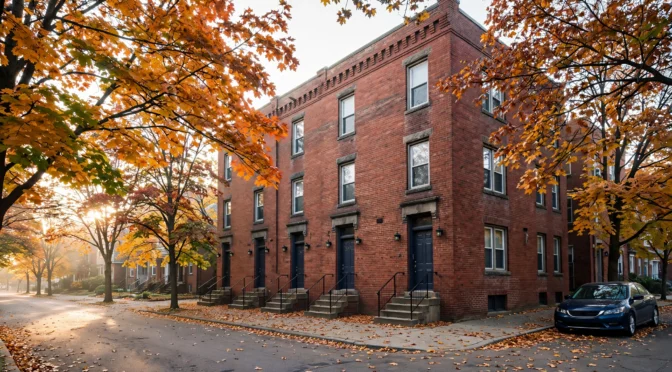
As October nights cool in Greater Cincinnati, mice seek shelter indoors. A gap around a utility line can give them access to a heated basement and the wall spaces above it. The apartment where someone spots a mouse may not be where it entered.

Start in the shared basement and follow utility lines toward the outside. Check the laundry room for leaks and the trash area for accessible food. Treating one apartment without checking those conditions can leave the source untouched.

The Landlord Does Not Always Pay for Pest Control

Sure Thing Pest Control white service van parked in a residential driveway.
Treating Only the Unit That Called Fixes It, surethingpc.com
A Mouse in October Is Just a One-Off, surethingpc.com

Ohio Revised Code Section 5321.04 sets out landlord duties, including keeping premises fit and habitable and common areas safe and sanitary. Section 5321.05 assigns tenants duties for sanitation and proper waste disposal. Neither duty makes the person who first reports a pest automatically responsible for the bill.

A foundation opening is a building repair. Food waste left inside a unit is a housekeeping issue. Both can contribute to the same infestation, so an inspection should document the entry point and the conditions supporting the pests before anyone assigns fault.

Read the current statute and lease before agreeing to pay or refusing a charge. A pest inspection can help establish the source; it does not decide legal liability.

A House and an Apartment Building Have Different Conditions to Check

Renting a whole house does not automatically make the tenant responsible for structural entry points. The tenant controls daily housekeeping, while the owner generally controls building repairs. In a duplex or apartment building, shared spaces add another place to investigate.

For a Greater Cincinnati landlord managing different property types, separate maintenance responsibilities from tenant housekeeping. These are practical inspection priorities, not a legal ruling on who owes a bill.

Location Building conditions for the owner to address Conditions the tenant controls
Single-family house Structural defects, such as a broken foundation vent or an opening around a utility line Food storage and household waste
Duplex Openings in shared walls or utility chases Food and waste handling inside their unit
Four-unit building Shared basement conditions and openings around plumbing stacks Unit cleanliness and scheduled trash removal

Treating Only the Unit That Called Can Leave the Source Untouched

Roaches and mice can travel through shared wall spaces and openings around pipes. In an older Cincinnati rental with a common basement, inspect those routes and assess nearby units rather than assuming the infestation stops at the complaining tenant’s door.

Repeatedly treating one apartment while leaving an active source next door wastes money. Repair entry points and address shared-room conditions alongside targeted treatment. For treatment options, see our cockroach extermination service.

Tenant-Caused Problems Still Need Evidence

A tenant may be responsible for costs when their conduct caused an infestation, subject to the lease and applicable law. Document the actual condition rather than assuming that pests prove poor housekeeping. A dirty kitchen can support roaches, but finding roaches does not establish where they originated.

Bed bugs require particular care because they can travel with belongings or move between units. A sighting does not prove who introduced them. Record the move-in condition and keep dated pest reports so the timeline is clear. For identification and treatment information, see our bed bug extermination page and our guide to bed bug marks on sheets.

Can a Tenant Stop Paying Rent Until the Roaches Are Gone?

Do not simply stop paying rent. Ohio has a formal rent-escrow process, and missing a requirement can hurt a tenant’s position even when the infestation is real.

  1. Notify the landlord in writing. Describe the pest problem and where you found it.
  2. Keep proof of delivery and give the landlord the legally required opportunity to address the condition.
  3. Ask legal aid or an attorney to confirm the requirements before taking any rent-escrow step.

Ohio Revised Code Section 5321.07 governs this remedy. The required timing is not an open-ended “reasonable time” in every case, so do not use this article as a withholding checklist.

Waiting Until Fault Is Proven Makes It Worse

Arrange an inspection and necessary treatment while the payment question is being resolved. Leaving an active infestation untreated can allow it to spread into other units. Keep the treatment decision separate from any later request for reimbursement.

Report sightings in writing as soon as you find them, with the room, the date and a photo if possible.

Kentucky Rentals Follow Kentucky Law, Not Ohio Law

For rentals across the river in Burlington or Fort Mitchell, do not apply Ohio’s rent-escrow procedure. Kentucky’s landlord-tenant provisions appear in KRS Chapter 383, but which provisions apply can depend on local adoption and the property’s circumstances.

Confirm the local rules before assigning costs or withholding rent. The practical inspection still starts with the source: a shared building opening needs repair, while accessible household waste needs removal. For the communities we cover, see our service areas page.

A Paper Trail and a Recurring Plan Help Manage the Building

A mouse can squeeze through an opening roughly the width of a pencil. Trapping removes mice already inside; exclusion means closing the openings that let them enter. Our rodent exclusion guide explains that work.

What to Check Before Another Treatment

Inspect the building conditions that can keep an infestation going. Fresh pest activity near a repaired opening also deserves another look.

  • Unsealed gaps around utility lines and exterior doors
  • Leaks or standing water in shared rooms
  • Accessible waste in the common trash area

What to Keep in One File

Ask for a written report after each service visit. It should distinguish what the technician found from what still needs investigation or repair.

  • Service reports that say what was found and what was done
  • Dated photos of pest evidence and completed repairs
  • Repair invoices
  • Move-in condition notes and tenant reports

If a city inspector is involved, ask the responsible agency what documentation it requires. Treatment records show what was done, but they do not establish compliance by themselves.

What a Recurring Plan Covers

A multi-unit pest plan should match the building’s conditions. It may include exterior treatment and monitoring, with targeted work in shared rooms. Follow-up inspections help determine whether activity has stopped or whether another source needs attention.

Sure Thing Pest Control is locally owned and family-run, operating since 1997. The owners bring over 80 years of combined pest control experience. We offer kid and pet friendly treatments, recurring commercial plans and ongoing scheduled protection through The Sure Cure.

For a shared-basement problem or repeat complaints across units, ask about our commercial pest control program. Call Sure Thing Pest Control at 513.247.0030 for a free estimate, and describe where pests have been reported and what repairs or treatments have already been tried.

Frequently asked questions

Under Ohio law, is a landlord always required to pay for pest control?

No. Ohio law assigns landlords habitability and common-area duties, while tenants have sanitation and waste-disposal duties. Who pays for a particular bill depends on what caused the problem and what the lease says, not simply where someone saw a pest.

Can a tenant withhold rent in Ohio over a roach or rodent problem?

Ohio provides a formal rent-escrow remedy for qualifying situations, not blanket permission to stop paying rent. Notice and court-deposit rules matter. Confirm the current requirements under Ohio Revised Code Section 5321.07 with legal aid or an attorney before acting.

Who pays for an exterminator in a rental in Kentucky?

Payment depends on the cause of the infestation, the lease and the Kentucky rules applicable to that property. Local adoption of landlord-tenant provisions can affect the analysis. Ask a local attorney before withholding rent or accepting a disputed charge.

Is a landlord responsible for mice in a shared basement or laundry room?

Generally, the landlord should address pest-supporting conditions in common areas under the owner’s control. That includes investigating building entry points and arranging necessary repairs or treatment. A mouse sighting in a shared room does not, by itself, prove which tenant caused the problem.

What should a landlord keep to show a city inspector that pest control is in place?

Keep dated service reports, photos and repair records together with tenant notices and move-in notes. The file should show what was found, what was treated and which corrections were completed. Ask the enforcing agency about its specific requirements; records alone do not guarantee compliance.

COVID-19 – Ohio Essential Service Order

Sure Thing Pest Control will continue operating with normal business hours providing essential pest management in people’s homes and businesses in addition to major commercial operations such as healthcare facilities, food processing facilities and more.

Pest control professionals are responsible for protecting against rodents, insects, arachnids and other animals that can damage property and threaten people’s health through the spread of disease and bacteria, in addition to inflicting painful bites, allergic reactions, and even death.

Our number one priority is everyone’s health and safety. We are following CDC, local, state and federal guidelines to ensure our clients and employees remain healthy and safe. Our leadership team has implemented additional measures for our technicians and office staff to limit interactions, keeping a 6′ distance from other individuals, and added cleaning protocols throughout the day. Additionally, we are screening our employees and have encouraged our employees to stay home if they are not well.

We recognize the effect of the situation on our families, clients, and communities. Our thoughts are with all who are sick and we are grateful for the first responders and healthcare workers caring for those in need.

As things change we will continue to keep our clients updated with any additional information that pertains to our industry as it becomes available.

Please see our other blog posts for additional details about our service adjustments and other information pertaining to Covid-19.

If you have any questions or concerns please don’t hesitate to reach out to us via phone at 513-247-0030 or help@SureThingPC.com.

Please stay safe, wash your hands, practice good hygiene, and social distancing.

Thanks,
Glenn Scherzinger and Jerry Zapf

CISA Essential Workers Guidelines

Covid-19 Service Adjustments

Dear Clients:

As an organization, we are taking additionals measures recommended by the CDC and our local government to ensure we are providing the best level of protection for both our clients and employees while still providing the quality of service you have come to expect for us.

We want you to know

  • Our employees are remaining vigilant in dealing with your pest issues and concerns
  • We’ll be limiting indoor services- our technicians will not be asking to come inside to check bait stations or perform interior treatments unless requested
  • We’ll be stopping the greeting practice of shaking hands
  • No signatures will be required to avoid contact
  • During services, we’ll be practicing social distancing (6 feet minimum) whenever possible
  • You’ll see our technicians wearing gloves and possibly masks depending on the facility
  • Our technicians are monitored daily and have been directed to stay at home if they feel ill
  • Our equipment is being cleaned at an increased frequency as a measure of precaution
  • Preventative annual inspections are being postponed until further notice
  • We’ll be focusing on robust exterior inspections and treatments to prevent and solve any issues that arise
  • We may make additional adjustments and changes in the following days and weeks as this is a continuously changing situation

We want you to know we are doing everything we can to protect your safety, health, and peace during this difficult unprecedented time.  We don’t recommend canceling or postponing any service as insects and rodents can still enter into your home and business.

Something to keep in mind is that just because your business is unoccupied doesn’t mean that insects and rodents are going to postpone invading your building. If anything they’re more likely to do so without anyone there. If your business has any adjusted hours please let us know.

If you have any questions or concerns about any pest issues or our Covid-19 protocol please don’t hesitate to reach out to us via email at sales@surethingpc.com or phone at 513.247.0030.


We will all get through this time together!

Thanks,
The Sure Thing Team!