Category Archives: Bed Bugs

Throw Away a Mattress With Bed Bugs? When to Keep It or Toss It

You usually do not need to throw away a mattress because of bed bugs. Most infested mattresses can be treated and kept; replacement makes sense when the mattress is already worn out or badly torn. Before moving anything, arrange an inspection. Carrying an unwrapped mattress through the house can spread bugs along the way.

If you have tried everything and are ready to put the bed on the curb, check the rest of the room first. Bed bugs also hide behind baseboards and in nearby furniture. A new mattress will not solve an infestation left untreated.

Are You Sure It Is Bed Bugs?

Bites alone cannot confirm bed bugs, and some people do not react to their bites. Look for physical evidence before deciding what to discard.

  1. Check mattress seams, especially the piping where the top meets the sides.
  2. Inspect the box spring, paying attention to its underside and staple lines.
  3. Run a flashlight along headboard joints and frame screw holes.
  4. Look for tiny dark spots about the size of a period or pale shed skins. Heavily infested rooms may also have a sweet, musty odor.

If your only clue is stains on the sheets, read what bed bug marks on sheets mean and what to check first. Stains need closer inspection, not an immediate trip to the curb.

Is the Mattress Already Due for Replacement?

Judge the mattress by its condition, not just the presence of bugs. Bed bugs do not damage furniture. Once treatment eliminates the bugs and eggs, an otherwise usable mattress can stay.

Badly torn fabric or exposed foam makes treatment harder and replacement more reasonable. Heavy staining or sagging may mean the mattress was already due for replacement anyway. A broken frame is a reason to replace the frame, not necessarily the mattress. An intact mattress in good condition is generally worth treating.

Can a Professional Treat the Mattress and Keep It?

Sure Thing Pest Control technician smiling in branded service van

Usually, yes. Treatment must account for eggs as well as live bugs. Many insecticides do not kill bed bug eggs, so chemical treatment commonly involves two or three visits spaced about 10 to 14 days apart. The exact schedule depends on the treatment method and inspection findings.

Resistance also matters. Bed bugs can resist commonly used pyrethroid insecticides, so repeatedly applying the same store-bought spray may leave the infestation active. A professional chooses methods based on where bugs are hiding and checks whether treatment worked.

Professional heat treatment is another option. It requires controlled temperatures throughout the treatment area, including hiding places. A hair dryer or space heater cannot substitute for that equipment and monitoring.

What a Treatment Plan Involves

An inspection should extend beyond the mattress to the frame and nearby hiding places. Adjacent rooms may need checking, too. Treatment then targets the locations found during that inspection, with follow-up appropriate to the method used.

Sure Thing Pest Control provides inspections and targeted treatments in Greater Cincinnati and Northern Kentucky. Our Cincinnati bed bug extermination service is the place to start before replacing usable furniture.

Where a Bed Bug Encasement Fits

A bed bug encasement encloses the mattress or box spring, trapping bugs inside and making activity on the outside easier to spot. Choose one specifically designed for bed bugs, with secure seams and a zipper that closes completely. Ask the technician when to install it and how long to leave it in place; an encasement does not treat bugs elsewhere in the room.

If the Mattress Must Go, How Do You Move It Without Spreading Bugs?

If the Mattress Must Go, How Do You Move It Without Spreading Bugs?, surethingpc.com

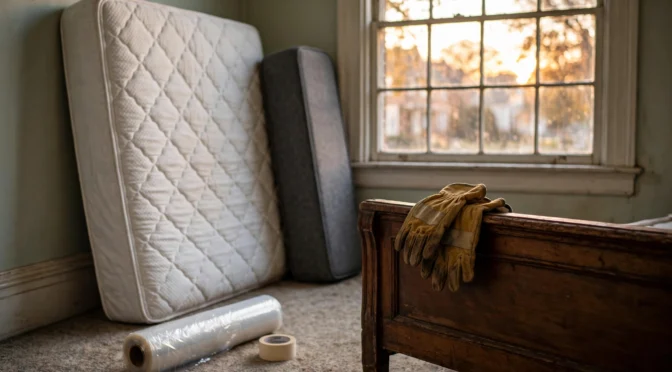
Seal the item before it leaves the bedroom. An unwrapped mattress can drop bugs along the route, creating hiding places far from the original bed.

  1. Wrap the item in the room where it sits, not in the hallway.
  2. Use heavy-duty plastic sheeting or furniture wrap. Narrow household plastic wrap can leave gaps or tear during handling.
  3. Tape every seam and check for openings before lifting.
  4. If discarding the frame, take it apart in the room and bag the screws and small parts separately.
  5. Carry the wrapped item straight out without resting it in a shared hallway.

Check the box spring especially carefully. Its corners and staple lines can leave openings even when the wrap looks tight from above.

Wrap It Where It Sits

Clear the route before wrapping so you do not have to set the item down while moving obstacles. Once sealed, write “BED BUGS” in large letters on more than one side of the plastic. The label warns collection crews and discourages someone from taking it home.

Carry It Straight Out

Move the sealed item directly to the collection location approved by your city or building manager. In an apartment, notify management before moving it through shared spaces, and check that handling has not torn the plastic.

What Does Your City Require Before Trash Day?

Call your city’s solid waste or public works office before putting an infested mattress outside. Ask what wrapping they require and when they pick up mattresses at your address. Do not assume the rules in one town match the next, or that your usual trash collection takes mattresses.

Who Do You Tell First in an Apartment or Shared Building?

Tell the landlord or property manager as soon as you suspect bed bugs. They can move between units through openings around shared walls and utility lines, so neighboring units may need inspection. Waiting until disposal day can delay that coordination.

For questions about treatment and disposal responsibilities in Ohio and Kentucky rentals, read the guide to pest control and landlord duties. Do not assume responsibility without checking the lease and applicable requirements.

What Has to Happen to the Room After the Mattress Is Gone?

The room still needs inspection and treatment. Bugs left in nearby furniture or behind baseboards can reach a replacement bed or follow you to another sleeping area.

  • Follow the technician’s specific re-entry instructions for people and pets.
  • Leave treated surfaces undisturbed for the period the technician specifies.
  • Ask when you can vacuum or clean baseboards without removing residual treatment.
  • Bag bedding before carrying it to the laundry, and follow the treatment plan’s laundering instructions.

Do not use a general waiting period in place of the instructions for your treatment. Products and methods differ, including how long treated areas must remain undisturbed.

Why Foggers and Store-Bought Sprays Often Fail

Foggers do not reliably reach the cracks where bed bugs hide and can scatter bugs into other areas. Store-bought products have other limitations, especially when used without a room-wide treatment plan.

Method What it does Main limitation
Foggers or bug bombs Release insecticide into the room Do not reliably reach hidden bugs and can spread them into other areas.
Store-bought sprays May kill exposed bugs Resistance can reduce effectiveness, and many products do not kill eggs.
Diatomaceous earth Dries out insects over time Works too slowly to control an active infestation on its own.
Rubbing alcohol Can kill bugs on direct contact Leaves no lasting control and creates a fire hazard.
Essential oils Are marketed as repellents or contact treatments Are not a dependable treatment for an established infestation.
Professional treatment Targets hiding places using methods selected after inspection May require preparation and follow-up visits rather than one application.

Before buying a replacement mattress, call Sure Thing Pest Control at 513.247.0030 for a free estimate. Explain what you found and ask about inspection and treatment options for keeping the bed.

Frequently asked questions

Will bed bugs go away if I throw away my bed?

No. Bed bugs can remain behind baseboards and in nearby furniture after the bed is removed. The room needs inspection and treatment even if you discard the mattress.

Do I need to wrap a mattress before putting it on the curb?

Yes, if it is infested. Seal it in heavy-duty plastic in the room where it sits, tape every seam and label more than one side “BED BUGS.” Confirm your city’s collection requirements before moving it outside.

Can I donate a mattress that had bed bugs?

Do not donate a mattress with an active infestation. If it was professionally treated, confirm that the infestation has been eliminated and ask the receiving organization about its acceptance policy before arranging a donation.

If bed bugs are only in one room, do I need to treat the whole house?

Not automatically. An inspection should establish where activity is present, including nearby rooms where appropriate. The treatment area should follow those findings rather than an assumption that the bugs stayed in one bed.

What do mattress encasements do for bed bugs?

Bed bug encasements trap bugs inside the mattress or box spring and make new activity easier to spot on the outside. They need intact seams and a securely closed zipper. They do not eliminate bugs hiding in the frame or elsewhere in the room.

Bed Bug Marks on Sheets: What They Mean and What to Do Next

Bed bugs can leave dark, ink-like dots or red smears that turn rust-brown on your sheets, but stains alone do not confirm an infestation. Check nearby mattress seams for insects or shed skins before spraying. Washing bedding removes marks and any bugs in the load, not those hiding in furniture.

If you have tried everything to get rid of recurring spots, stop treating the sheets as the source. Photograph the marks before laundering, then inspect the bed without taking it apart.

Are dark specks on sheets always bed bugs?

No. Lint and fabric pilling can look like bed bug evidence at first glance. Bed bug fecal spots are digested blood: small, dark brown-to-black dots that resemble a fine marker dot, sometimes with a slight bleed into the weave.

Look at the mark’s edges and location before deciding what made it.

What you see What it might be How to tell
Dark dot with a slight bleed into the fabric Bed bug fecal spot Marks near seams warrant inspection; the appearance alone is not proof
Fuzzy fiber end, gray or dark Lint or pilling Has a fibrous edge and may lift away
Dot or line resembling ink Pen ink or dye Often stays its original color when dampened, although inks vary
Dark speck that smears reddish-brown when dampened Blood-derived mark Could be bed bug evidence, flea dirt or another blood source
Orange or brown flake near metal Rust Check nearby hardware for corrosion

Several dots along a mattress seam deserve a closer look than one loose speck in the middle of a sheet. Location helps you choose where to inspect, but it cannot identify the pest.

Do blood spots mean the bugs bled on the sheets?

Most blood smears on bedding come from a recently fed bug crushed during sleep. It is not blood the bug simply leaked onto the bedding.

Fresh blood looks red or pink and turns rust-brown as it dries. Color cannot reliably tell you how many days old a stain is or whether bed bugs are still present. A small cut or another source of blood can leave a similar mark.

Does a damp cloth test prove it is bed bugs?

No. A reddish-brown smear is consistent with blood-derived material, but flea dirt can react the same way.

  1. Dampen a white cloth or cotton swab with plain water.
  2. Press it gently against one dark spot. Avoid scrubbing, which spreads the stain.
  3. Check for a reddish-brown transfer onto the cloth.

A positive result is a reason to inspect the seams. A spot that does not transfer color remains unidentified; the test does not rule bed bugs in or out.

Where do bed bugs hide when they are not on the sheets?

Where do bed bugs hide when they are not on the sheets?, surethingpc.com

Start with the mattress seams and work outward toward the frame. Bed bugs hide close to sleeping people, often in narrow gaps that a quick glance at the bedding misses.

Marks near the head of the bed give you a useful starting point, not a precise map of the infestation.

Bed bugs usually feed at night and retreat into hiding places. Clean-looking sheets do not mean the bed is clear.

Use a flashlight to examine accessible seams and joints. Leave dismantling heavy or attached furniture to the inspection professional.

Mattress piping and tags

Shine the light along the piping where the mattress panels meet, including the tag seam. Look for insects and eggs tucked into the stitching. Shed skins, the shells left behind as young bed bugs grow, also warrant identification.

Check the lower seam if you can reach it safely. Adult bed bugs are roughly apple-seed sized; young ones can be pale and difficult to see against light fabric.

Headboard, frame and box spring

Inspect accessible frame joints and the back of the headboard. Box spring corners and underside seams also offer hiding places. Do not unscrew the frame or detach a wall-mounted headboard just to search.

Baseboards and nearby furniture

Check the bedside table and visible gaps along nearby baseboards. Bed bugs can also hide behind picture frames, but there is no need to tear trim off the wall. Photograph suspicious evidence and leave it available for identification.

A correctly identified insect is stronger evidence than a stain. Eggs and shed skins can help an inspector confirm what you found, but unfamiliar debris is easy to misidentify.

Will washing sheets in hot water fix a bedroom problem?

No. Laundering cannot reach bugs hiding in the bed frame or furniture. Even if every insect in the laundry load is killed, those elsewhere in the room remain.

Bag bedding before carrying it to the laundry area. Wash according to the fabric’s care instructions and use a high-heat dryer setting where the fabric allows. Dryer heat is an important part of handling infested washable items; washing alone is not a dependable treatment plan.

Photograph the marks first. Clean sheets can make you feel better without resolving the source of the problem.

Will a store spray or bug bomb clear them?

Bug bombs are a poor choice for bed bugs. The fog does not reliably reach insects and eggs deep in cracks, and it can scatter bugs into other hiding places.

Do not spray bedding unless the product label specifically permits that use. Applying more product does not overcome poor access to hiding places, and misuse creates unnecessary exposure around sleeping areas.

Vinegar and rubbing alcohol will not eradicate an infestation. Rubbing alcohol also presents a fire risk. Keep the bed in its room rather than moving it elsewhere. A professional treatment plan covers what a product or a wash cycle cannot.

What do tiny bed bugs look like, and where do they bite?

What do tiny bed bugs look like, and where do they bite?, surethingpc.com

Young bed bugs can look much lighter than adults, especially before feeding. A tiny pale insect should not be dismissed because it does not match the familiar brown adult in photographs.

How the nymphs change

Bed bugs pass through five immature stages before adulthood. Unfed nymphs are pale and nearly translucent; after feeding, blood inside the body gives them a reddish tint. Each stage requires a blood meal before the next molt.

Adults are brownish-red and flat when unfed. A flashlight helps reveal young bugs against mattress stitching, but color alone is not enough to identify one.

Where the bites show up

Reactions can appear as itchy red bumps on exposed skin, sometimes in lines or clusters. Those patterns are not unique to bed bugs. Some people show no visible reaction, so the absence of bites does not clear a room.

Bed bugs are not known to transmit disease. Scratching can break the skin and lead to infection, while repeated bites can disrupt sleep. Seek medical advice if the skin becomes increasingly red, painful or starts draining.

How soon after a trip or a guest do marks appear?

Signs may go unnoticed for several weeks after bed bugs arrive. A small number can be difficult to find, so the morning you discover a stain does not tell you when the bugs entered.

In Greater Cincinnati and Northern Kentucky, fall travel and holiday visits provide opportunities for bugs to hitchhike on luggage or clothing. Secondhand furniture is another possible route. An October discovery may relate to an earlier trip, but stains cannot establish who or what brought bugs inside.

Cincinnati’s cold winters do not clear an infestation in a heated home. Older foundations are not the issue here; bed bugs are primarily a furniture-and-bedding pest, and clean homes can have them too.

What should you do before a professional inspects the bed?

Keep the room as undisturbed as practical so evidence remains available and potentially infested belongings stay contained. Renters should notify their landlord or property manager because adjoining units may need assessment.

  1. Photograph stains and any suspected insects before cleaning.
  2. Seal loose bedding in bags before taking it to the laundry area. Follow fabric care instructions and use dryer heat where appropriate.
  3. Keep bedding from touching the floor. If the bed is against a wall, ask the inspector about safely separating it.
  4. Leave the frame assembled and do not move bedroom furniture into another room.
  5. Avoid foggers and unplanned spray applications. Tell the inspector about any products already used.

Sure Thing Pest Control provides thorough inspection and targeted bed bug treatments across Greater Cincinnati and Northern Kentucky. We are locally owned and family-run, with licensed and certified technicians who complete over 40 hours of additional training annually. Read about our Cincinnati bed bug extermination service or call 513.247.0030 for a free estimate.

Frequently asked questions

Why are there blood spots on my sheets if I never saw a bug?

A recently fed bed bug can be crushed during sleep, leaving a red or pink smear that turns brown as it dries. Small cuts can leave similar stains, so blood spots alone do not identify bed bugs. Inspect the mattress seams for insects or shed skins.

Does washing sheets in hot water kill bed bugs?

Laundering can kill bugs in the load, particularly with suitable dryer heat, but washing alone is not dependable. Follow fabric care instructions and bag bedding before moving it. Bugs hiding in furniture remain beyond the reach of the laundry cycle.

How long after exposure do bed bug signs show up?

Signs can take several weeks to become noticeable, although you might find an insect sooner. Small populations are easy to miss. The date you find marks does not reliably establish the date of exposure.

What if I slept in a bed with bed bugs?

Sleeping in an infested bed does not mean you automatically brought bugs home. Keep luggage away from beds and inspect its seams; bag washable clothing before laundering and drying it with appropriate heat. If you find suspected bugs or recurring marks at home, call Sure Thing Pest Control at 513.247.0030 for a free estimate on inspection and bed bug treatment.

How to Get Rid of Bed Bugs in Your Cincinnati Home

If you have discovered a bed bug infestation in your Cincinnati home, you are not alone. Cincinnati is near the top of the list for the number of bed bug infestations. Knowing that many of your neighbors have also dealt with these pests may be comforting but it doesn’t change the fact that you need to find a way to get rid of the bed bugs. There are a number of treatment options available for eradicating bed bugs. Some homeowners choose to go with do-it-yourself options while others seek out professional help.

DIY options

A quick search online or a visit to you a big box hardware store will provide you with a number of choices for DIY bed bug treatment. There are a variety of insecticide options with various application methods. You can find foggers that release a cloud of insecticide into the room as well as sprays that you apply directly to the infested areas. In addition, there are bed bug traps and bed bug egg killers advertised for DIYers. You can even purchase a kit that contains a variety of treatment options designed to kill currents bugs and prevent future infestations. Any of these options have the potential to kill bed bugs when they come in contact with one another. The problem that many homeowners run into is the fact that bed bugs are experts at hiding and often avoid exposure to these DIY treatments.

Professional options

A pest control professional can offer a number of treatment options to help you get rid of the bed bugs in your home. Bed bugs do not like high heat and can be killed off with specially designed heaters. These heaters can be effective but do come with a set of potential problems. The high level of heat can negatively impact common household items by melting them, scorching them, or damaging internal components. If you choose this option you need to be diligent about removing or protecting any item that may be sensitive to heat. Another treatment option available through a professional is insecticide. Some of the insecticides offered by professionals contain similar ingredients to the ones you can find on the hardware store shelf. The big difference is that a pest control professional is trained in the proper use and application of those insecticides. Applying the insecticides in the right areas and in the correct manner can make the difference between completely or partially eradicating and infestation.

When it comes to getting rid of bed bugs, bringing in a professional is always the best choice. These pests are difficult to eradicate. You need help from someone who has the training to spot evidence of bed bugs and the tools to properly apply the chosen treatment. Another important reason to use a professional for bed bug eradication is for the guarantee. A top notch pest control company will provide a guarantee with their work which means you can rest assured that they will get rid of the bed bugs in your home.

5 Most Common Reasons You Have Bed Bugs

No one wants to deal with a bed bug problem. But, if you have a bed bug infestation you understand that not dealing with it is not an option. As you make plans to eradicate your home of bed bugs it is a good idea to figure out why you developed the issue in the first place. This knowledge can help you prevent future infestations. Listed below are five of the most common reasons you have bed bugs.

You did not completely eradicate a previous infestation.

Bed bugs are notoriously difficult to eradicate once they have set up residence in your home. They are small and excellent at hiding which makes it difficult to know for sure if you completely eradicated an infestation. Many homeowners attempt to get rid of bed bugs through DIY methods like bug bombs and spot treatment. These methods will kill the bed bugs but only those that come in contact with the poison. The fact that bed bugs are small and good at hiding means that they often get into areas that are difficult to reach with these DIY methods. If you had a bed bug infestation in the past and have discovered another one it is highly likely that it is a result of failing to fully eradicate the previous infestation. Your best option for getting rid of bed bugs is to bring in a professional with the tools, knowledge, and experience necessary for the job.

You brought bed bug infested items into your home.

Mattresses are not the only thing that can become infested with bed bugs. Upholstered chairs, couches, other bedroom furniture, and even clothing can bring bed bugs into your home. Shopping for these types of items second hand puts you at risk for bringing in these pests. If you have developed a bed bug problem recently then take stock of the used items you have brought into your house. That chair you want to re-cover could be the source of your current woes. You can minimize your chances of bringing bed bugs in this way by carefully examining each item for signs of pest activity before bringing it inside your home.

You stayed in a bed bug infested hotel.

Hotels are well known as a potential culprit for spreading bed bugs. If the person who stayed in the hotel room before you has a bed bug problem at home it puts you at risk for developing an infestation. These pests can travel on a variety of items from an infested home to the hotel. Do a visual inspection of the bed and surrounding areas in your hotel room to check for bed bugs.

You picked bed bugs up on a plane or bus ride.

Bed bugs are not only present inside of houses or bedrooms. They can travel on clothing, suitcases, and a variety of other items. As with a hotel, when you travel by plane or bus you share a space with a variety of people. If someone has a bed bug issue at home these pests can travel on their clothing or luggage and make their way to the seats of planes and buses. If you are unlucky enough to sit in one of those seats you may have an unwanted passenger accompany you home from your trip. Bed bugs do not like heat so drying your clothes on the hottest setting possible immediately upon arriving home can kill off any pests traveling with you.

Your neighbors have bed bugs.

In certain living arrangements bed bugs can spread quickly from home to home. If you live in an apartment complex, duplex, or condo then you may have bed bugs because your neighbor has them. The close proximity of this type of living arrangement makes it easy for bed bugs to spread between units. If you live in one of these housing arrangements and have bed bugs let your neighbors know so everyone can be proactive in prevention and treatment.

Whatever the reason for your bed bug infestation the end result is the same-you have bed bugs! Immediate action is important to prevent the infestation from spreading to others and increasing in severity. Bring in a top notch exterminator from the beginning to effectively eradicate these pests from your bed and your home.

What Should I Do if I Determine I Have Bed Bugs?

The thought of having bed bugs can send homeowners into panic. These tiny pests cause itchy bites and are notorious for being difficult to eradicate. If you suspect bed bugs in your home there are a couple of things you can do to confirm your suspicions. Start with a visual inspection for these pests in your bed and surrounding areas. Bed bugs can be difficult to spot so it is also helpful to know how to recognize other signs of activity. If you determine that you do have bed bugs then the next step is to bring in professional help.

Do a visual inspection

Bed bugs are great at hiding but it is possible to find them if you know where to look. Start with the edges of your mattress. Pull back the sheet and look closely at the crevices and seams around the perimeter of your mattress. Pay close attention to the perimeter because many types of mattresses
have edging that provides ample space for bed bugs to hide. Then, move inward and check the other crevices and tufting of the mattress. The design of your mattress will impact how you execute a visual bed bug inspection. Once you have inspected your mattress it is time to move on to the surrounding areas. Bed bugs have been known to hang out on bed frames, night stands, inside wall sockets, and anywhere else where they can get consistent access to their favorite meal. Keep in mind that these pests are small and do not like to be out in the open. They will try to hide so you must be meticulous as you do a visual inspection to ensure that you do not overlook their presence.

Recognize other signs of activity

It can be difficult to spot bed bugs especially to the untrained eye. If you do a visual inspection and come up with nothing then it may be a sign that you do not have bed bugs. Or, it could simply mean that the bed bugs were doing a good job staying hidden during the search. In order to minimize the likelihood of this happening you need to learn how to recognize the other signs of bed bug activity. One of the most common ways that homeowners discover a bed bug problem is from getting bitten. Bed bug bites are typically small and red and show up in groupings . Oftentimes they become very itchy and bothersome. The bites do not always show up immediately which can make it difficult to determine if they are from bed bugs or some other type of pest. Another potential sign of bed bug activity is blood spots on your bedding. You will not feel a bed bug bite when it occurs but you may bleed a little and that blood can get on your bedding. These will be very small dots of blood so they may not be visible if you have dark sheets. If you suspect bed bug activity you can change your dark sheets for lighter ones and keep an eye out for small dots of blood. These signs of bed bug activity can help you determine if you have bed bugs even if you were unable to find any during a visual inspection.

Bring in professional help

If you determine that you have bed bugs the next step is to bring in professional help. The success rate of homeowners treating bed bug issues on their own is very low. These pests are good at hiding and use that skill to avoid exposure to typical DIY treatment methods. A professional will have the training and experience to recognize the problem, identify the infested areas, and apply lethal treatment in areas where the bed bugs will be exposed.

A bed bug problem will not go away on its own. As soon as you determine that you have an infestation-or even suspect a problem-bring in professional help. Dealing with your bed bug issue quickly and professionally will allow you to rest easy in your bed once again.

Bed Bug Treatment Options in Cincinnati

Local news sources have reported extensively on the fact that Cincinnati has one of the highest bed bug infestation rates in the country. In 2017 our beloved city was number two on the list and thankfully dropped a few spots to number five on the list for 2018. The improvement is
welcomed but being on the list at all means that bed bugs are still a very real threat for the residents of Cincinnati. If you fear a potential bed bug infestation then it may be helpful to understand the treatment options that
are available for residents.

Heat

Bed bugs do not like high levels of heat. Because of this, there are treatment options available that involve the use of high-powered heaters throughout infected areas of your home. This method can be effective but can also pose a threat to certain materials that you may have in your home. Before you opt for this type of treatment, make sure that you remove anything that can potentially be melted or damaged by being exposed to such high heat.

Room defoggers

Room defoggers, or bug bombs, are a common DIY option for treating many types of pests. If you visit the local hardware store you will find a number of treatment options for bed bugs. Room defoggers have the ability to kill off the pests that come in contact with the airborne pesticide. Bed bugs are notoriously difficult to eradicate partially because of their ability to get deep into the smallest of crevices. Homeowners often find it difficult to completely get rid of bed bugs with this method because some are so well hidden that they are never exposed to the pesticide released into the air.

Pyrethroid insecticides

Pyrethroid insecticides, when applied by a professional, are the most effective treatment option for bed bugs. This type of insecticide is part of a class of insecticides used by both consumers and professionals. You can find treatment options in this class that are effective for treating bed bugs. The key to getting the best results from this type of insecticide is to have a professional do the treatment. Eradicating bed bugs requires you to identify the problem areas and treat them directly. These frustrating pests are excellent at hiding and avoiding detection from the untrained eye. A professional will know where to look for bed bugs and how to identify signs of activity. Finding the areas where bed bugs are active will allow for direct treatment.

There are a number of ways that bed bugs can get into your home. You can take precautions to minimize your risk but it is possible for even the most proactive homeowners to develop a bed bug infestation. Understanding the bed bug treatment options available in Cincinnati will prepare you to make a quick and informed decision if you ever discover a problem.