Black Widow Spider Control in Milford: 5 Safe Steps

Controlling black widows starts with identifying the spider, then removing its shelter and the insects it eats. In Milford and the Cincinnati area, the northern black widow is the species to watch for. Keep your hands out of hidden spaces, and have a suspected widow identified before attempting treatment.

If you have tried everything and spiders keep returning, look beyond the web. Insect activity and gaps around the foundation can keep the problem going, especially as November temperatures fall and pests seek shelter.

Are Black Widows Native to Ohio and Northern Kentucky?

Yes. The northern black widow is found in the Cincinnati tristate area, though it is rare indoors. Look first at undisturbed outdoor spots such as woodpiles and old sheds, rather than assuming a basement spider is a widow.

Cold weather can push spiders and their insect prey toward buildings. A November sighting is a reason to check nearby entry points, not proof that black widows have established themselves inside. Black widows are most active at 70°F or higher, so in November a spider you see is more likely one that has moved in for warmth.

How Do You Tell a Northern Black Widow From a Common House Spider?

How Do You Tell a Northern Black Widow From a Common House Spider?, surethingpc.com

A female northern black widow has a rounded, usually shiny black abdomen. Its underside typically carries a red hourglass broken into two parts. The marking can be paler than expected, and some females appear brownish-black, so color alone cannot confirm identification.

Look at the web without disturbing it. Widows build tangled webs low to the ground, unlike the wheel-shaped webs of garden orb weavers.

Spider Body and marking Web Where it is usually found Bite risk
Northern black widow (female) Rounded black abdomen; usually a split red hourglass underneath Tangled and low to the ground Woodpiles, sheds and sheltered building corners Bites are uncommon but medically significant
Common house spider Small, tan to brown; no hourglass Tangled web in corners and window frames Rooms and garages Generally harmless
Cellar spider Small body with long, thin legs Loose web Basements and crawl spaces Generally harmless
Wolf spider Large, hairy, brown or gray; no hourglass No capture web; hunts on the ground Basements, garages and outdoors Not medically significant for healthy adults
Orb weaver Variable color, often with a patterned abdomen Wheel-shaped web Gardens and near exterior lights Generally harmless

Male widows are smaller and lighter than females and may have reddish spots. Do not handle an unfamiliar spider based on its size or an uncertain identification.

The Hourglass Is Usually Split, Not Complete

The northern widow’s marking is usually divided, but you should never turn a spider over to inspect it. Photograph it from a safe distance. A useful photo may help a technician identify it; a blurry image may not be enough.

The Web Is the First Look, Not the Proof

Common house spiders also make tangled webs. Use a web to locate activity, then leave identification to someone who can assess the spider itself if you cannot see it clearly.

Where Black Widows Hide in Garages, Basements and Woodpiles

Widows favor dry shelter that rarely gets disturbed. Check visually behind stored items and beneath outdoor structures, but do not reach into hidden spaces to investigate.

In older Milford homes, the building has often settled, leaving openings around utility lines and foundation joints. These are entry points for spiders and their prey, not evidence that a widow is present.

5 Safe Steps to Keep Black Widows Out of Your Home

5 Safe Steps to Keep Black Widows Out of Your Home, surethingpc.com

Start with the shelter. These nonchemical steps reduce the conditions that support spiders; treating only the spider you see leaves those conditions unchanged.

Look Before You Lift or Reach

Wear work gloves when handling firewood or stored materials, and use a flashlight before reaching into dark spaces. Gloves are a precaution, not permission to pick up a suspected widow.

Move the Woodpile and Check the Outside Foundation

Store firewood off the ground and away from the foundation. Inspect each piece before carrying it inside, and keep vegetation near the building trimmed so you can see sheltered areas.

Clear Out the Clutter Where Widows Sit

Remove unused boxes and loose materials from garage floors and basement corners. Leave enough space around shelving to inspect behind it without putting your hands where you cannot see.

Seal the Gaps Spiders Walk Through

Repair gaps around exterior doors and utility penetrations. Check window screens and weatherstripping, but do not block ventilation openings; use suitable screening where needed. This exclusion work addresses access rather than just the spider already indoors.

Cut the Insects They Feed On

Turn off unnecessary porch lights. Where lighting is needed, warm-colored, shielded fixtures aimed downward can reduce the draw for insect prey. Our guide to brown recluse spiders in Ohio discusses another medically significant spider found in the region.

What to Do If You Find One in the Garage or Basement

Keep children and pets away, and do not reach behind the spider or try to crush it with your hand. Take a photo from a safe distance and call a licensed pest professional if you suspect a widow. Avoid moving the surrounding clutter until the spider can be addressed without close contact.

What to Do If Someone Is Bitten

Call a doctor or poison control promptly for a suspected black widow bite. Symptoms can include muscle cramps and nausea. Children and older adults need prompt medical assessment; contact a veterinarian for a pet.

Use a photo for identification if you have one, but do not delay care or risk another bite to capture the spider. Our brown recluse guide addresses a different spider whose suspected bites also warrant medical advice.

When Should You Call a Licensed Technician for Black Widows?

Sure Thing Pest Control technician smiling in branded service van

Arrange an inspection when you suspect a widow near regularly used spaces, cannot identify the spider, or keep finding spiders after reducing clutter and sealing openings. Medical care comes first if someone has been bitten.

Before treatment, ask for specific answers about the product and its precautions:

  • What product will you use, and what precautions apply to children and pets?
  • Does anyone need to leave during treatment?
  • When can people and pets return to treated areas?

Sure Thing Pest Control offers kid and pet friendly treatments and ongoing scheduled protection through The Sure Cure. We have been locally owned and family-run since 1997. Our owners bring over 80 years of combined pest control experience.

For a suspected widow in Milford, call 513.247.0030 for a free estimate and describe where you found it. Our Cincinnati spider control page explains the service; our credentials and our frequently asked questions provide more information before you schedule.

Frequently asked questions

What month are black widows most active?

Black widows are most active in warm weather, rather than one particular month. Falling temperatures can drive them toward sheltered areas, but a fall sighting does not establish an indoor infestation.

Are black widows dangerous to children and pets?

Black widow bites are medically significant, although these spiders generally bite only when trapped or pressed against skin. Seek prompt medical advice for a suspected bite in a child and veterinary advice for a pet.

How do I get rid of black widow spiders in my yard?

Move firewood away from the foundation and remove undisturbed debris near the house. Reduce unnecessary outdoor lighting that attracts insect prey. Have suspected widows identified before attempting treatment.

What is considered a black widow infestation?

There is no single household sighting count that defines an infestation. Repeated confirmed sightings or occupied webs in several locations warrant inspection, especially near areas people use. A tangled web alone does not identify a black widow.

Fruit Flies in Drains in Norwood: How to Clear the Pipe Film

Flies around your sink may be drain flies rather than fruit flies. Drain flies breed in the slimy film inside pipes, so lasting control means removing that film with a stiff brush and a labeled enzyme cleaner. Hot water or traps alone won’t remove the breeding source.

If you have tried everything and the flies keep returning, identify the insect before adding another cleaner. A fuzzy fly resting beside the drain needs a different approach from a tan, red-eyed fly hovering over ripe fruit.

Are Those Flies Drain Flies or Fruit Flies?

Appearance is a better starting point than location alone. Fruit flies can gather near sinks, so seeing a fly on the rim does not prove it bred in the pipe.

Feature Drain flies Fruit flies
Body and color Fuzzy, moth-like, dark gray or brown Small, tan, usually with red eyes
Wings Held roof-like over the body Not fuzzy or moth-like
Behavior Weak fliers that hop and hover near drains Cluster around fermenting food and residue
Where to look Drain openings and nearby walls Fruit, damp sponges, wine bottle rims

Check the insects closely before treating the plumbing. If they look like drain flies, an overnight tape test can help locate their source.

Which Drain Is Breeding the Flies?

Which Drain Is Breeding the Flies?, surethingpc.com

Test a suspected drain before buying a product. You’ll need clear packing tape and a night when the fixture can stay unused.

  1. Place clear packing tape sticky side down over the drain opening.
  2. Leave it overnight without running water in that fixture.
  3. Check the adhesive in the morning for small flies or tiny dark specks. Caught flies help confirm that insects are emerging from that drain; specks alone may need closer inspection.
  4. Test other suspected drains separately. Clean each confirmed source rather than assuming the kitchen sink is the only one.

If the kitchen test is clear, check the bathroom or an unused basement floor drain. Where the flies gather is not always where they breed.

Does Pouring Hot Water Down the Drain Clear It?

Hot water can flush loose material, but it does little to the film clinging to the pipe wall. Drain fly larvae live in that film, not in the water passing through it. Leaving the film intact allows the problem to continue.

Boiling water can also soften PVC joints and fittings. Even with metal or cast-iron lines, repeated kettle treatments are a poor substitute for removing the buildup. If you don’t know your pipe material, skip the boiling water.

Do Bleach or Vinegar Traps Fix a Drain Fly Problem?

Bleach does not digest the organic buildup that supports drain fly larvae. Vinegar and dish soap traps may catch adult flies, but they leave the larvae in the pipe film. A few flies in a trap do not mean the breeding source is gone.

Never mix bleach with acid or ammonia products; those combinations can release dangerous gases. Avoid caustic lye in residential drains, too. The risk to people and plumbing outweighs its value for this problem.

What Actually Removes the Film?

Start with physical removal. A drain brush scrubs away accessible buildup, while an enzymatic or bacterial cleaner digests organic material that remains. A film that accumulated over months may take several cleaning sessions to remove.

Brush the first few inches

Wear gloves and remove the stopper or drain cover if you can do so safely. Keep children and pets away from the open drain and cleaning products while you work.

  1. Use a stiff drain brush to scrub the inside of the opening.
  2. Work into the first few inches of accessible pipe without forcing the brush past an obstruction.
  3. Rinse away loosened debris, following the cleaner’s directions before applying it.

Let the enzyme cleaner sit overnight

Choose a product labeled for the intended drain use and follow its directions. These cleaners need several undisturbed hours to digest organic material, which is why nighttime application often works best. Running water too soon can wash the product away before it has time to act.

Repeat for several nights

Repeat brushing and treatment as the label permits over several nights.

Watch for fly activity between treatments. If flies keep returning after a full week, stop adding products and arrange an inspection rather than assuming a stronger cleaner will solve it.

What About a Basement Floor Drain?

What About a Basement Floor Drain?, surethingpc.com

A floor drain’s P-trap holds water that blocks sewer gases and insects from moving into the room. In heated winter air, an infrequently used trap can dry out and lose that seal.

For a Norwood homeowner with an unused basement floor drain, the fix is simple. Refill the trap with water. A thin layer of mineral oil on the water’s surface can slow evaporation. Check it periodically during the heating season; if flies persist after the water seal is restored, have the drain inspected.

For a broader look at drain-breeding pests in basements and how they get in, see our guide to sewer roaches in Cincinnati basements.

When Do the Flies Point to a Sewer Line or Grease Trap?

Recurring flies at several fixtures can point to a problem beyond one sink. Sewage odors or gurgling warrant attention, especially if you also find wet, soft areas on the floor. A licensed plumber can assess whether a camera inspection is needed for a cracked sewer line or blocked main.

Restaurant grease traps and interceptors require professional pumping and cleaning under applicable local food-service rules. Home drain products are not a substitute. Facility managers should arrange proper grease-system service rather than waiting for flies to appear.

When Should You Call a Pro, and What Should They Check First?

Call for an inspection if flies return after a full week of brushing and enzyme treatment. Call a plumber sooner if you notice sewage odors or signs of a leak. Persistent flies can mean a missed breeding site, not necessarily a deeper plumbing defect.

Ask the pest technician to identify the fly first, then explain how they will trace its source. Treatment should follow that inspection, not come before it.

Sure Thing Pest Control is locally owned and family-run, serving Greater Cincinnati and Northern Kentucky since 1997. Our background-checked technicians complete over 40 hours of additional training annually. Our fly extermination service addresses fly problems, and our commercial pest control programs support businesses with ongoing pest management. If the flies keep returning, use our contact page or call 513.247.0030 for a free estimate.

Frequently asked questions

How do I tell drain flies from fruit flies?

Drain flies are fuzzy, dark gray or brown, with moth-like wings held roof-like over their bodies. Fruit flies are tan, usually with red eyes, and gather near fermenting food or damp residue. An overnight tape test can help confirm whether flies are emerging from a drain.

Do apple cider vinegar traps get rid of fruit flies?

Apple cider vinegar traps can catch adult fruit flies, but they do not remove the material where larvae develop. Remove the breeding source, such as overripe fruit or fermenting residue. If you have confirmed drain flies, clean the pipe film rather than relying on traps.

Do fruit flies live in kitchen sink drains?

Fruit flies can breed in fermenting organic residue around a sink or drain, but fuzzy, moth-like flies emerging from a drain are likely drain flies. Identify the insect before choosing a treatment. A tape test helps locate an active drain source, but it does not identify the species by itself.

What are the small dark flies in my bathroom?

Small, fuzzy flies resting near a bathroom drain are often drain flies. Color alone is not enough to identify them, so look for moth-like wings and weak, hopping flight. Test the suspected drain overnight before treating it.

How long should it take for the flies to stop after cleaning the drain?

Fly activity should decline over several nights as brushing and enzyme treatment remove the breeding film. Follow the product label rather than increasing the dose. If flies keep returning after a full week, stop adding cleaners and have the source inspected.

Will Lysol Kill Ants in Blue Ash? What Sprays Can and Can’t Do

Lysol can kill ants it touches, but it will not eliminate the colony. It is a surface disinfectant, not a labeled ant treatment. For ants returning to your kitchen, bait is usually the better choice because foragers carry it back to the nest, where contact spray cannot reach.

If you have tried everything to keep ants off the counter, another trail can be frustrating. Before spraying again, watch where they enter. That trail gives you a useful clue about the source.

Does Lysol Kill Ants on Contact?

Yes, but killing exposed workers is different from controlling an infestation. Lysol Disinfectant Spray is marketed as killing 99.9% of illness-causing germs on surfaces, not as an insecticide. That germ-killing claim does not establish how well it controls ants.

A direct spray can kill individual ants, but it does not deliver treatment to the queen or workers sheltered in the nest. Even a completely clear counter tells you little about whether the colony is still active.

Why Do Ants Return After Spraying?

Why Do Ants Come Back Bigger After Spraying?, surethingpc.com

Foraging ants leave pheromones, chemical signals that guide other ants toward food. Wiping the trail removes that route marker. Surviving foragers can establish another route, which explains why ants may appear somewhere else after you clean.

The nest also remains active. If the queen survives, she can continue producing workers. More ants after spraying are a reason to change the approach, not spray harder. Our ant inspection and treatment services address the infestation rather than just the visible trail.

What Is Colony Budding, and Can Spraying Cause It?

Budding happens when part of a colony separates to establish another nest. In species with multiple queens, disturbance can encourage this split. Odorous house ants are one example.

Repellent sprays can drive ants away from a treated spot without eliminating them. For species prone to budding, that disturbance can make treatment more complicated. Not every spray application creates new nests, but spraying the trail is a poor first choice when you do not know which ant you have.

Which Ants Invade Cincinnati Kitchens, and Which Ones Split?

Odorous house ants are common indoor ants in the Midwest. Their colonies can have several queens, which helps explain why treating only the workers on a counter may provide little lasting relief. Identifying the species matters before choosing a treatment.

For a Blue Ash homeowner, the practical inspection starts where the trail meets the building. Look closely at plumbing penetrations beneath the sink, then check accessible foundation gaps outside. Ants entering through an opening do not necessarily nest beside it; follow the route as far as you safely can.

Argentine ants also form multi-queen colonies, but their behavior should not be used to identify ants in your kitchen. A study about that species can explain how bait works without proving that the ants in your home are Argentine ants.

What Should You Do Instead When Ants Show Up on the Counter?

Remove competing food and find the entry route before choosing a product. Avoid spraying ants you intend to bait, since the foragers need to survive long enough to carry bait back.

  1. Put food in closed containers and wipe up sticky spills. Pick up leftover pet food rather than leaving it available to foragers.
  2. Follow the trail to its entry point. Check around plumbing and inspect accessible gaps along the foundation.
  3. Clean food-contact surfaces with soap and water. This removes trail signals, but it does not treat the nest.
  4. Use an ant bait according to its label if activity continues. Keep spray cleaners away from the bait and its approach route.
  5. Seal accessible entry gaps as part of prevention, and keep monitoring for activity elsewhere.

Vinegar can remove trail signals, but it will not eliminate a hidden colony. Diatomaceous earth kills insects by absorbing oils from their outer covering; its dust can irritate airways and should not be inhaled. Neither is a substitute for reaching the source of a recurring infestation.

How Long Does Ant Bait Take, and Is It Safe Around Pets?

Expect several days to a couple of weeks before activity drops, depending on the colony and product. Slow action is the point: foragers need time to carry the material back and share it. A product that kills them before they return cannot do that job.

A University of California, Riverside study published in 2026 found that Argentine ant workers exposed to thiamethoxam bait became unusually active outside the nest before dying. Boric acid bait produced different behavior and killed about 90% of workers within roughly two weeks. Those were findings for the studied ants and conditions, not a promise for every household infestation.

More ants around bait usually mean they are feeding on it. That alone does not mean the treatment has failed.

Watch the trend over several weeks, not the first busy afternoon.

No insecticide should be treated as harmless around children or pets. Read the label before buying, use only the permitted placement, and keep bait inaccessible to children and animals. Keep it away from food-preparation surfaces, and store unused product securely.

When Should You Stop Treating Ants Yourself and Call a Pro?

Sure Thing Pest Control white service van parked in a residential driveway.

Ask for an inspection if ants keep returning after two or three weeks of consistent baiting and cleanup. Call sooner if they repeatedly emerge from wall or floor openings you cannot inspect. Those routes can conceal nesting sites that require a different approach.

Suspected carpenter ants also warrant an inspection because they excavate wood and can damage it. Our carpenter ant extermination page covers treatment for that problem.

Sure Thing Pest Control is locally owned and family-run, operating since 1997. Our owners bring over 80 years of combined pest control experience. We offer kid and pet friendly treatments for homes and commercial properties, with ongoing scheduled protection available through The Sure Cure.

If ants keep returning in your Blue Ash home, call 513.247.0030 for a free estimate or request an ant-control quote. Tell us where the ants appear and which products you have already used.

Frequently asked questions

Does Lysol kill ants instantly?

Lysol can kill ants on contact, but you should not expect a guaranteed instant result. It is a surface disinfectant, not a labeled insecticide, and it does not eliminate the hidden colony.

Will spraying Lysol keep ants from coming back?

No, spraying Lysol is not a reliable way to prevent returning ants. It may remove trail signals, but surviving ants can establish new routes while the colony remains active. Removing food sources, using appropriate bait and sealing entry gaps offer a better approach.

How long does ant bait take to work?

Ant bait can take several days to a couple of weeks before activity drops. Foragers must carry the slow-acting material back to the colony, so increased activity around fresh bait can be normal. Seek an inspection if ants continue returning after two or three weeks of consistent baiting and cleanup.

Are ant baits safe for pets and children?

Ant baits must be placed and stored where pets and children cannot access them, following the product label. A bait station is not permission to leave insecticide within reach. Sure Thing Pest Control offers kid and pet friendly treatments if you prefer professional treatment.

Wood Eating Insects in Hyde Park: Beetle or Termite Signs

Wood-eating insects in a Hyde Park home are usually termites or powderpost beetle larvae, and their signs differ enough to matter. Fine powder under tiny round holes points toward beetles, while mud tubes point toward subterranean termites. Carpenter ants do not eat wood, but they hollow it out for nests, so they belong on the list too. Check the debris and the wood around it before choosing a treatment.

If you have tried everything to stop powder collecting beneath a joist, painting over the holes will not reach larvae inside. Save a sample of the debris and photograph where it falls. That gives an inspector more to work with than holes alone.

What else eats wood besides termites?

Powderpost beetle larvae feed inside seasoned hardwood. Other beetles, including the oldhouse borer, can also damage framing long after construction. Identifying the insect matters because some borers can reinfest wood, while others emerge once and do not return to seasoned lumber.

Carpenter ants do not eat wood. They excavate smooth galleries for nests, usually in moist or decayed areas. Carpenter bees make round entry holes about 1/2 inch wide, commonly in exposed outdoor wood such as porch rails. Our guide to sugar ants vs carpenter ants explains identification, and our carpenter ant exterminators in Cincinnati page covers treatment.

First, examine the dust beneath the holes

First, Rub the Dust Between Your Fingers, surethingpc.com

Start with debris directly beneath the affected wood, not dust swept from across the basement. Frass is insect waste, and its texture helps narrow the possibilities. Collect it on clean paper rather than handling unknown debris.

  1. Save a sample before cleaning. Photograph the powder and the wood above it so its location is clear.
  2. Check the texture. Powderpost beetles leave flour-like powder. Carpenter ant debris is coarser and may contain insect fragments. Subterranean termite damage often contains soil or mud; drywood termites produce pellets.
  3. Watch for new deposits. After documenting the area, clean beneath it and check again. Fresh powder warrants inspection, although movement or vibration can also dislodge old debris.

Next, measure the holes and read their shape

Next, Measure the Holes and Read Their Shape, surethingpc.com

Powderpost beetles leave round exit holes about 1 to 2 mm across. Hold a fine ruler against several holes and photograph it for scale. Clean, round openings with powder underneath suggest beetles; irregular galleries containing soil suggest termites.

A hole records where an adult emerged, not necessarily where insects are feeding now. Several borers leave similar openings, so an inspector needs the debris and the condition of the wood as well as a measurement.

Then probe the wood and look for mud tubes

Check foundation walls for mud tubes leading toward framing. Subterranean termites use these covered routes to reach wood, where damage can remain hidden beneath an intact surface. Leave tubes in place for inspection. Our termite inspections and control service addresses that concern.

Where framing is safely accessible, gentle pressure with a screwdriver can reveal soft or crumbling wood. Do not force the tool into a damaged beam or enter an unsafe crawlspace. Sagging framing needs prompt assessment by a qualified structural professional, not just pest treatment. For outdoor wood, our notes on signs of termites in a deck explain what to check.

Check the moisture, because it is the part you can fix

Ohio’s humid summers and older housing stock give these insects plenty to work with. A damp crawlspace can support decay and make wood more attractive to carpenter ants and some beetles. Treating insects without correcting a leak leaves that condition in place. Check for:

  • Standing water beneath the house after rain
  • Overflowing gutters or downspouts discharging against the foundation
  • Ground sloping toward the basement wall
  • Plumbing leaks wetting nearby framing
  • Firewood stored indoors or against the house

Wood can contain excess moisture without feeling wet. Ask for a moisture-meter reading when framing stays damp or shows decay. Crawlspace ventilation also needs an assessment of the whole space; opening or closing vents is not a universal fix. Seasonal upkeep for Cincinnati homes covers the rest of the job.

Why a quiet November does not mean the damage has stopped

No visible adult beetles does not mean the wood is clear. Powderpost beetle larvae can remain inside wood for months or years before emerging, and emergence varies with species and indoor conditions. A November inspection can identify damage without waiting for adults to appear. Old holes alone do not prove an active infestation, so weigh fresh debris, newly appearing holes and the condition of the wood before deciding whether treatment is needed now.

Which insect can keep working in seasoned framing?

Powderpost beetles and certain other structural borers can reinfest seasoned wood. By contrast, many insects associated with freshly cut timber do not reinfest building lumber after emerging, even when development inside that lumber takes years.

That distinction prevents unnecessary treatment. Species identification also directs moisture repairs: young deathwatch beetle larvae depend on fungi, making damp, fungus-affected timber part of the problem. Powderpost beetles can infest dry hardwood, so drying alone is not a complete answer for every beetle.

What a licensed applicator does, and what to skip yourself

Treatment must reach the insect where it lives. Borates can penetrate accessible, unfinished wood; paint and other finishes limit that access. In finished spaces, targeted injection may require small access holes rather than removing an entire wall.

Replacing damaged wood does not establish that nearby framing is pest-free. Assess surrounding wood before repairs, and have a qualified contractor determine whether structural replacement or reinforcement is necessary.

What treatment usually involves

Expect the treatment recommendation to explain what evidence was found and how the proposed application reaches it. Ask about:

  • Identification of the insect and evidence of current activity
  • Access to affected framing and nearby wood
  • Borate treatment for suitable unfinished wood or targeted treatment in concealed areas
  • Moisture repairs needed alongside pest control
  • Written product information and instructions for keeping people and pets out during treatment

Sure Thing Pest Control is locally owned and family-run, operating since 1997. Our two owners bring over 80 years of combined pest control experience. For powder or mud tubes in your Hyde Park home, call 513.247.0030 for a free estimate or request a quote online. Our termite inspection checklist can help you prepare.

What to skip yourself

A coat of varnish does not reach larvae inside a joist. Keep treatment separate from cosmetic repairs, and avoid work that hides evidence before inspection.

  • Do not rely on paint, stain or varnish to eliminate an existing infestation.
  • Do not attempt structural fumigation or apply pesticides contrary to their labels. Ask a licensed applicator about kid and pet friendly treatment options and reentry instructions.
  • Do not cut out a load-bearing joist without a qualified contractor’s assessment.
  • Keep firewood outside, elevated and away from the foundation. Bring in only what you are ready to burn.

Frequently asked questions

How do I tell powderpost beetle damage from termite damage?

Powderpost beetles typically leave fine powder beneath small, round exit holes. Subterranean termites often leave mud tubes or soil inside damaged wood, while drywood termites produce pellets. Save debris and photographs for an inspector because no single sign confirms every infestation.

How big are powderpost beetle exit holes?

Powderpost beetle exit holes are typically about 1 to 2 mm across. Measure several with a fine ruler and include the scale in a photograph. Hole size helps identification but does not establish whether insects are still active.

What wood moisture level do wood-boring beetles need to survive?

There is no single moisture threshold for all wood-boring beetles. Powderpost beetles can infest dry, seasoned hardwood, while some other beetles depend on damp, fungus-affected wood. A moisture reading helps assess conditions, but the species determines what those readings mean.

Will painting or varnishing the wood kill powderpost beetles?

No. Paint and varnish do not reach larvae tunneling inside wood. They can also interfere with penetrating treatments, so discuss existing finishes with the applicator before refinishing affected wood.

Should I replace the damaged joist or treat it?

That depends on how much strength the joist has lost and whether insects remain active. A qualified contractor should assess structural repairs, while a pest professional checks the affected and adjoining wood. Treatment cannot restore lost strength, and replacement alone may leave an infestation untreated.

Roaches in the Ceiling? What a High Sighting Means in Hyde Park

Roaches on a ceiling can climb there using pads and claws on their legs, so a sighting high up is not unusual for the insect. One sighting alone does not prove an infestation overhead. In your Hyde Park home, repeated sightings or droppings near ceiling gaps are reasons to have a technician check for a hidden population.

Which Roach Did You See, and Can It Climb?

German and American cockroaches can climb smooth walls and ceilings. Oriental cockroaches generally cannot climb smooth vertical surfaces, so a large dark roach high on a smooth wall is unlikely to be that species. A small, tan roach with two dark stripes behind its head is likely German; a larger reddish-brown one may be American.

A photograph helps a technician identify it. If you are unsure what you saw, our guide on wood roach vs cockroach explains how to tell them apart.

Are There Droppings or Shed Skins Near Outlets and Fans?

Are There Droppings or Shed Skins Near Outlets and Fans?, surethingpc.com

Check crevices near the sighting with a flashlight. Evidence tucked along a switch plate or exhaust-fan housing tells you more about a hiding place than one roach crossing an open ceiling. Keep the inspection outside electrical boxes; do not reach inside them.

Where to look first

Start near water and appliances, then check the ceiling gap where you saw the roach.

  • Outlet and switch plates. Look along the outside edges for dark specks.
  • Exhaust fan housings. Inspect the gap where the housing meets the ceiling.
  • Behind the range hood and under the sink. Look for grease buildup or leaks as well as pest evidence.
  • Cabinet corners and appliance edges. Check accessible crevices without moving heavy equipment.

What a breeding population leaves behind

German cockroach droppings are roughly 1 mm specks resembling ground pepper or coffee grounds. Their young leave translucent tan skins as they grow. Several shed skins of different sizes point to an actively reproducing population.

German cockroach egg cases are roughly 6–9 mm long, with a purse-like shape. Empty cases are light tan. Photograph anything you find so a technician can distinguish roach evidence from ordinary debris.

Does a Ceiling Sighting Mean the Infestation Is Severe?

A high sighting tells you where a roach went, not how many are present. Roaches are generally most active between midnight and 4 a.m., but sounds inside a wall cannot identify the pest or measure the population.

A heavy German cockroach infestation can produce a musty, oily odor near openings into infested voids. That odor, together with droppings or shed skins in several rooms, warrants a professional inspection. Ceiling height alone is not a measure of severity.

What Draws Roaches to Your Walls, Ceiling and Kitchen?

Roaches need water and food, with sheltered places nearby. Cleaning helps, but it will not correct a leaking pipe or reach insects hiding behind a wall.

Water and moisture

Check under sinks for slow leaks and around vents for condensation. Damp crawlspaces can also support roaches.

Oriental cockroaches are particularly dependent on moisture, surviving only a couple of weeks without water. A dry drain trap can provide an entry route, which our article on sewer roaches in Cincinnati basements explains.

Food and crumbs

Grease around the stove and pet food left overnight give roaches places to feed. Wipe up food residue and store food in sealed containers. An infestation is not proof of poor housekeeping, but reducing available food supports treatment.

Warmth and dark hiding places

The sheltered gap behind a refrigerator can put warmth close to food and water. Openings around plumbing let roaches move between rooms and wall cavities. Note those gaps for the technician rather than spraying into them.

Why Do Roaches Use the Upper Walls in Older Hyde Park Homes?

Why Do Roaches Use the Upper Walls in Older Hyde Park Homes?, surethingpc.com

Older Hyde Park homes may have plaster-and-lath walls with irregular cavities that offer hidden travel routes. Some older buildings also have balloon framing, with continuous vertical spaces connecting the basement and attic. Those are construction details to check, not assumptions to make about every house.

Warm air rising through a building may help make upper cavities attractive to roaches seeking shelter. The actual conditions depend on insulation, air leaks and the heating system. A ceiling sighting does not establish that the space above it is warmer or infested.

Why Do Foggers and Household Sprays Make a Wall-Void Problem Worse?

Store-bought foggers are the wrong tool for roaches hiding inside walls. They do not reliably reach sheltered voids, and exposure can drive roaches deeper into hiding. Spraying the ceiling treats the visible insect without finding its source.

Baits work because roaches carry the bait back and share it with the colony. Spraying at the same time as baiting undermines the bait, because roaches that die cannot carry it back to the harborage. Our article on ant control services versus DIY sprays discusses a similar problem with treating visible insects instead of the population behind them.

How Does a Technician Reach a Roach Harborage Inside a Wall or Ceiling?

Treatment starts by identifying the species and locating its hiding places. Ask how the evidence found during inspection determines where products will go.

Placing bait where roaches travel

Bait placement follows the insects’ routes, not simply the spot where you last saw one.

  1. The technician inspects likely hiding places and openings into wall cavities.
  2. Bait is placed near activity, according to the product label.
  3. Follow-up checks help determine whether activity is declining and whether placement needs adjustment.

Growth regulators on young roaches

Insect growth regulators interfere with development or reproduction. They may be part of a plan that addresses young roaches as well as adults. Ask how long the selected product remains active and when the technician recommends checking progress.

Fixing the moisture

A leaking pipe needs repair alongside pest treatment. Ask which moisture problems need attention and who should handle them. Follow each product’s re-entry instructions, keeping children and pets away from treated areas for the specified time.

What Should You Do This Week, and When Should You Call?

Sure Thing Pest Control white service van parked in a residential driveway.

Photograph the insect if you can do so safely, record where you saw it, and check nearby accessible crevices. Use the evidence below to decide what needs inspection.

What you see What it may mean What to do now
One roach on the ceiling, nothing else A wanderer or hidden activity; the sighting alone cannot distinguish them Photograph it, check nearby gaps and request identification
Repeated sightings high up A nearby travel route or hiding place Arrange an inspection and check accessible fan edges
Droppings with shed skins or egg cases A reproducing population may be nearby Arrange an inspection and avoid foggers
Musty, oily odor with roach evidence in several rooms A more extensive infestation may be present Request an inspection and treatment plan

Sure Thing Pest Control is locally owned and family-run, serving Greater Cincinnati and Northern Kentucky since 1997. We offer kid and pet friendly treatments and ongoing scheduled protection through The Sure Cure. For a free estimate, call 513.247.0030 or use the contact form; our cockroach extermination service page explains the residential service.

Frequently asked questions

Does seeing a roach on the ceiling mean they are living in the walls?

No, a single sighting does not establish where roaches are living. Repeated sightings combined with droppings or shed skins near openings make a hidden population more likely and warrant inspection.

What do cockroaches absolutely hate?

No scent or household repellent reliably clears an infestation. Removing accessible food and water helps, but established populations usually need targeted treatment at their hiding places.

How do I kill a roach on my ceiling?

If it is safely within reach, you can remove it with a vacuum hose rather than spraying overhead. Do not climb on furniture to reach it. Removing one roach does not address hidden activity, so photograph it first if possible and check for other evidence.

Are the treatments safe for kids and pets?

Sure Thing Pest Control offers kid and pet friendly treatments, but product-specific precautions still apply. Ask for preparation and re-entry instructions, and keep children and pets away from treated areas until those instructions allow their return.

Pest Control Quotes in Mason: What Drives the Price in 2026

A useful pest control quote for your Mason home should spell out what the treatment covers and whether sealing is included, not just a total price. Compare those details before choosing: a quote for trapping mice is a different job from one that also closes the gaps letting them inside.

If you have tried everything and pests keep returning, ask how the proposed work addresses the source. National prices can help you budget, but they cannot tell you what your home needs.

What do national pest control prices look like in 2026?

Google’s AI Overview in 2026, citing This Old House, puts a standard general pest treatment at about $171, with a typical range of $50 to $500 per appointment. The 2026 overview also lists one-time visits at roughly $100 to $500. These are national benchmarks, not Mason prices or Sure Thing Pest Control rates.

Recurring service commonly runs $40 to $70 a month or $125 to $200 per quarterly visit, according to the same 2026 overview. Compare the annual total and covered pests, then read the cancellation terms. Our pest control programs page describes ongoing protection through The Sure Cure; our comparison of programs versus one-time sprays explains the trade-offs.

What do common jobs cost, from a few traps to a sealed attic?

Pest.gg’s analysis of 5,315 homeowner-shared quotes from 2020 through 2026, published October 5, 2026, shows how much scope can change the total. These national figures describe different jobs, not interchangeable treatment options.

JobScopeNational range (Pest.gg, 2026)
RodentsTraps onlyAbout $270 to $550
RodentsTraps plus sealing and exclusionAbout $800 to $3,100
RodentsTraps, sealing and new attic insulationAbout $5,000 to $12,500
Bed bugsTreatment with follow-up visitsAbout $1,500
Bed bugsHeat treatmentAbout $2,000
TermitesFirst year and ongoing serviceAbout $1,500 initially, then about $300 a year

For mice, trapping removes animals already inside. Exclusion means sealing the openings they use to enter. Ask which work the estimate includes before comparing it with another company’s total. Our rodent control service includes trapping and exclusion solutions. For other infestations, see our bed bug extermination and termite inspection pages for the services available.

Why does the same job get quoted at two very different prices?

In Pest.gg’s October 2026 analysis, one quote was at least twice another in 95 of the 173 cases where homeowners collected multiple estimates. That finding is a reason to compare written scopes, not proof that the highest or lowest quote is wrong.

One estimate may include sealing entry points and a return visit. Another may cover treatment only. Ask each company what is excluded, including repairs or repeat visits that would need a separate payment.

What moves a Mason quote, from pest severity to the building itself?

What moves a Mason quote, from pest severity to the building itself?, surethingpc.com

For most residential jobs, pest severity matters more than house size. The building’s construction then determines where the technician needs access and how much inspection or sealing work is involved.

Pest severity counts for more than square footage

A few ants on a kitchen counter and a colony inside a wall are different jobs, even in houses of the same size. Finding the colony and treating its source can take more work than addressing occasional visitors. A larger house can add labor, but square footage alone does not explain a quote.

Slab foundations change access and the perimeter

A slab-on-grade home in Mason needs a different inspection approach from a house with a crawlspace. Where there is no accessible space beneath the floor, the technician needs to assess entry routes around the foundation, including utility openings and garage transitions. Ask the estimator to identify the openings that need attention rather than simply listing “exterior treatment.”

Older foundations and crawlspaces add inspection time

Stone foundations and hard-to-reach crawlspaces can take longer to inspect and seal. An older home may have concealed gaps that require closer inspection before the work can be priced. The quote should explain access limits and whether additional findings could change the price.

Where do the extra charges hide, and how do you save without cutting corners?

Check what falls outside the quoted treatment price. Common items to clarify include:

  • Sealing work billed separately from trapping or treatment.
  • Return visits charged individually.
  • An inspection fee, including any conditions for waiving it.
  • Repairs or insulation replacement that require a separate estimate.

In fall, sealing entry routes can prevent repeated rodent problems as temperatures drop. Pay for the work your inspection supports, not an automatic package of repairs. If insulation replacement appears in the estimate, ask what damage makes it necessary and whether it is priced separately.

In Pest.gg’s October 2026 analysis, ineffective treatment accounted for about one in four complaints. Ask what happens if activity continues. Our rodent exclusion guide explains the sealing work to discuss with the estimator.

How do you read a pest control quote line by line?

Ask for enough detail to distinguish the initial treatment from any ongoing obligation. Use these questions while the estimator is available:

  1. What treatment does the price cover, and which products are proposed?
  2. How many follow-up visits are included?
  3. Is exclusion included, with a separate price for that work?
  4. What does the guarantee cover, how long does it last, and what voids it?
  5. What brings the company back at no charge?
  6. How will the technician inspect areas that are difficult to reach?
  7. Is there an inspection fee, and can it be waived?
  8. Who will perform the work, and whom should you call with questions?

Read renewal and cancellation terms before signing a recurring agreement. Do not assume a free estimate includes every type of inspection or that a guarantee covers every pest.

Sure Thing Pest Control offers free estimates for Mason homeowners. Call 513.247.0030 or use the contact page to request an estimate for your pest issue and ask for the proposed scope in writing.

What should you check on the license and the products before you agree?

Sure Thing Pest Control technician smiling in branded service van

Ohio pesticide applicators are regulated by the Ohio Department of Agriculture. Ask for the applicator’s license information and verify it with the department before treatment. A lower price tells you nothing about whether the company stands behind its work.

Ask which products will be used and where they will go. Get clear instructions about when children and pets can return to treated areas and whether anyone needs to leave during application. “Safe” without those details does not answer the practical question.

Sure Thing Pest Control provides kid and pet friendly treatments. Our technicians are licensed and certified, and each one is background checked and completes over 40 hours of additional training a year. Our credentials page explains those qualifications.

Frequently asked questions

How much does pest control cost in Mason?

No Mason-specific price is published here. As a starting point, Google’s AI Overview, citing This Old House, puts a standard general treatment at about $171 in 2026, with appointments ranging from $50 to $500. Your estimate should reflect the pest you have and the work it needs at your property.

Is it cheaper to do pest control monthly or quarterly?

Using the national 2026 benchmarks, monthly service totals about $480 to $840 a year, while quarterly visits total about $500 to $800. Those ranges overlap, so neither schedule is automatically cheaper. Compare covered pests and return-visit terms before deciding.

Do pest control companies charge for the initial inspection?

Some companies charge an inspection fee or waive it when you hire them. Sure Thing Pest Control offers free pest control estimates, but an estimate and a specialized inspection are not necessarily the same service. Confirm what the appointment includes before booking.

How much does it cost to get rid of mice in a house?

Pest.gg’s October 2026 national quote analysis lists trapping at about $270 to $550 and trapping with exclusion at about $800 to $3,100. Jobs that also include new attic insulation run about $5,000 to $12,500. These are different scopes, so ask whether sealing is included and what evidence supports any insulation replacement.

Are pest control contracts worth it?

A recurring plan can make sense when pest pressure returns each season. A single, resolved infestation may suit one-time service better. Before signing, read the renewal terms and any cancellation penalty, and confirm which pests the plan covers.

Oakley Mice: How to Tell House and Deer Mice Apart in Cincinnati

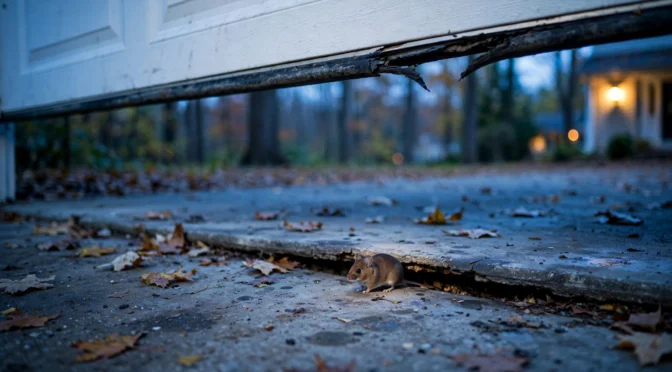
House mice and deer mice are common home-invading mice in Ohio. House mice can live indoors year-round; deer mice usually come from fields and woods as weather cools. Keeping them out takes exclusion: finding and sealing openings about the size of a dime, then trapping mice already inside.

If you have tried everything and still hear scratching in your Oakley attic or garage, check the entry points before buying another repellent. By early November, the seasonal push indoors is already underway.

How Can You Tell a House Mouse From a Deer Mouse?

How Can You Tell a House Mouse From a Deer Mouse?, surethingpc.com

Look at the tail before trusting a photo match. A house mouse has a uniformly gray tail. A deer mouse has a two-toned tail, dark above and white underneath. Observe from a distance rather than trying to handle the animal.

Coat color helps, but habitat gives you another clue about where to inspect.

Feature House mouse Deer mouse
Coat color Gray-brown with a gray or buff belly Brownish back with a clean white belly
Feet Generally not distinctly white White feet
Tail Uniformly gray, about as long as the body Dark above, white below
Where it lives Inside buildings year-round, including wall voids and basements Fields and woods; enters garages and outbuildings in cool weather
Where to check first Foundation gaps and utility openings Garage door gaps and outbuilding entrances

White-footed mice also live in Ohio and resemble deer mice. A white belly and two-toned tail do not reliably distinguish those two species. For exclusion, where the mouse travels matters more than a perfect identification.

Why Does It Matter Which Mouse Is Inside?

Species can point to nearby habitat and health concerns. Ohio State University research published February 3, 2026 found that Lyme disease risk in parts of Ohio now matches Connecticut’s. Infection prevalence in captured blacklegged ticks rose from 2.4% in 2014 to as much as 47.6%; white-footed mice and eastern chipmunks were the most frequently infected reservoir hosts in the study.

That does not mean every mouse carries an infected tick, or that touching a mouse is how Lyme disease spreads. It does make tick prevention worth attention on wooded properties. Our guide to ticks in Ohio this fall and what yard defense can and cannot do explains the yard side of the problem.

Why Do Mice Move Indoors When Temperatures Drop?

Colder nights and dwindling outdoor food push mice toward shelter. In Ohio, that movement generally begins in late September and October. House mice already living inside do not need a cold snap to remain active.

In Oakley, home to roughly 10,500 residents, mouse activity shifts between older residential streets and commercial pockets around Oakley Square and the 20th Century Theater. The wooded corridor along the Wasson Way trail provides travel paths and dense ground cover for deer mice and white-footed mice, especially where residential backyards run up against the path. Once late autumn sets in, these outdoor mice push toward warmth in nearby detached garages and crawlspaces. House mice, by contrast, frequently thrive year-round inside Oakley’s early 20th-century homes, slipping through aging stone foundation joints, mortar gaps, and loose sill plates. Habitat tells you where mice travel from outdoors; your foundation and door seals determine whether they get inside.

Why Do Irish Spring, Peppermint and Lemon Fail Once It Turns Cold?

A scent does not block access to food or shelter. A mouse may avoid an odor briefly and still use the same opening once the scent weakens. Repellents leave the entry problem untouched.

We would put the effort into finding gaps rather than repeatedly replacing scented cotton balls. Ultrasonic devices are no substitute for that inspection either.

Does Irish Spring Soap Repel Rats and Mice?

Do not rely on soap to keep rodents out. It leaves the opening available, along with whatever food or shelter attracted the animal. Check the nearby wall and foundation instead of adding more bars.

Do Mice Like the Smell of Lemon?

Whether mice like lemon is not a useful test of control. A lemon scent cannot prevent a mouse from passing through an open gap. Fresh droppings mean you need to address access and activity, not adjust the fragrance.

Do Peppermint Oil and Sonic Repellers Work?

Peppermint oil is not dependable exclusion, and sonic or ultrasonic repellers lack solid scientific evidence of lasting control. In a home with children or pets, start with inspection and protected trapping rather than exposed poison or sticky traps. Trap placement still needs to keep curious hands and paws away.

Where Do Mice Get In Around Oakley Foundations?

Check openings about the size of a dime, especially where building materials meet. The sill plate, where the wood framing rests on the foundation, is a good starting point. Follow it to utility penetrations and inspect gaps around exterior doors.

Old mortar voids may need masonry repair rather than caulk. Use gnaw-resistant materials such as metal mesh; foam alone is not a durable mouse barrier. Do not simply plug brick weep holes, because they serve a drainage function. Our guide to rodent exclusion and sealing your home for winter covers materials and the fuller inspection checklist.

How Do You Inspect an Attic or Crawlspace Without Handling Mice?

Inspect only areas you can safely reach. Ventilate enclosed spaces before cleanup and wear gloves; a basic dust mask does not make heavy contamination safe to handle. Leave extensive droppings or contaminated insulation to a professional.

  1. Start in the basement with a flashlight. Follow the top of the foundation and check around utility openings for gaps or daylight.
  2. Compare accessible indoor gaps with the same locations outside. Look around vents without blocking ventilation or drainage openings.
  3. In garages and outbuildings, inspect the door sweep and the bottom corners of the garage door first.
  4. Look for droppings along walls and chewed food packaging. Mice feed at multiple spots, so do not assume the first damaged bag marks the only active area.
  5. For limited droppings, do not sweep or vacuum them dry. Wet them thoroughly with disinfectant, allow the label’s contact time, then wipe them up and bag the waste.

Do not enter an attic without secure footing or a crawlspace with unsafe access. An inspection is not worth a fall or exposure to heavy contamination.

When Should a Licensed Professional Take Over?

Sure Thing Pest Control technician smiling in branded service van

Scratching inside inaccessible walls or widespread droppings warrants a professional inspection. If you find chewed wiring, have a qualified electrician assess the damage as well. Trapping mice does not repair an electrical hazard.

Exclusion prevents new arrivals, while trapping addresses mice already inside. Sure Thing Pest Control has been locally owned and family-run since 1997. Our two owners bring over 80 years of combined experience. We offer kid and pet friendly pest solutions and scheduled protection through The Sure Cure pest control programs. For an active indoor problem, our mice infestation control plan for Cincinnati before winter explains the trapping and sealing sequence.

If you are finding fresh droppings, call 513.247.0030 for a free estimate or review our Cincinnati rodent control services before arranging an inspection.

Frequently asked questions

How can I tell a house mouse from a deer mouse?

A house mouse has a uniformly gray tail and a gray or buff belly. A deer mouse has a dark-above, white-below tail with white feet and a white belly. White-footed mice look similar to deer mice, so those markings alone do not distinguish the two.

Does Irish Spring soap repel rats and mice?

Soap is not a dependable way to keep rats or mice out. It does not close entry points or remove food and shelter. Inspect and seal access points rather than relying on the scent.

Do mice like the smell of lemon?

Lemon scent is not a reliable mouse-control method, regardless of how mice respond to it initially. An open entry point remains usable after the scent fades. Exclusion and trapping address the actual problem.

Do ultrasonic pest repellers work on mice?

There is no solid scientific evidence that ultrasonic repellers provide dependable, lasting mouse control. Do not rely on one to clear mice from a wall or attic. Find their entry points and address the mice already inside.

Is it safe to clean up mouse droppings myself?

Limited droppings can generally be cleaned with precautions: ventilate first, wear gloves, and wet the waste thoroughly with disinfectant. Follow the label’s contact time before wiping it up; never sweep or vacuum droppings dry. Heavy contamination or soiled insulation calls for professional assessment.