Category Archives: Pest Control

Will Lysol Kill Ants in Blue Ash? What Sprays Can and Can’t Do

Lysol can kill ants it touches, but it will not eliminate the colony. It is a surface disinfectant, not a labeled ant treatment. For ants returning to your kitchen, bait is usually the better choice because foragers carry it back to the nest, where contact spray cannot reach.

If you have tried everything to keep ants off the counter, another trail can be frustrating. Before spraying again, watch where they enter. That trail gives you a useful clue about the source.

Does Lysol Kill Ants on Contact?

Yes, but killing exposed workers is different from controlling an infestation. Lysol Disinfectant Spray is marketed as killing 99.9% of illness-causing germs on surfaces, not as an insecticide. That germ-killing claim does not establish how well it controls ants.

A direct spray can kill individual ants, but it does not deliver treatment to the queen or workers sheltered in the nest. Even a completely clear counter tells you little about whether the colony is still active.

Why Do Ants Return After Spraying?

Why Do Ants Come Back Bigger After Spraying?, surethingpc.com

Foraging ants leave pheromones, chemical signals that guide other ants toward food. Wiping the trail removes that route marker. Surviving foragers can establish another route, which explains why ants may appear somewhere else after you clean.

The nest also remains active. If the queen survives, she can continue producing workers. More ants after spraying are a reason to change the approach, not spray harder. Our ant inspection and treatment services address the infestation rather than just the visible trail.

What Is Colony Budding, and Can Spraying Cause It?

Budding happens when part of a colony separates to establish another nest. In species with multiple queens, disturbance can encourage this split. Odorous house ants are one example.

Repellent sprays can drive ants away from a treated spot without eliminating them. For species prone to budding, that disturbance can make treatment more complicated. Not every spray application creates new nests, but spraying the trail is a poor first choice when you do not know which ant you have.

Which Ants Invade Cincinnati Kitchens, and Which Ones Split?

Odorous house ants are common indoor ants in the Midwest. Their colonies can have several queens, which helps explain why treating only the workers on a counter may provide little lasting relief. Identifying the species matters before choosing a treatment.

For a Blue Ash homeowner, the practical inspection starts where the trail meets the building. Look closely at plumbing penetrations beneath the sink, then check accessible foundation gaps outside. Ants entering through an opening do not necessarily nest beside it; follow the route as far as you safely can.

Argentine ants also form multi-queen colonies, but their behavior should not be used to identify ants in your kitchen. A study about that species can explain how bait works without proving that the ants in your home are Argentine ants.

What Should You Do Instead When Ants Show Up on the Counter?

Remove competing food and find the entry route before choosing a product. Avoid spraying ants you intend to bait, since the foragers need to survive long enough to carry bait back.

  1. Put food in closed containers and wipe up sticky spills. Pick up leftover pet food rather than leaving it available to foragers.
  2. Follow the trail to its entry point. Check around plumbing and inspect accessible gaps along the foundation.
  3. Clean food-contact surfaces with soap and water. This removes trail signals, but it does not treat the nest.
  4. Use an ant bait according to its label if activity continues. Keep spray cleaners away from the bait and its approach route.
  5. Seal accessible entry gaps as part of prevention, and keep monitoring for activity elsewhere.

Vinegar can remove trail signals, but it will not eliminate a hidden colony. Diatomaceous earth kills insects by absorbing oils from their outer covering; its dust can irritate airways and should not be inhaled. Neither is a substitute for reaching the source of a recurring infestation.

How Long Does Ant Bait Take, and Is It Safe Around Pets?

Expect several days to a couple of weeks before activity drops, depending on the colony and product. Slow action is the point: foragers need time to carry the material back and share it. A product that kills them before they return cannot do that job.

A University of California, Riverside study published in 2026 found that Argentine ant workers exposed to thiamethoxam bait became unusually active outside the nest before dying. Boric acid bait produced different behavior and killed about 90% of workers within roughly two weeks. Those were findings for the studied ants and conditions, not a promise for every household infestation.

More ants around bait usually mean they are feeding on it. That alone does not mean the treatment has failed.

Watch the trend over several weeks, not the first busy afternoon.

No insecticide should be treated as harmless around children or pets. Read the label before buying, use only the permitted placement, and keep bait inaccessible to children and animals. Keep it away from food-preparation surfaces, and store unused product securely.

When Should You Stop Treating Ants Yourself and Call a Pro?

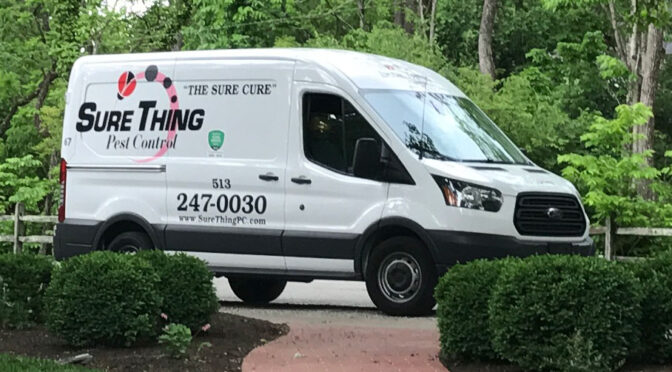
Sure Thing Pest Control white service van parked in a residential driveway.

Ask for an inspection if ants keep returning after two or three weeks of consistent baiting and cleanup. Call sooner if they repeatedly emerge from wall or floor openings you cannot inspect. Those routes can conceal nesting sites that require a different approach.

Suspected carpenter ants also warrant an inspection because they excavate wood and can damage it. Our carpenter ant extermination page covers treatment for that problem.

Sure Thing Pest Control is locally owned and family-run, operating since 1997. Our owners bring over 80 years of combined pest control experience. We offer kid and pet friendly treatments for homes and commercial properties, with ongoing scheduled protection available through The Sure Cure.

If ants keep returning in your Blue Ash home, call 513.247.0030 for a free estimate or request an ant-control quote. Tell us where the ants appear and which products you have already used.

Frequently asked questions

Does Lysol kill ants instantly?

Lysol can kill ants on contact, but you should not expect a guaranteed instant result. It is a surface disinfectant, not a labeled insecticide, and it does not eliminate the hidden colony.

Will spraying Lysol keep ants from coming back?

No, spraying Lysol is not a reliable way to prevent returning ants. It may remove trail signals, but surviving ants can establish new routes while the colony remains active. Removing food sources, using appropriate bait and sealing entry gaps offer a better approach.

How long does ant bait take to work?

Ant bait can take several days to a couple of weeks before activity drops. Foragers must carry the slow-acting material back to the colony, so increased activity around fresh bait can be normal. Seek an inspection if ants continue returning after two or three weeks of consistent baiting and cleanup.

Are ant baits safe for pets and children?

Ant baits must be placed and stored where pets and children cannot access them, following the product label. A bait station is not permission to leave insecticide within reach. Sure Thing Pest Control offers kid and pet friendly treatments if you prefer professional treatment.
Pest Control Programs vs One-Time Sprays in Hyde Park: Cost and Coverage

A pest control program is a scheduled plan to treat existing pests and prevent them from returning by treating the pests you already have and watching for new activity. For Hyde Park homes with recurring seasonal problems, especially older properties near Hyde Park Square or Ault Park, it can make more sense than a single visit. One isolated wasp nest may need only one treatment.

If you have tried everything and pests keep returning, check whether the treatment addresses their source. Another application will not close the gap mice use to enter your basement. Before buying recurring service, get the covered pests and visit schedule in writing.

Why does a spring treatment stop working by October?

Why Does a Spring Treatment Stop Working by October?, surethingpc.com

An exterior treatment has a limited protection window. Weather and ground contact wear down the residue on foundations and nearby soil. Depending on the product and conditions, protection may last weeks to a season, not an entire year.

As fall nights cool across Hyde Park, home to roughly 14,000 residents, mice look for shelter from the mature tree canopy along streets near Observatory Avenue and Erie Avenue. In historic homes with older stone or brick foundations, rodents enter through gaps around utility lines, mortar joints, or where siding meets the sill plate. Those openings may have been there all summer. A spring application does not close them.

Stink bugs also seek shelter as temperatures fall, often gathering on sunny exterior walls. Prevention needs to happen before they settle inside.

What should you compare before you choose?

Compare the work included, rather than the name of the plan. Ask these questions about either option:

  • How many visits are included, and when? Two spring visits do not provide a year-round service schedule.
  • What happens at each visit? Find out whether entry-point inspection or sealing is included alongside treatment.
  • Which pests are covered? Get their names, rather than relying on “general pest control.”
  • What happens if pests return? Confirm any additional charge and the length of any retreatment guarantee.
  • How does the agreement end? Read the renewal and cancellation terms before signing.

For a one-time job, confirm whether follow-up treatment is included. “One-time service” does not tell you what happens if the original problem remains.

How do the two options compare side by side?

Cost depends on the pest and the work needed to address it. Compare the total price over the agreement’s term, including any separately quoted exclusion work, rather than comparing a single-visit price with a monthly payment.

The 2025 Pest Control Industry Cost Study found that recurring revenue accounted for 74% of income among 246 surveyed U.S. pest management companies in 47 states. Recurring service is common, but that does not make it the right purchase for every home.

Criterion One-time spray or visit Scheduled program
Visit schedule Service for a defined problem; confirm follow-ups Recurring visits on an agreed schedule
Work performed Treatment directed at the identified pest Ongoing treatment and monitoring as specified
Coverage window Depends on the treatment and conditions Maintained through the period the agreement covers
Pests covered The pest named in the service agreement The pests listed in the plan
Sealing entry points Confirm whether included or quoted separately Confirm whether included or quoted separately
Additional visits Check the follow-up terms Check between-service charges and retreatment terms
Renewal and cancellation Check for any continuing obligation Read automatic-renewal and cancellation provisions
Cost comparison Total price for the defined job Total price over the agreement’s term

When is a one-time visit the right call?

A single wasp nest under an eave may call for one targeted service, not year-round treatment. An isolated ant problem may also suit a one-time visit if the source can be identified and addressed.

  • The advantage: you pay to address a defined problem without committing to recurring service.
  • The limitation: treatment for that pest does not provide protection against next season’s problems.

Ask for an inspection-based recommendation rather than assuming every sighting needs a program. Our bee and wasp control and ant control pages explain those services.

What does a program cover through the four pest seasons?

Hyde Park’s seasonal concerns include spring swarmers, summer stinging insects, fall overwintering bugs, and winter rodents seeking shelter in older basements. A recurring plan should explain when inspections happen and which of these pests it covers. Year-round service does not automatically mean every pest is included.

The Sure Cure provides ongoing scheduled protection. Confirm its covered pests and treatment schedule before signing, and ask whether any exclusion work requires a separate quote. A recurring pattern, such as mice each fall, warrants attention to entry points as well as treatment.

Sealing the entry points

A mouse sighting tells you to look for an entry route. Exclusion means closing those routes so rodents cannot keep coming back. Inspect foundation gaps and utility penetrations, then address mice already indoors through trapping.

Do not indiscriminately seal building openings designed for ventilation or drainage. Ask what material will be used and how the repair preserves the opening’s function. Our rodent exclusion and mice infestation control pages explain this work.

Monitoring and interior trapping

Mice reproduce quickly, so removing one does not establish that an infestation is over. Trapping and continued checks help determine whether activity has stopped after entry points are addressed.

Avoid sweeping or vacuuming dry droppings, which can put contaminated particles into the air. Use appropriate disinfectant and gloves for cleanup, and seek professional guidance for extensive contamination or affected insulation. Our rodent control and stink bug control pages cover these different shelter-seeking pests.

How long does an exterior barrier actually last?

There is no single lifespan for every exterior treatment. The product and how much weather the surface gets both affect how long it remains effective. A protected application beneath an overhang does not face the same conditions as an exposed foundation.

Ask when reassessment or retreatment is due. That interval should follow the product label and conditions at your property, not a blanket promise that one spring treatment lasts through October.

What happens when pests come back between visits?

The agreement should say whether additional visits are included for covered pests. If they are not, ask what they cost. Also check how long any retreatment guarantee lasts and whether a different pest requires separate service.

Report new activity with its location and date. Mice appearing in an attic after basement trapping may require a different inspection route, rather than simply repeating the original treatment.

What should you ask before you sign a program?

What Should You Ask Before You Sign a Program?, surethingpc.com

A written scope is the document you keep after the sales call, so it should answer your questions without anyone having to remember what was said. Go through the points below before you sign, and get any answer that is not in writing added to the agreement.

  • When are the scheduled visits? Check which seasons the agreement covers.
  • Are your pests named? Do not assume termites or rodents are included.
  • Is exclusion included? Ask which openings will be addressed and what costs extra.
  • What happens between visits? Check charges and retreatment conditions.
  • How do you cancel? Read any notice requirements and automatic-renewal terms.
  • What precautions apply? Get product-specific instructions for children and pets before treatment.

Once those answers are in writing, the choice between a program and a one-time visit gets simpler. A single page that names the pests, the visits and the exit terms tells you more than a lower first price does.

Which option fits your home?

Use the pattern of activity to guide the decision:

  • One isolated, identified problem: consider targeted service.
  • Pests returning season after season: consider recurring protection that addresses the source.
  • Mice inside walls or signs of wood-destroying insects: start with a professional inspection.

Tell the technician where you found activity and when it started. Photos can help distinguish a single event from evidence of an established infestation.

Sure Thing Pest Control has been locally owned and family-run since 1997. The two owners bring over 80 years of combined experience, and our background-checked technicians complete over 40 hours of additional training annually. You can meet the team. For a free estimate on the problem at your home, call 513.247.0030 or describe it through our contact page.

Frequently asked questions

How much does a one-time pest control treatment cost compared to a scheduled program?

The price depends on the pest and the scope of work, so a single number would mislead you. Compare the one-time job’s total cost with the program’s total cost over its agreement term, including any separate exclusion charges. Sure Thing Pest Control offers free estimates.

What is included in The Sure Cure recurring protection plan?

The Sure Cure provides ongoing scheduled pest protection. Confirm the covered pests and visit schedule in the written agreement, and whether sealing is included. The pest control programs page provides an overview.

Do I have to pay again if pests come back between scheduled visits?

That depends on your agreement and whether the returning pest is covered. Check whether additional visits are included, along with any charges or retreatment deadlines. Do not assume every return visit is free.

How long does an exterior pest control barrier actually last?

Exterior treatments may provide protection for weeks to a season, depending on the product and exposure. Weather and the treated surface affect performance. Ask your technician for the label-based retreatment interval appropriate to your property.

Are pest control program treatments safe for kids and pets?

Sure Thing Pest Control offers kid and pet friendly treatments, but precautions still apply. Ask where products will be placed and how long children and pets must stay away from treated areas. Follow the product instructions on drying time and when it is safe to re-enter.

Commercial Pest Management in Cincinnati: What Auditors Ask For

Commercial pest management is a written program that keeps pests out and records every check, including the empty ones. For a Cincinnati facility preparing for an audit, traps alone are not enough. Auditors typically ask for a current device map, dated inspection logs and proof that you corrected problems and reviewed activity over time.

If you have tried adding traps but sightings keep returning, check the entry route before adding another device. In Greater Cincinnati and Northern Kentucky, late October is a useful time to inspect loading docks as falling overnight temperatures push rodents toward shelter.

Why Late October Is the Walk-Through Window

Rodents are active year-round, but fall cooling and declining outdoor food make buildings more attractive. A loading dock left open during unloading provides access even when the rest of the building is well sealed.

Walk the building before cold weather settles in. If an audit is approaching, allow time to replace worn seals and verify that repairs hold rather than leaving defects for the week of the inspection.

Loading Docks and Overhead Doors Come First

Loading Docks and Overhead Doors Come First, surethingpc.com

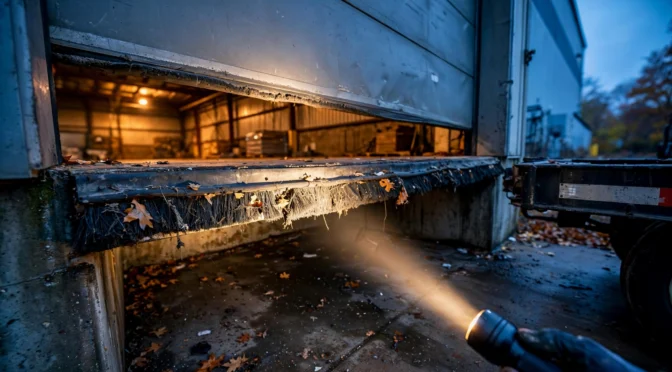
Walk the dock at night with a flashlight when freight traffic has stopped. Check closed doors closely, especially at the corners where seals pull loose.

  1. Inspect the full width of each overhead door’s bottom seal. Look for gaps between the seal and the floor.
  2. Check the ends of brush seals where the floor meets the door track.
  3. Inspect the gap where the dock leveler lip meets the pit, including nearby seals damaged by equipment.
  4. Check sweeps on personnel doors that open outside.
  5. Look for droppings along wall edges. Chewed material and greasy rub marks also warrant inspection.
  6. Record each defect’s location and date, including repairs completed during the walk.

Pay particular attention to corners and the space under the leveler lip. A seal that looks intact from several feet away may have an opening at one end.

Pipes, Conduit and Door Frames Are the Openings Most Walks Miss

Mice can pass through openings much smaller than most people expect. Rats also use gaps around utility penetrations, so an inspection that stops at the overhead doors leaves entry routes unchecked.

Follow utility lines where they enter the building, checking both sides of the wall where accessible. Inspect around exhaust housings and at the base of door frames. Treat each unsealed penetration as a possible entry point rather than judging it by how small it looks.

Use durable, rodent-resistant repairs appropriate to the opening, such as metal flashing or a cement-based patch. Foam alone is not a dependable rodent barrier. Exclusion means closing the route pests use, not simply placing a trap beside it.

How Often Stations and Traps Should Be Checked and Where They Go

Set the inspection frequency with your provider based on facility risk and audit requirements. Get the agreed frequency in writing. A workable schedule followed consistently is better than an ambitious one with missed checks.

  1. Document the inspection cadence for exterior stations and interior traps.
  2. Give each device a unique number that matches the site map.
  3. Review coverage near loading docks and mechanical rooms, using likely pest travel routes to guide placement.
  4. Ask your provider to assess poorly placed or redundant devices. An empty trap alone is not a reason to remove it.
  5. Compare the map with the floor whenever devices move and during scheduled program reviews.

A map cannot explain coverage if it shows stations that are missing or leaves installed devices unmarked. Correct those mismatches before reviewing activity trends.

For activity around the building, our Cincinnati rodent control service includes trapping and exclusion to address mice and rats at their source.

Why Bait Stays Out of Food and Storage Zones

Keep rodent bait out of food-contact and product-handling zones. In food and healthcare facilities, integrated pest management starts with exclusion and sanitation, supported by monitoring. Pesticide decisions must follow the product label and the facility’s requirements.

Multi-catch traps can monitor rodent activity without introducing toxicant where product is handled. Pheromone monitors serve a different purpose: detecting particular insect pests. Exterior bait stations may be appropriate away from product areas, with placement determined by a licensed technician.

Which Records an Auditor Asks to See First

Which Records an Auditor Asks to See First, surethingpc.com

Auditors typically ask for evidence of an ongoing program, not just a clean service ticket. Keep these records together so someone unfamiliar with the building can follow what was checked and what changed.

  1. Keep a site map that numbers every device and shows its actual location, with the date it was last verified.
  2. Keep the agreed inspection schedule and name the person responsible for each check.
  3. Record each check on a dated line with the checker’s initials, and write “no activity” for empty checks.
  4. Document each sighting or defect, the response and who verified completion.
  5. Review activity by device and area over time, and record the changes made in response.
  6. Keep dated descriptions of work performed, along with pesticide application records.
  7. Keep licensing documentation for every applicator. The Ohio Department of Agriculture regulates Ohio commercial applicators, and the Kentucky Department of Agriculture regulates Kentucky applicators.

Record problems even when they are fixed immediately. A sighting followed by a documented response shows how the facility handled it; repeated activity without review leaves the cause unresolved. Confirm record-retention requirements with the authorities and audit program that apply to your facility.

Which Logs Show a Trend, Paper or Electronic

Either format can support an audit when records are complete and retrievable. Electronic logging makes it easier to compare activity across quarters, but software does not replace a completed inspection.

Feature Paper log Timestamped electronic log
Completeness Requires a completed entry for every check Scanning can help track completed checks
Retrieval during an audit Requires organized, accessible files Search tools can retrieve dates or devices
Trend across quarters Usually requires manual compilation Reporting tools can chart activity
Corrective actions linked to a sighting Requires clear cross-references May link actions directly to the record

Before choosing a format, ask your provider to show how you would retrieve a device’s history and its corrective actions. Check that the report includes empty inspections, not just visits with activity.

Why Sanitation Comes Before Adding More Devices

At a food facility, spilled product beneath racks can keep feeding rodents after traps are installed. Inspect dock staging areas for accessible food and standing water. Clear clutter that blocks inspection along walls, and assign responsibility for correcting each condition.

More devices do not automatically improve control. Every added station needs inspection and a record; a crowded map with missed checks is less useful than a well-placed system maintained consistently.

When to Call a Licensed Technician and What to Ask Them

Call a licensed professional when you find rodent signs in a mechanical room or sightings continue after sanitation and exclusion work. The next step is diagnosing access and activity, not adding traps without a placement plan.

Before service begins, ask which records you will receive and how trend reviews will be delivered. Sure Thing Pest Control is locally owned and family-run, and its owners bring over 80 years of combined pest control experience. Our technicians are background checked and complete over 40 hours of additional training annually.

Our commercial pest control plans are customized for local businesses, with ongoing scheduled protection available through The Sure Cure. Call 513.247.0030 for a free estimate and to discuss your facility’s pest activity and audit documentation needs.

Frequently asked questions

How often should exterior rodent stations and interior traps be checked?

There is no single inspection frequency for every facility. Agree on a written schedule with your provider based on pest risk and your audit program, then record every check, including those with no activity.

Does a clean service visit pass a pest audit?

A clean visit alone does not demonstrate an ongoing pest management program. Auditors typically ask for device-check logs, documented corrective actions and evidence that activity has been reviewed over time.

Can rodent bait be used in a food plant or warehouse?

Bait may have a role in a facility’s program, but keep it out of food-contact and product-handling zones. A licensed technician should determine placement under the product label, and exclusion and sanitation should come first.

Which pest control records should be kept for an audit?

Keep a current device map and inspection schedule, along with the logs and service records that show every check and fix. Include trend reviews, pesticide application records and each technician’s license. Confirm retention periods with your applicable regulators and audit program.

Pest Control Landlord Duties: Who Pays in Ohio and Kentucky

For a landlord, pest control costs usually fall on the owner when the problem comes from the building itself, such as a gap in a foundation or a shared plumbing chase. Tenants may be responsible when their conduct caused the infestation, but a sighting alone does not establish fault. In an Ohio rental, who pays turns on what caused the problem and what the lease and applicable law say.

If you have tried everything to keep mice out of a shared basement laundry room, start with the building’s entry points, not the apartment that reported the mouse. This is practical pest-management guidance, not legal advice. Confirm payment disputes and rent remedies with a local attorney.

A Mouse in October Calls for a Building Inspection

As October nights cool in Greater Cincinnati, mice seek shelter indoors. A gap around a utility line can give them access to a heated basement and the wall spaces above it. The apartment where someone spots a mouse may not be where it entered.

Start in the shared basement and follow utility lines toward the outside. Check the laundry room for leaks and the trash area for accessible food. Treating one apartment without checking those conditions can leave the source untouched.

The Landlord Does Not Always Pay for Pest Control

Sure Thing Pest Control white service van parked in a residential driveway.
Treating Only the Unit That Called Fixes It, surethingpc.com
A Mouse in October Is Just a One-Off, surethingpc.com

Ohio Revised Code Section 5321.04 sets out landlord duties, including keeping premises fit and habitable and common areas safe and sanitary. Section 5321.05 assigns tenants duties for sanitation and proper waste disposal. Neither duty makes the person who first reports a pest automatically responsible for the bill.

A foundation opening is a building repair. Food waste left inside a unit is a housekeeping issue. Both can contribute to the same infestation, so an inspection should document the entry point and the conditions supporting the pests before anyone assigns fault.

Read the current statute and lease before agreeing to pay or refusing a charge. A pest inspection can help establish the source; it does not decide legal liability.

A House and an Apartment Building Have Different Conditions to Check

Renting a whole house does not automatically make the tenant responsible for structural entry points. The tenant controls daily housekeeping, while the owner generally controls building repairs. In a duplex or apartment building, shared spaces add another place to investigate.

For a Greater Cincinnati landlord managing different property types, separate maintenance responsibilities from tenant housekeeping. These are practical inspection priorities, not a legal ruling on who owes a bill.

Location Building conditions for the owner to address Conditions the tenant controls
Single-family house Structural defects, such as a broken foundation vent or an opening around a utility line Food storage and household waste
Duplex Openings in shared walls or utility chases Food and waste handling inside their unit
Four-unit building Shared basement conditions and openings around plumbing stacks Unit cleanliness and scheduled trash removal

Treating Only the Unit That Called Can Leave the Source Untouched

Roaches and mice can travel through shared wall spaces and openings around pipes. In an older Cincinnati rental with a common basement, inspect those routes and assess nearby units rather than assuming the infestation stops at the complaining tenant’s door.

Repeatedly treating one apartment while leaving an active source next door wastes money. Repair entry points and address shared-room conditions alongside targeted treatment. For treatment options, see our cockroach extermination service.

Tenant-Caused Problems Still Need Evidence

A tenant may be responsible for costs when their conduct caused an infestation, subject to the lease and applicable law. Document the actual condition rather than assuming that pests prove poor housekeeping. A dirty kitchen can support roaches, but finding roaches does not establish where they originated.

Bed bugs require particular care because they can travel with belongings or move between units. A sighting does not prove who introduced them. Record the move-in condition and keep dated pest reports so the timeline is clear. For identification and treatment information, see our bed bug extermination page and our guide to bed bug marks on sheets.

Can a Tenant Stop Paying Rent Until the Roaches Are Gone?

Do not simply stop paying rent. Ohio has a formal rent-escrow process, and missing a requirement can hurt a tenant’s position even when the infestation is real.

  1. Notify the landlord in writing. Describe the pest problem and where you found it.
  2. Keep proof of delivery and give the landlord the legally required opportunity to address the condition.
  3. Ask legal aid or an attorney to confirm the requirements before taking any rent-escrow step.

Ohio Revised Code Section 5321.07 governs this remedy. The required timing is not an open-ended “reasonable time” in every case, so do not use this article as a withholding checklist.

Waiting Until Fault Is Proven Makes It Worse

Arrange an inspection and necessary treatment while the payment question is being resolved. Leaving an active infestation untreated can allow it to spread into other units. Keep the treatment decision separate from any later request for reimbursement.

Report sightings in writing as soon as you find them, with the room, the date and a photo if possible.

Kentucky Rentals Follow Kentucky Law, Not Ohio Law

For rentals across the river in Burlington or Fort Mitchell, do not apply Ohio’s rent-escrow procedure. Kentucky’s landlord-tenant provisions appear in KRS Chapter 383, but which provisions apply can depend on local adoption and the property’s circumstances.

Confirm the local rules before assigning costs or withholding rent. The practical inspection still starts with the source: a shared building opening needs repair, while accessible household waste needs removal. For the communities we cover, see our service areas page.

A Paper Trail and a Recurring Plan Help Manage the Building

A mouse can squeeze through an opening roughly the width of a pencil. Trapping removes mice already inside; exclusion means closing the openings that let them enter. Our rodent exclusion guide explains that work.

What to Check Before Another Treatment

Inspect the building conditions that can keep an infestation going. Fresh pest activity near a repaired opening also deserves another look.

  • Unsealed gaps around utility lines and exterior doors
  • Leaks or standing water in shared rooms
  • Accessible waste in the common trash area

What to Keep in One File

Ask for a written report after each service visit. It should distinguish what the technician found from what still needs investigation or repair.

  • Service reports that say what was found and what was done
  • Dated photos of pest evidence and completed repairs
  • Repair invoices
  • Move-in condition notes and tenant reports

If a city inspector is involved, ask the responsible agency what documentation it requires. Treatment records show what was done, but they do not establish compliance by themselves.

What a Recurring Plan Covers

A multi-unit pest plan should match the building’s conditions. It may include exterior treatment and monitoring, with targeted work in shared rooms. Follow-up inspections help determine whether activity has stopped or whether another source needs attention.

Sure Thing Pest Control is locally owned and family-run, operating since 1997. The owners bring over 80 years of combined pest control experience. We offer kid and pet friendly treatments, recurring commercial plans and ongoing scheduled protection through The Sure Cure.

For a shared-basement problem or repeat complaints across units, ask about our commercial pest control program. Call Sure Thing Pest Control at 513.247.0030 for a free estimate, and describe where pests have been reported and what repairs or treatments have already been tried.

Frequently asked questions

Under Ohio law, is a landlord always required to pay for pest control?

No. Ohio law assigns landlords habitability and common-area duties, while tenants have sanitation and waste-disposal duties. Who pays for a particular bill depends on what caused the problem and what the lease says, not simply where someone saw a pest.

Can a tenant withhold rent in Ohio over a roach or rodent problem?

Ohio provides a formal rent-escrow remedy for qualifying situations, not blanket permission to stop paying rent. Notice and court-deposit rules matter. Confirm the current requirements under Ohio Revised Code Section 5321.07 with legal aid or an attorney before acting.

Who pays for an exterminator in a rental in Kentucky?

Payment depends on the cause of the infestation, the lease and the Kentucky rules applicable to that property. Local adoption of landlord-tenant provisions can affect the analysis. Ask a local attorney before withholding rent or accepting a disputed charge.

Is a landlord responsible for mice in a shared basement or laundry room?

Generally, the landlord should address pest-supporting conditions in common areas under the owner’s control. That includes investigating building entry points and arranging necessary repairs or treatment. A mouse sighting in a shared room does not, by itself, prove which tenant caused the problem.

What should a landlord keep to show a city inspector that pest control is in place?

Keep dated service reports, photos and repair records together with tenant notices and move-in notes. The file should show what was found, what was treated and which corrections were completed. Ask the enforcing agency about its specific requirements; records alone do not guarantee compliance.

Brown Recluse Spiders in Ohio: How to Tell Them From Lookalikes

Brown recluse spiders are rare in Ohio, with established populations mainly in the southwest near the Indiana border. A brown spider in a Cincinnati basement is more likely to be a harmless lookalike. Check the eyes before deciding: a brown recluse has six, arranged in three pairs, while most spiders have eight.

Finding a spider while moving a storage box is reason to pause, not to assume the worst. Keep your hands clear and get a photograph if you can do so safely. Color alone will not tell you what you found.

Are Brown Recluse Spiders Really Found in Cincinnati?

Yes, but they are uncommon. Ohio’s established populations are mainly in the southwestern corner near Indiana, and Cincinnati sits in that part of the state, so a recluse here is possible. Being closer to the population still does not make it common. That does not make every tan basement spider a likely recluse.

When brown recluses are found in Ohio, they are usually indoors, where sheltered storage spaces provide places to hide. They avoid people and generally bite when pressed against skin, such as inside clothing or gloves. Identify the spider before deciding what treatment, if any, is needed.

Why the Eyes Matter More Than Color

Why Counting the Eyes Settles Most Sightings, surethingpc.com

The eye arrangement is the most reliable field mark, but it takes a clear, magnified view. Six eyes alone do not confirm a brown recluse; other features must match too. Do not handle a live spider to get a closer look.

  1. Use good light and magnification. A sharp close-up photograph may be easier to examine than a moving spider.
  2. Count the eyes. A brown recluse has six, arranged in three pairs at the front of the head.
  3. Check the arrangement. The pairs form a tight arc. Eight eyes rule out a brown recluse.
  4. If the eyes are unclear, leave the identification open. Follow the photo and specimen steps below rather than guessing.

Find the Violin on the Front Body Section, Not the Belly

The violin marking is on the cephalothorax, the front body section where the legs attach. It is not on the abdomen. Looking for a pattern on the spider’s rear body section can send the identification in the wrong direction.

A violin-like mark does not confirm a recluse, and a faint marking is not enough to rule one out. Check the eyes and legs together rather than relying on a shape that lighting can make difficult to read.

Compare Legs, Body and Web Against the Usual Lookalikes

Wolf spiders, funnel weavers and cellar spiders account for many mistaken sightings. A heavy body or obvious leg spines points away from a recluse. A nearby web can help, but do not assume a spider built a web just because it is beside one.

Feature Brown recluse Wolf spider Grass or funnel weaver Cellar spider
Eyes Six, in three pairs in a tight arc Eight Eight Count varies by species; do not identify by count alone
Legs Long and thin, with fine hairs and no obvious spines or dark bands Thicker, hairy and spiny Slender; appearance varies by species Extremely long and thin
Body Pale brown to reddish brown Heavier-bodied Flat and brownish Small compared with its legs
Web Irregular silk in sheltered spaces Hunts on the ground rather than using a prey-catching web Sheet web with a funnel Loose, tangled web in a corner
Behavior Hides in dark, sheltered spots and avoids people Runs across floors and retreats from people Moves quickly across floors Usually stays near its web; rarely bites

Mahoning County Public Health in northeast Ohio, as quoted by WKBN, calls the brown recluse the most commonly misidentified spider. That warning is useful in Cincinnati too: a brown color and quick movement are not enough to identify one.

What to Do When You Still Cannot Tell

A clear photograph is more useful than a crushed specimen. Keep your distance if capturing the spider would mean reaching into clutter or handling it.

  1. Photograph it from above and from the front. Use bright light and include an object for scale without placing your fingers beside it.
  2. If you can safely contain it without touching it, use a clear, sealed container. Ask a pest professional or local extension office about identification.
  3. Note where you found it. Repeated sightings in one storage area give an inspector somewhere specific to start.

Recurring spiders usually point to an insect food supply, not to the spider itself. An inspection should look beyond the spider to moisture, clutter and entry gaps, rather than treating only the spot where it appeared. A single spider in a basement corner is a lead for the inspector, and a pattern of sightings in one storage area is a stronger one.

When Is a Spider Bite a Reason to See a Doctor?

A recluse bite may not hurt at first. If a suspected bite becomes increasingly painful or the redness spreads over the following hours, seek medical care promptly. A skin lesion alone cannot identify the spider responsible.

  1. Wash the area with soap and water and apply a cold pack wrapped in cloth.
  2. Record when you noticed the bite and photograph changes.
  3. Seek medical advice if symptoms worsen rather than waiting to confirm the spider.
  4. Call emergency services for trouble breathing or another severe reaction.

Bring a safely contained specimen or a clear photograph if you have one, but do not delay care to catch the spider. For a child, contact their medical provider; for a pet, call a veterinarian. Avoid diagnosing a bite from an online photograph.

Why Spiders Show Up in Basements in October

Why Spiders Show Up in Basements in October, surethingpc.com

An October sighting does not establish that a spider just moved indoors for winter. Basements provide shelter and insect prey, and moving seasonal storage can expose a spider that was already there.

Cardboard and stored clothing

Cardboard and undisturbed clothing give spiders places to hide. Clutter also shelters insects they eat. Wear gloves when moving stored items, and shake out clothing or shoes that have been left in sheltered outdoor spaces before putting them on.

Moisture and the insects spiders eat

Damp conditions support some of the insects spiders follow. Check for leaks and condensation, and use a dehumidifier where needed. Reducing that food supply does more over time than repeatedly spraying visible spiders.

For entry gaps, see our guide to rodent exclusion and sealing your home before winter. Smaller openings around pipes or doors also deserve attention because insects and spiders can use them.

How to Cut Spider Food Without Fogging

Sure Thing Pest Control technician smiling in branded service van

If you have tried everything and spiders keep returning, start with the storage area rather than another spray. Clearing cardboard and reducing moisture address the conditions that keep the problem going.

  • Replace cardboard boxes with sealed plastic bins.
  • Keep storage off the floor and away from walls so you can inspect and clean behind it.
  • Correct leaks and reduce basement dampness.
  • Vacuum webs and the undisturbed edges of storage areas.
  • Seal accessible gaps around pipes and other entry points.

Skip broad-spectrum aerosol foggers. They do not reliably reach the cracks where spiders hide and can leave pesticide residues on exposed surfaces. Targeted treatment, when needed, should follow identification and inspection.

Sure Thing Pest Control has been locally owned and family-run since 1997. Our two owners bring over 80 years of combined pest control experience. Our licensed, certified technicians are background checked and complete over 40 hours of additional training annually.

For recurring spiders in Greater Cincinnati or Northern Kentucky, call 513.247.0030 for a free estimate, or review our Cincinnati spider control services. We offer kid and pet friendly treatments, with ongoing scheduled protection through The Sure Cure among our pest control programs.

Frequently asked questions

Does living in Northern Kentucky change how I identify a suspected recluse?

No. The identifying features are the same on either side of the Ohio River: six eyes in three pairs, slender legs without obvious spines, and fairly uniform coloring. Location alone cannot confirm a recluse, so get a clear photograph or professional identification if you are unsure.

Are brown recluse bites dangerous to children and pets?

A suspected recluse bite deserves medical or veterinary advice because tissue injury can develop after the bite. Contact a child’s medical provider or your veterinarian if symptoms appear or worsen. Trouble breathing or another severe reaction requires emergency care.

What should I do if I think I found a brown recluse in my house?

Keep your hands clear and photograph it from above and from the front if you can do so safely. Contain it only if that does not require touching it or reaching into a hiding place. Ask a pest professional or extension office to help identify it before choosing treatment.

Are there any poisonous spiders in Ohio?

Ohio has spiders with medically significant venom, including brown recluses and black widows. “Venomous” is the accurate term because they deliver venom through a bite. Most spiders found in Ohio homes are not harmful to people, and a brown spider is not automatically a recluse.

Do cardboard boxes attract spiders?

Cardboard provides hiding places for spiders and some insects they eat. Undisturbed boxes against basement walls are especially difficult to inspect and clean around. Replace them with sealed plastic bins and leave enough space to vacuum behind stored items.

Spring Pest Prevention Tips for Cincinnati Homes with Sure Thing Pest Control

Spring in Cincinnati, Ohio, is a time of growth, warmer weather, and — unfortunately — increased pest activity. As temperatures rise, ants, spiders, mosquitoes, and other pests start seeking food, water, and shelter, making spring the perfect time to take preventive action. With help from Sure Thing Pest Control, homeowners can protect their property and keep pests at bay all season long.

1. Inspect and Seal Entry Points

Pests often enter homes through small cracks, gaps, and openings around doors, windows, and foundations. Spring is a great time to:

  • Seal gaps around doors and windows
  • Repair damaged screens on windows and vents
  • Inspect your foundation and exterior walls for cracks

These preventive steps can stop ants, spiders, rodents, and other seasonal pests from invading your home. Sure Thing Pest Control can perform a professional inspection to identify less obvious entry points and provide targeted solutions.

2. Keep Yards and Landscaping Maintained

Spring cleaning isn’t just for your home’s interior — it’s crucial for your yard too. Piles of debris, tall grass, and dense vegetation provide perfect hiding spots for pests. To reduce infestations:

  • Remove leaves, branches, and clutter from your yard
  • Trim bushes and trees away from the house
  • Keep mulch and soil beds away from direct contact with your home’s foundation

Proper yard maintenance not only improves curb appeal but also helps prevent ants, spiders, and other pests from moving indoors.

3. Protect Food and Water Sources

Pests are drawn to accessible food and water. In the spring, sugary ant baits, bird feeders, pet food, and open trash cans can attract unwanted guests. Simple preventive steps include:

  • Store food in sealed containers
  • Keep trash bins tightly closed
  • Clean up standing water to reduce mosquito breeding

Sure Thing Pest Control also provides barrier treatments that minimize pest access to these attractants around your home.

4. Use Professional Spring Pest Control Services

While DIY measures help, professional pest control is the most effective way to prevent infestations. Sure Thing Pest Control offers:

  • Exterior barrier treatments for ants, spiders, and other seasonal pests
  • Inspections to identify early signs of infestations
  • Customized prevention plans for Cincinnati homes and businesses

5. Monitor and Maintain

Even after initial treatments, ongoing vigilance is key. Schedule regular inspections, monitor potential problem areas, and address minor issues before they become major infestations.

Conclusion

Spring is a beautiful season in Cincinnati, but it’s also prime time for pests. Taking preventive measures now can save you headaches, damage, and unnecessary costs later. Partnering with Sure Thing Pest Control ensures your home is protected with professional inspections, barrier treatments, and ongoing monitoring for a pest-free spring.

Mice Control in Cincinnati, Ohio: Protect Your Home with Sure Thing Pest Control

Mice infestations are a common problem in Cincinnati, Ohio, and they can cause serious damage to homes and businesses. From chewing through wires and insulation to contaminating food and spreading disease, ignoring a mouse problem can lead to costly repairs. That’s why residents trust Sure Thing Pest Control for reliable and effective mice control in Cincinnati.

Why Cincinnati Homes and Businesses Are at Risk for Mice

Cincinnati’s climate and housing mix make it a prime location for mice. As temperatures drop in fall, mice seek warm shelter indoors to overwinter. Older homes, basements, attics, and crawl spaces are particularly vulnerable. Even in spring and summer, mice continue searching for food and nesting areas, making year-round rodent control in Cincinnati essential.

Signs of a Mice Infestation

Knowing the signs of mice activity can help prevent a small problem from turning into a full-blown infestation:

  • Small droppings in cabinets, pantries, and along baseboards
  • Chewed wires, wood, and insulation
  • Scratching or scurrying sounds in walls or ceilings
  • Nests made of shredded paper, fabric, or insulation

How Sure Thing Pest Control Handles Mice in Cincinnati

At Sure Thing Pest Control, we specialize in mice control in Cincinnati, Ohio. Our professional services include:

  • Comprehensive inspection to identify entry points and active infestations
  • Targeted trapping and removal for effective mouse elimination
  • Exclusion techniques to seal cracks and prevent re-entry
  • Ongoing prevention strategies to keep your home or business pest-free

Preventive Tips to Reduce Mice Activity

While professional mice control is essential, homeowners can take steps to reduce the risk of infestation:

  • Seal gaps and cracks around doors, windows, and foundations
  • Store food in airtight containers
  • Keep yards, basements, and attics free of clutter where mice can nest

Why Choose Sure Thing Pest Control in Cincinnati

With years of experience serving Cincinnati and the surrounding areas, Sure Thing Pest Control provides reliable, effective, and safe mice control services. We focus on both immediate elimination and long-term prevention, ensuring your property stays protected from rodents year-round.

Contact Sure Thing Pest Control Today

Don’t wait for mice to take over your home or business. For professional rodent control in Cincinnati, Ohio, contact Sure Thing Pest Control today. Our experts will provide a thorough inspection, a customized treatment plan, and ongoing preventive measures to keep your property safe from mice.

The Early Invasion of Stink Bugs in Cincinnati

Over the weekend while I was out doing some work around the house, I noticed what looked to be a couple of stink bugs trying to make their way in. It seems they have already started the search for a location to overwinter. If you’ve had issues with stink bugs in the past, now is the time to start preparing and pest-proofing your home before they make their way in.

As you’ve probably noticed the days have been getting shorter and shorter which is the trigger for many insects including stink bugs, ladybugs, and boxelder bugs to begin searching for areas to overwinter in Great Cincinnati. Like your home or business! While treatment will help to greatly reduce the number of these over winter pests that make it into your home the best way to deal with them is prevention: pest-proofing your home to keep them from making their way in.

In the Cincinnati area, we have a great number of insects that try to make your home their overwintering hotel including the brown marmorated stink bug, Asian lady beetle, boxelder bug, and cluster flies just to name a few. Brown marmorated stink bugs are usually the first to start searching followed by the Asian lady beetle a few weeks later. If your home has had issues in the past than you should expect the same problem again this year.


You may ask, what measures should I take to prevent these overwinter pests?

Pest control treatment is a great start. At Sure Thing, we can perform a fall application to your home to prevent a large majority of the stink bugs, boxelder bugs, and other pests from making their way in. While this is a great method for greatly reducing the chances of these pests from entering your home or business some exclusions measures should also be taken to have the best results.

Another great method for stopping them before they make it into your home is to properly pest-proof your home. Here are some tips that you can do at home to reduce problems with fall insect invasions:

  1. Seal cracks around doors, windows, and dry vents with caulk. Cracks as small as 1/8” will allow some insects to fit through.
  2. Replace torn or damaged window screens.
  3. Seal openings around pipes and wires in the foundation and siding with caulk. For larger openings use expandable foam or other suitable materials.
  4. Check the seal/ weather stripping under the doors. While lying on the floor, look to see if you can see light coming from under or around the door.
  5. Adding a chimney cap to exclude Stink bugs and also other wildlife. Make sure to leave your damper closed when not in use.
  6. *Cover attic and roof vents with hardware cloth. The cloth should be 1/6 inch or smaller to exclude stink bugs*
  7. Remove window AC units if possible.
  8. Apply a residual insecticide to the exterior of the home. Treating underneath and around doors, windows, utility openings, and where there is a change of material.

What To Do Once They’re Inside

Once overwinter pests have made it inside your Cincinnati home or business, you’ll generally them in various places. They are commonly seen around chimneys, closets, window air condition units, attics, on shelves, and around windows and doors.

Once Stink bugs have already made it into your home a chemical treatment is not recommended as they are going to be in wall voids and other areas that can’t be accessed so you may still continue to find insects. Besides prevention, the best way to remove overwintering pests is simply to suck them up with a vacuum. Another great control measure in dark areas such as attics and basements is to use some variation of a light-baited/ funnel trap and soapy water traps.


Got Questions? Need help? Don’t want the Stink Bugs to invade your home? Feel free to reach out! We’re here to help!

Sweat Bees in Cincinnati

If you spent any extended amount of time outdoors this weekend you may have been seeing a lot of sweat bees … Well, they may not actually be sweat bees… They may actually be hover flies which are very beneficial insects! Hover Fly on Hand

What’s the difference between a Sweat Bees and hover flies?

Well, the easiest way to tell if is a bee or a hover fly is that hover flies only 1 set of wings where bees have 2 sets on each side. Hover flies don’t sting or bite, but rather lick you for your sweat which may cause some slight irritation for a second. These tiny creatures start as larvae before growing into flies that are often confused with sweat bees. Unlike sweat bees, hover flies have the ability to hover in one spot, giving the appearance as if they’re suspended in mid-air.

How are hover flies similar Sweat Bees?

Just like bees theses flies are pollinators too so you may see them around your flowers and in your garden. In addition to being pollinators, they are a predator of aphids. Hover flies will crawl all over the foliage of infested plants grabbing and consuming these aphids. A hover fly can consume as many as 20-30 aphids per day or over 200 during its lifetime.

Hover Fly on Flower

Why am I seeing more now than ever before?

We don’t have a defiant answer to why we are seeing them more now than before but it’s believed to be weather-related. It’s believed that the influx maybe dur to the more humid months we have here in the greater Cincinnati area.

As we start to enter the time between summer and fall you’ll start to see less and less of them. So enjoy them for just a couple of more months.

Cincinnati Pest Control Spring Time Newsletter

Springtime in Cincinnati doesn’t only mean the start to the baseball season, well not yet this year, but it’s also the time that we see overwintering pest reemerge. Check out our newsletter to find out what’s new with Sure Thing this spring but also what we’re expecting to see pest and termite wise in Cincinnati.


Click the picture above to see all pages of your Spring Pest Control newsletter.

COVID-19 – Ohio Essential Service Order

Sure Thing Pest Control will continue operating with normal business hours providing essential pest management in people’s homes and businesses in addition to major commercial operations such as healthcare facilities, food processing facilities and more.

Pest control professionals are responsible for protecting against rodents, insects, arachnids and other animals that can damage property and threaten people’s health through the spread of disease and bacteria, in addition to inflicting painful bites, allergic reactions, and even death.

Our number one priority is everyone’s health and safety. We are following CDC, local, state and federal guidelines to ensure our clients and employees remain healthy and safe. Our leadership team has implemented additional measures for our technicians and office staff to limit interactions, keeping a 6′ distance from other individuals, and added cleaning protocols throughout the day. Additionally, we are screening our employees and have encouraged our employees to stay home if they are not well.

We recognize the effect of the situation on our families, clients, and communities. Our thoughts are with all who are sick and we are grateful for the first responders and healthcare workers caring for those in need.

As things change we will continue to keep our clients updated with any additional information that pertains to our industry as it becomes available.

Please see our other blog posts for additional details about our service adjustments and other information pertaining to Covid-19.

If you have any questions or concerns please don’t hesitate to reach out to us via phone at 513-247-0030 or help@SureThingPC.com.

Please stay safe, wash your hands, practice good hygiene, and social distancing.

Thanks,
Glenn Scherzinger and Jerry Zapf

CISA Essential Workers Guidelines

Covid-19 Service Adjustments

Dear Clients:

As an organization, we are taking additionals measures recommended by the CDC and our local government to ensure we are providing the best level of protection for both our clients and employees while still providing the quality of service you have come to expect for us.

We want you to know

  • Our employees are remaining vigilant in dealing with your pest issues and concerns
  • We’ll be limiting indoor services- our technicians will not be asking to come inside to check bait stations or perform interior treatments unless requested
  • We’ll be stopping the greeting practice of shaking hands
  • No signatures will be required to avoid contact
  • During services, we’ll be practicing social distancing (6 feet minimum) whenever possible
  • You’ll see our technicians wearing gloves and possibly masks depending on the facility
  • Our technicians are monitored daily and have been directed to stay at home if they feel ill
  • Our equipment is being cleaned at an increased frequency as a measure of precaution
  • Preventative annual inspections are being postponed until further notice
  • We’ll be focusing on robust exterior inspections and treatments to prevent and solve any issues that arise
  • We may make additional adjustments and changes in the following days and weeks as this is a continuously changing situation

We want you to know we are doing everything we can to protect your safety, health, and peace during this difficult unprecedented time.  We don’t recommend canceling or postponing any service as insects and rodents can still enter into your home and business.

Something to keep in mind is that just because your business is unoccupied doesn’t mean that insects and rodents are going to postpone invading your building. If anything they’re more likely to do so without anyone there. If your business has any adjusted hours please let us know.

If you have any questions or concerns about any pest issues or our Covid-19 protocol please don’t hesitate to reach out to us via email at sales@surethingpc.com or phone at 513.247.0030.


We will all get through this time together!

Thanks,
The Sure Thing Team!

Signs You Might Have a Cockroach Problem

No homeowner wants to have a cockroach problem. These nasty pests can cause real issues. Cockroaches travel through all types of filth and waste picking up traces of it on their legs and bodies. They can then transfer the bacteria they carry around to the surfaces of your house-like your kitchen counters. In addition, cockroaches can get into your food supply and contaminate it. They can spread disease to you and your family in this way. Cockroaches can also cause trouble for people with breathing problems. Their excrement and carcasses can pollute the air and be problematic for certain people. Cockroaches have the potential to cause you harm which makes it important to watch closely for signs that you might have an infestation.

Seeing a cockroach

The most obvious sign of a cockroach infestation is actually seeing a cockroach. There are many different types of cockroaches in the world. They can differ in size and coloring. But, all cockroaches can be identified by their general shape and body features. Their body features include long antennae, chewing mouthparts, six legs, and a shield-shaped structure on the top of their bodies. If you see one it is almost always an indication that an infestation is present. Cockroaches prefer to remain unseen-hiding in the dark and behind clutter. When you see one it is highly likely that it has friends nearby in the shadows. If you see one or two cockroaches it might be tempting to convince yourself that there is not a bigger issue-especially if you caught and killed the cockroaches you encountered. Don’t be fooled, one cockroach sighting is almost always the clearest sign that you have a cockroach problem.

Finding evidence of cockroaches

Cockroaches leave behind evidence of their presence-even if you do not actually see one scurrying around. Seeing small droppings in drawers or the backs of cabinets can indicate a cockroach infestation. It can be difficult to differentiate between roach droppings and other types of pest droppings. You can take a little time and learn how to identify the different types of pest droppings or you can simply call in help when you find evidence of any type of pest. Roach carcasses are another sign that you may have an issue. A dead roach is definitely the only type you want to see in your house. But, roach carcasses in your house can be an indication that there is an active infestation.
Seeing a cockroach or discovering signs of their presence should prompt you to call a pest control professional. The threat that these pests pose to your health makes quick action essential. Do not risk having your food supply and surfaces in your home contaminated because of a cockroach problem.

Signs You Might Have a Cockroach Problem

Termite Treatment Options in Cincinnati

The most effective way to deal with termites is to bring in professional help. In Cincinnati, you have a number of options when it comes to getting professional termite treatment. Two of the most effective options available in the area for eradicating termites are the Advance® Termite Baiting System and liquid Termidor® termiticide/insecticide treatment. Both of the options are effective choices for killing off active termites and protecting your home going forward.

Advance® Termite Baiting System

The Advance® Termite Baiting System provides an intelligently designed and high-quality defense against termites. This treatment option is less invasive than the typical liquid treatment options. The first step in the process of having an Advance® Termite Baiting System installed is to get a professional termite inspection. Once the infestation status of the home is determined, baiting stations are placed in the soil around the house. The locations of the baiting stations are determined by current termite activity in an area and the potential for activity in a given area. The Advance® Termite Baiting System stations are then checked regularly for signs of termites. When termites are discovered they are placed into a bait cartridge where they are exposed to termite bait. The pests feed on the bait, return to the colony, and send other termites to the bait stations. This process reduces the size of the colony in the beginning and completely kills it off over time.

Liquid Termidor® termiticide

Liquid Termidor® is an excellent termite treatment option for the people of Cincinnati and anywhere else. It has been named the #1 termite defense in America. Termidor® is undetectable to termites because they cannot see, taste, or smell it. This liquid termiticide is applied along the foundation walls or exterior perimeter of your home. Termidor® binds tightly to the soil and kills termites that come in contact with or ingest it. If a termite comes in contact with Termidor® it becomes a carrier and transfers the termiticide to others in the colony. Since termites do not die immediately upon contact they have time to spread it to others. This makes Termidor® a very effective option for fully eradicating a termite infestation.

There are additional termite treatment options on the market but the two mentioned here have proven to be the best available. Now the question is, ‘Which treatment option is right for my home in Cincinnati?’ The answer to that question depends on a number of factors including the construction of your home, the type of infestation, and your risk for developing more termite issues in the future. You and the termite professional you choose will work together to determine the option that will best address your current infestation and protect your home going forward.  

What Should I Do if I Find Out I Have Termites?

What Should I Do if I Find Out I Have Termites?

Termites are one of the most destructive pests on the planet. A colony will eat away at the wood in your home with their scissor-like jaws 24 hours per day. The damage they do is typically to the structural wood of your home and can lead to issues with a number of important elements of your house. The costs to repair the damage caused by termites can quickly add up. The potential for damage and the costs of repairs make quick action on your part essential. If you find out there are termites in your home start the process of dealing with them immediately. They will not stop causing damage until you take steps to stop them. The first thing you need to do if you find out you have termites is to get a professional inspection. Once you have the results of the inspection the next step is to have your home treated for termites by a professional. After the termites are eradicated from your home the final step is to protect it from a re-infestation.

Get a professional inspection

A professional termite inspection will do a number of things to help you deal with termites. The inspector will be able to confirm your suspicions of an infestation and identify the areas where the termites are active. In addition, the inspector will be able to determine the severity of the infestation and potential areas of damage. As a part of the inspection the pest control professional will provide you with information about the infestation and recommendations for treatment.

Have your home treated for termites by a professional

A termite infestation is one that requires the intervention of a professional. Termites often infest areas that are out of site and out of easy reach. In order to stop termite damage you must completely eradicate the infestation. This is difficult to do and requires the expertise, training, and tools of a professional.

Protect your home from re-infestation

Once your home has been treated for termites the next step is to protect it from re-infestation. A re-infestation can happen if you do not address the conditions that led to the infestation in the first place. Subterranean termites require moisture to survive and are attracted to areas of moisture around homes. If you have any type of moisture issues around your house you need to address those to prevent termites in the future. Make sure that all of your downspouts are working properly and directing water away from your house. You can also talk to your pest control professional about their suggestions for further protecting your home.

A termite infestation is a serious issue that requires professional intervention. Protect your home from the damage termites can do by bringing in professional help as soon as you discover a problem. You can learn more about termites, treatment options, and prevention here.