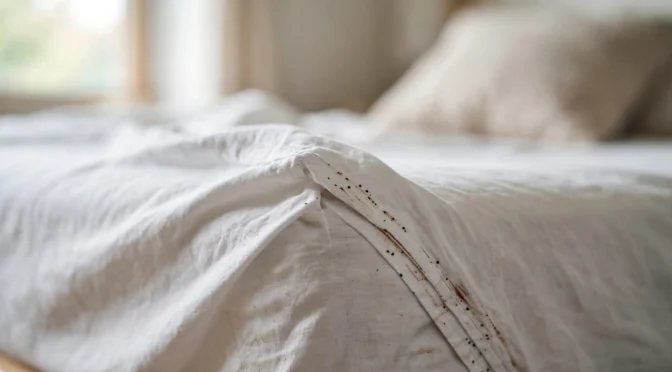
Bed bugs can leave dark, ink-like dots or red smears that turn rust-brown on your sheets, but stains alone do not confirm an infestation. Check nearby mattress seams for insects or shed skins before spraying. Washing bedding removes marks and any bugs in the load, not those hiding in furniture.
If you have tried everything to get rid of recurring spots, stop treating the sheets as the source. Photograph the marks before laundering, then inspect the bed without taking it apart.
Are dark specks on sheets always bed bugs?
No. Lint and fabric pilling can look like bed bug evidence at first glance. Bed bug fecal spots are digested blood: small, dark brown-to-black dots that resemble a fine marker dot, sometimes with a slight bleed into the weave.
Look at the mark’s edges and location before deciding what made it.
| What you see | What it might be | How to tell |
|---|---|---|
| Dark dot with a slight bleed into the fabric | Bed bug fecal spot | Marks near seams warrant inspection; the appearance alone is not proof |
| Fuzzy fiber end, gray or dark | Lint or pilling | Has a fibrous edge and may lift away |
| Dot or line resembling ink | Pen ink or dye | Often stays its original color when dampened, although inks vary |
| Dark speck that smears reddish-brown when dampened | Blood-derived mark | Could be bed bug evidence, flea dirt or another blood source |
| Orange or brown flake near metal | Rust | Check nearby hardware for corrosion |
Several dots along a mattress seam deserve a closer look than one loose speck in the middle of a sheet. Location helps you choose where to inspect, but it cannot identify the pest.
Do blood spots mean the bugs bled on the sheets?
Most blood smears on bedding come from a recently fed bug crushed during sleep. It is not blood the bug simply leaked onto the bedding.
Fresh blood looks red or pink and turns rust-brown as it dries. Color cannot reliably tell you how many days old a stain is or whether bed bugs are still present. A small cut or another source of blood can leave a similar mark.
Does a damp cloth test prove it is bed bugs?
No. A reddish-brown smear is consistent with blood-derived material, but flea dirt can react the same way.
- Dampen a white cloth or cotton swab with plain water.
- Press it gently against one dark spot. Avoid scrubbing, which spreads the stain.
- Check for a reddish-brown transfer onto the cloth.
A positive result is a reason to inspect the seams. A spot that does not transfer color remains unidentified; the test does not rule bed bugs in or out.
Where do bed bugs hide when they are not on the sheets?
Start with the mattress seams and work outward toward the frame. Bed bugs hide close to sleeping people, often in narrow gaps that a quick glance at the bedding misses.
Marks near the head of the bed give you a useful starting point, not a precise map of the infestation.
Bed bugs usually feed at night and retreat into hiding places. Clean-looking sheets do not mean the bed is clear.
Use a flashlight to examine accessible seams and joints. Leave dismantling heavy or attached furniture to the inspection professional.
Mattress piping and tags
Shine the light along the piping where the mattress panels meet, including the tag seam. Look for insects and eggs tucked into the stitching. Shed skins, the shells left behind as young bed bugs grow, also warrant identification.
Check the lower seam if you can reach it safely. Adult bed bugs are roughly apple-seed sized; young ones can be pale and difficult to see against light fabric.
Headboard, frame and box spring
Inspect accessible frame joints and the back of the headboard. Box spring corners and underside seams also offer hiding places. Do not unscrew the frame or detach a wall-mounted headboard just to search.
Baseboards and nearby furniture
Check the bedside table and visible gaps along nearby baseboards. Bed bugs can also hide behind picture frames, but there is no need to tear trim off the wall. Photograph suspicious evidence and leave it available for identification.
A correctly identified insect is stronger evidence than a stain. Eggs and shed skins can help an inspector confirm what you found, but unfamiliar debris is easy to misidentify.
Will washing sheets in hot water fix a bedroom problem?
No. Laundering cannot reach bugs hiding in the bed frame or furniture. Even if every insect in the laundry load is killed, those elsewhere in the room remain.
Bag bedding before carrying it to the laundry area. Wash according to the fabric’s care instructions and use a high-heat dryer setting where the fabric allows. Dryer heat is an important part of handling infested washable items; washing alone is not a dependable treatment plan.
Photograph the marks first. Clean sheets can make you feel better without resolving the source of the problem.
Will a store spray or bug bomb clear them?
Bug bombs are a poor choice for bed bugs. The fog does not reliably reach insects and eggs deep in cracks, and it can scatter bugs into other hiding places.
Do not spray bedding unless the product label specifically permits that use. Applying more product does not overcome poor access to hiding places, and misuse creates unnecessary exposure around sleeping areas.
Vinegar and rubbing alcohol will not eradicate an infestation. Rubbing alcohol also presents a fire risk. Keep the bed in its room rather than moving it elsewhere. A professional treatment plan covers what a product or a wash cycle cannot.
What do tiny bed bugs look like, and where do they bite?
Young bed bugs can look much lighter than adults, especially before feeding. A tiny pale insect should not be dismissed because it does not match the familiar brown adult in photographs.
How the nymphs change
Bed bugs pass through five immature stages before adulthood. Unfed nymphs are pale and nearly translucent; after feeding, blood inside the body gives them a reddish tint. Each stage requires a blood meal before the next molt.
Adults are brownish-red and flat when unfed. A flashlight helps reveal young bugs against mattress stitching, but color alone is not enough to identify one.
Where the bites show up
Reactions can appear as itchy red bumps on exposed skin, sometimes in lines or clusters. Those patterns are not unique to bed bugs. Some people show no visible reaction, so the absence of bites does not clear a room.
Bed bugs are not known to transmit disease. Scratching can break the skin and lead to infection, while repeated bites can disrupt sleep. Seek medical advice if the skin becomes increasingly red, painful or starts draining.
How soon after a trip or a guest do marks appear?
Signs may go unnoticed for several weeks after bed bugs arrive. A small number can be difficult to find, so the morning you discover a stain does not tell you when the bugs entered.
In Greater Cincinnati and Northern Kentucky, fall travel and holiday visits provide opportunities for bugs to hitchhike on luggage or clothing. Secondhand furniture is another possible route. An October discovery may relate to an earlier trip, but stains cannot establish who or what brought bugs inside.
Cincinnati’s cold winters do not clear an infestation in a heated home. Older foundations are not the issue here; bed bugs are primarily a furniture-and-bedding pest, and clean homes can have them too.
What should you do before a professional inspects the bed?
Keep the room as undisturbed as practical so evidence remains available and potentially infested belongings stay contained. Renters should notify their landlord or property manager because adjoining units may need assessment.
- Photograph stains and any suspected insects before cleaning.
- Seal loose bedding in bags before taking it to the laundry area. Follow fabric care instructions and use dryer heat where appropriate.
- Keep bedding from touching the floor. If the bed is against a wall, ask the inspector about safely separating it.
- Leave the frame assembled and do not move bedroom furniture into another room.
- Avoid foggers and unplanned spray applications. Tell the inspector about any products already used.
Sure Thing Pest Control provides thorough inspection and targeted bed bug treatments across Greater Cincinnati and Northern Kentucky. We are locally owned and family-run, with licensed and certified technicians who complete over 40 hours of additional training annually. Read about our Cincinnati bed bug extermination service or call 513.247.0030 for a free estimate.
Frequently asked questions
Why are there blood spots on my sheets if I never saw a bug?
A recently fed bed bug can be crushed during sleep, leaving a red or pink smear that turns brown as it dries. Small cuts can leave similar stains, so blood spots alone do not identify bed bugs. Inspect the mattress seams for insects or shed skins.
Does washing sheets in hot water kill bed bugs?
Laundering can kill bugs in the load, particularly with suitable dryer heat, but washing alone is not dependable. Follow fabric care instructions and bag bedding before moving it. Bugs hiding in furniture remain beyond the reach of the laundry cycle.
How long after exposure do bed bug signs show up?
Signs can take several weeks to become noticeable, although you might find an insect sooner. Small populations are easy to miss. The date you find marks does not reliably establish the date of exposure.
What if I slept in a bed with bed bugs?
Sleeping in an infested bed does not mean you automatically brought bugs home. Keep luggage away from beds and inspect its seams; bag washable clothing before laundering and drying it with appropriate heat. If you find suspected bugs or recurring marks at home, call Sure Thing Pest Control at 513.247.0030 for a free estimate on inspection and bed bug treatment.