Category Archives: Prevention tips

Black Widow Spider Control in Milford: 5 Safe Steps

Controlling black widows starts with identifying the spider, then removing its shelter and the insects it eats. In Milford and the Cincinnati area, the northern black widow is the species to watch for. Keep your hands out of hidden spaces, and have a suspected widow identified before attempting treatment.

If you have tried everything and spiders keep returning, look beyond the web. Insect activity and gaps around the foundation can keep the problem going, especially as November temperatures fall and pests seek shelter.

Are Black Widows Native to Ohio and Northern Kentucky?

Yes. The northern black widow is found in the Cincinnati tristate area, though it is rare indoors. Look first at undisturbed outdoor spots such as woodpiles and old sheds, rather than assuming a basement spider is a widow.

Cold weather can push spiders and their insect prey toward buildings. A November sighting is a reason to check nearby entry points, not proof that black widows have established themselves inside. Black widows are most active at 70°F or higher, so in November a spider you see is more likely one that has moved in for warmth.

How Do You Tell a Northern Black Widow From a Common House Spider?

How Do You Tell a Northern Black Widow From a Common House Spider?, surethingpc.com

A female northern black widow has a rounded, usually shiny black abdomen. Its underside typically carries a red hourglass broken into two parts. The marking can be paler than expected, and some females appear brownish-black, so color alone cannot confirm identification.

Look at the web without disturbing it. Widows build tangled webs low to the ground, unlike the wheel-shaped webs of garden orb weavers.

Spider Body and marking Web Where it is usually found Bite risk
Northern black widow (female) Rounded black abdomen; usually a split red hourglass underneath Tangled and low to the ground Woodpiles, sheds and sheltered building corners Bites are uncommon but medically significant
Common house spider Small, tan to brown; no hourglass Tangled web in corners and window frames Rooms and garages Generally harmless
Cellar spider Small body with long, thin legs Loose web Basements and crawl spaces Generally harmless
Wolf spider Large, hairy, brown or gray; no hourglass No capture web; hunts on the ground Basements, garages and outdoors Not medically significant for healthy adults
Orb weaver Variable color, often with a patterned abdomen Wheel-shaped web Gardens and near exterior lights Generally harmless

Male widows are smaller and lighter than females and may have reddish spots. Do not handle an unfamiliar spider based on its size or an uncertain identification.

The Hourglass Is Usually Split, Not Complete

The northern widow’s marking is usually divided, but you should never turn a spider over to inspect it. Photograph it from a safe distance. A useful photo may help a technician identify it; a blurry image may not be enough.

The Web Is the First Look, Not the Proof

Common house spiders also make tangled webs. Use a web to locate activity, then leave identification to someone who can assess the spider itself if you cannot see it clearly.

Where Black Widows Hide in Garages, Basements and Woodpiles

Widows favor dry shelter that rarely gets disturbed. Check visually behind stored items and beneath outdoor structures, but do not reach into hidden spaces to investigate.

In older Milford homes, the building has often settled, leaving openings around utility lines and foundation joints. These are entry points for spiders and their prey, not evidence that a widow is present.

5 Safe Steps to Keep Black Widows Out of Your Home

5 Safe Steps to Keep Black Widows Out of Your Home, surethingpc.com

Start with the shelter. These nonchemical steps reduce the conditions that support spiders; treating only the spider you see leaves those conditions unchanged.

Look Before You Lift or Reach

Wear work gloves when handling firewood or stored materials, and use a flashlight before reaching into dark spaces. Gloves are a precaution, not permission to pick up a suspected widow.

Move the Woodpile and Check the Outside Foundation

Store firewood off the ground and away from the foundation. Inspect each piece before carrying it inside, and keep vegetation near the building trimmed so you can see sheltered areas.

Clear Out the Clutter Where Widows Sit

Remove unused boxes and loose materials from garage floors and basement corners. Leave enough space around shelving to inspect behind it without putting your hands where you cannot see.

Seal the Gaps Spiders Walk Through

Repair gaps around exterior doors and utility penetrations. Check window screens and weatherstripping, but do not block ventilation openings; use suitable screening where needed. This exclusion work addresses access rather than just the spider already indoors.

Cut the Insects They Feed On

Turn off unnecessary porch lights. Where lighting is needed, warm-colored, shielded fixtures aimed downward can reduce the draw for insect prey. Our guide to brown recluse spiders in Ohio discusses another medically significant spider found in the region.

What to Do If You Find One in the Garage or Basement

Keep children and pets away, and do not reach behind the spider or try to crush it with your hand. Take a photo from a safe distance and call a licensed pest professional if you suspect a widow. Avoid moving the surrounding clutter until the spider can be addressed without close contact.

What to Do If Someone Is Bitten

Call a doctor or poison control promptly for a suspected black widow bite. Symptoms can include muscle cramps and nausea. Children and older adults need prompt medical assessment; contact a veterinarian for a pet.

Use a photo for identification if you have one, but do not delay care or risk another bite to capture the spider. Our brown recluse guide addresses a different spider whose suspected bites also warrant medical advice.

When Should You Call a Licensed Technician for Black Widows?

Sure Thing Pest Control technician smiling in branded service van

Arrange an inspection when you suspect a widow near regularly used spaces, cannot identify the spider, or keep finding spiders after reducing clutter and sealing openings. Medical care comes first if someone has been bitten.

Before treatment, ask for specific answers about the product and its precautions:

  • What product will you use, and what precautions apply to children and pets?
  • Does anyone need to leave during treatment?
  • When can people and pets return to treated areas?

Sure Thing Pest Control offers kid and pet friendly treatments and ongoing scheduled protection through The Sure Cure. We have been locally owned and family-run since 1997. Our owners bring over 80 years of combined pest control experience.

For a suspected widow in Milford, call 513.247.0030 for a free estimate and describe where you found it. Our Cincinnati spider control page explains the service; our credentials and our frequently asked questions provide more information before you schedule.

Frequently asked questions

What month are black widows most active?

Black widows are most active in warm weather, rather than one particular month. Falling temperatures can drive them toward sheltered areas, but a fall sighting does not establish an indoor infestation.

Are black widows dangerous to children and pets?

Black widow bites are medically significant, although these spiders generally bite only when trapped or pressed against skin. Seek prompt medical advice for a suspected bite in a child and veterinary advice for a pet.

How do I get rid of black widow spiders in my yard?

Move firewood away from the foundation and remove undisturbed debris near the house. Reduce unnecessary outdoor lighting that attracts insect prey. Have suspected widows identified before attempting treatment.

What is considered a black widow infestation?

There is no single household sighting count that defines an infestation. Repeated confirmed sightings or occupied webs in several locations warrant inspection, especially near areas people use. A tangled web alone does not identify a black widow.
Commercial Pest Management in Cincinnati: What Auditors Ask For

Commercial pest management is a written program that keeps pests out and records every check, including the empty ones. For a Cincinnati facility preparing for an audit, traps alone are not enough. Auditors typically ask for a current device map, dated inspection logs and proof that you corrected problems and reviewed activity over time.

If you have tried adding traps but sightings keep returning, check the entry route before adding another device. In Greater Cincinnati and Northern Kentucky, late October is a useful time to inspect loading docks as falling overnight temperatures push rodents toward shelter.

Why Late October Is the Walk-Through Window

Rodents are active year-round, but fall cooling and declining outdoor food make buildings more attractive. A loading dock left open during unloading provides access even when the rest of the building is well sealed.

Walk the building before cold weather settles in. If an audit is approaching, allow time to replace worn seals and verify that repairs hold rather than leaving defects for the week of the inspection.

Loading Docks and Overhead Doors Come First

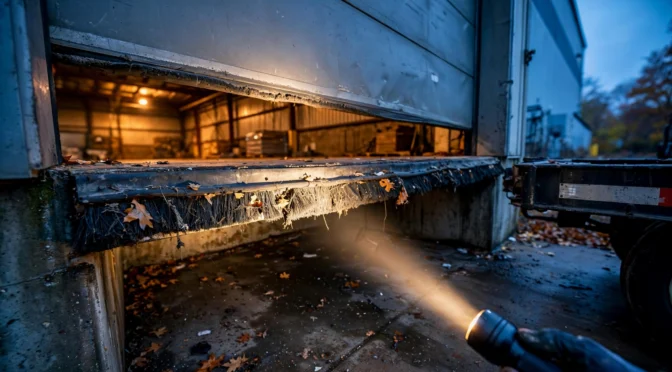
Loading Docks and Overhead Doors Come First, surethingpc.com

Walk the dock at night with a flashlight when freight traffic has stopped. Check closed doors closely, especially at the corners where seals pull loose.

  1. Inspect the full width of each overhead door’s bottom seal. Look for gaps between the seal and the floor.
  2. Check the ends of brush seals where the floor meets the door track.
  3. Inspect the gap where the dock leveler lip meets the pit, including nearby seals damaged by equipment.
  4. Check sweeps on personnel doors that open outside.
  5. Look for droppings along wall edges. Chewed material and greasy rub marks also warrant inspection.
  6. Record each defect’s location and date, including repairs completed during the walk.

Pay particular attention to corners and the space under the leveler lip. A seal that looks intact from several feet away may have an opening at one end.

Pipes, Conduit and Door Frames Are the Openings Most Walks Miss

Mice can pass through openings much smaller than most people expect. Rats also use gaps around utility penetrations, so an inspection that stops at the overhead doors leaves entry routes unchecked.

Follow utility lines where they enter the building, checking both sides of the wall where accessible. Inspect around exhaust housings and at the base of door frames. Treat each unsealed penetration as a possible entry point rather than judging it by how small it looks.

Use durable, rodent-resistant repairs appropriate to the opening, such as metal flashing or a cement-based patch. Foam alone is not a dependable rodent barrier. Exclusion means closing the route pests use, not simply placing a trap beside it.

How Often Stations and Traps Should Be Checked and Where They Go

Set the inspection frequency with your provider based on facility risk and audit requirements. Get the agreed frequency in writing. A workable schedule followed consistently is better than an ambitious one with missed checks.

  1. Document the inspection cadence for exterior stations and interior traps.
  2. Give each device a unique number that matches the site map.
  3. Review coverage near loading docks and mechanical rooms, using likely pest travel routes to guide placement.
  4. Ask your provider to assess poorly placed or redundant devices. An empty trap alone is not a reason to remove it.
  5. Compare the map with the floor whenever devices move and during scheduled program reviews.

A map cannot explain coverage if it shows stations that are missing or leaves installed devices unmarked. Correct those mismatches before reviewing activity trends.

For activity around the building, our Cincinnati rodent control service includes trapping and exclusion to address mice and rats at their source.

Why Bait Stays Out of Food and Storage Zones

Keep rodent bait out of food-contact and product-handling zones. In food and healthcare facilities, integrated pest management starts with exclusion and sanitation, supported by monitoring. Pesticide decisions must follow the product label and the facility’s requirements.

Multi-catch traps can monitor rodent activity without introducing toxicant where product is handled. Pheromone monitors serve a different purpose: detecting particular insect pests. Exterior bait stations may be appropriate away from product areas, with placement determined by a licensed technician.

Which Records an Auditor Asks to See First

Which Records an Auditor Asks to See First, surethingpc.com

Auditors typically ask for evidence of an ongoing program, not just a clean service ticket. Keep these records together so someone unfamiliar with the building can follow what was checked and what changed.

  1. Keep a site map that numbers every device and shows its actual location, with the date it was last verified.
  2. Keep the agreed inspection schedule and name the person responsible for each check.
  3. Record each check on a dated line with the checker’s initials, and write “no activity” for empty checks.
  4. Document each sighting or defect, the response and who verified completion.
  5. Review activity by device and area over time, and record the changes made in response.
  6. Keep dated descriptions of work performed, along with pesticide application records.
  7. Keep licensing documentation for every applicator. The Ohio Department of Agriculture regulates Ohio commercial applicators, and the Kentucky Department of Agriculture regulates Kentucky applicators.

Record problems even when they are fixed immediately. A sighting followed by a documented response shows how the facility handled it; repeated activity without review leaves the cause unresolved. Confirm record-retention requirements with the authorities and audit program that apply to your facility.

Which Logs Show a Trend, Paper or Electronic

Either format can support an audit when records are complete and retrievable. Electronic logging makes it easier to compare activity across quarters, but software does not replace a completed inspection.

Feature Paper log Timestamped electronic log
Completeness Requires a completed entry for every check Scanning can help track completed checks
Retrieval during an audit Requires organized, accessible files Search tools can retrieve dates or devices
Trend across quarters Usually requires manual compilation Reporting tools can chart activity
Corrective actions linked to a sighting Requires clear cross-references May link actions directly to the record

Before choosing a format, ask your provider to show how you would retrieve a device’s history and its corrective actions. Check that the report includes empty inspections, not just visits with activity.

Why Sanitation Comes Before Adding More Devices

At a food facility, spilled product beneath racks can keep feeding rodents after traps are installed. Inspect dock staging areas for accessible food and standing water. Clear clutter that blocks inspection along walls, and assign responsibility for correcting each condition.

More devices do not automatically improve control. Every added station needs inspection and a record; a crowded map with missed checks is less useful than a well-placed system maintained consistently.

When to Call a Licensed Technician and What to Ask Them

Call a licensed professional when you find rodent signs in a mechanical room or sightings continue after sanitation and exclusion work. The next step is diagnosing access and activity, not adding traps without a placement plan.

Before service begins, ask which records you will receive and how trend reviews will be delivered. Sure Thing Pest Control is locally owned and family-run, and its owners bring over 80 years of combined pest control experience. Our technicians are background checked and complete over 40 hours of additional training annually.

Our commercial pest control plans are customized for local businesses, with ongoing scheduled protection available through The Sure Cure. Call 513.247.0030 for a free estimate and to discuss your facility’s pest activity and audit documentation needs.

Frequently asked questions

How often should exterior rodent stations and interior traps be checked?

There is no single inspection frequency for every facility. Agree on a written schedule with your provider based on pest risk and your audit program, then record every check, including those with no activity.

Does a clean service visit pass a pest audit?

A clean visit alone does not demonstrate an ongoing pest management program. Auditors typically ask for device-check logs, documented corrective actions and evidence that activity has been reviewed over time.

Can rodent bait be used in a food plant or warehouse?

Bait may have a role in a facility’s program, but keep it out of food-contact and product-handling zones. A licensed technician should determine placement under the product label, and exclusion and sanitation should come first.

Which pest control records should be kept for an audit?

Keep a current device map and inspection schedule, along with the logs and service records that show every check and fix. Include trend reviews, pesticide application records and each technician’s license. Confirm retention periods with your applicable regulators and audit program.

Mice Infestation Control in Cincinnati: What Works Before Winter

Mice infestation control takes more than catching the ones you see. Set enough traps along their travel routes, seal openings larger than a quarter inch, and remove accessible food while you monitor for fresh activity. If you have tried everything and still find droppings in the pantry, check the entry points before buying more bait.

Why a Few Snap Traps Under the Sink Miss the Breeding Mice

Catching one or two mice does not tell you how many remain. A trap under the sink only catches mice that pass that spot; it does nothing for a route behind the pantry or through the basement.

The Illinois Department of Public Health identifies using too few traps as a common control mistake. The better approach is to find each active route and place enough traps to cover it, rather than concentrating them wherever they are easiest to reach.

Open entry points can undo that work. A gap around a pipe lets more mice enter, while an open cereal box gives them food after they arrive. Trapping needs to happen alongside exclusion, which means closing the openings mice use to get inside.

Why Late October Brings Mice Indoors Across Greater Cincinnati

Step Two: Pre-Bait, Then Set Traps in Perpendicular Pairs, surethingpc.com
Step One: Read the Runways Before You Set Anything, surethingpc.com

As nights turn colder in late October and November, mice seek shelter in homes and outbuildings. A heated structure offers protection from the weather, and accessible food gives them a reason to stay.

Wooded ravines and mature tree cover bring rodent shelter close to homes across Greater Cincinnati and Northern Kentucky. Older Cincinnati homes, along with homes in established communities such as Lebanon and Springboro, may also have gaps around stone foundations or utility lines. Those openings deserve a close inspection before cold weather settles in.

How Fast Mice Breed and How Long Trapping Must Run

The Illinois Department of Public Health’s house mouse guidance reports that a female may have 5 to 10 litters per year, usually with 5 or 6 young each. Gestation takes 19 to 21 days, and young mice mature in 6 to 10 weeks. House mice can breed year-round indoors.

That is why a quiet stretch after the first catches is not proof the problem is over. Continue checking traps and looking for fresh droppings along previously active routes. There is no standard five-day rule that establishes when a home is clear.

An established infestation can take several weeks to resolve, sometimes longer in a house with many wall voids. Plan on that timeline from the start. The stopping point should depend on repeated checks showing no fresh activity along the routes you trapped, not a date on the calendar.

Step One Is to Find the Runways Before Setting Traps

Inspect the edges of rooms and cabinets before choosing trap locations. Mice tend to follow sheltered routes rather than cross open floors. Look for:

  1. Dark rub marks along baseboards or cabinet edges.
  2. Greasy trails along pipes and basement joists.
  3. Droppings clustered along the back of a shelf or beside a wall.

Check above floor level, too. The Illinois Department of Public Health reports that house mice can jump about 13 inches onto a flat surface and climb rough vertical surfaces. A raised pantry shelf is not out of reach.

Wall noises alone do not identify the animal. Before setting traps for an uncertain scratching sound, read Noise in Walls at Night: Is It Mice, Rats, or Bats? for help distinguishing the signs.

Step Two Is to Prebait and Set Traps in Pairs

The Illinois Department of Public Health recommends prebaiting as a way to improve trapping success. Leave bait on an unset trap until mice take it at least once, then set the trap in the same location.

Prebait before setting the traps

  1. Place a small amount of bait on the trigger pan of an unset trap.
  2. Check daily to see whether the bait has been taken.
  3. Once mice have taken it, rebait and set the trap.

Crunchy peanut butter is one suitable bait listed in state health guidance. Use a small amount on the trigger rather than a large serving that a mouse can take without disturbing the mechanism.

Place pairs along active routes

The New York State Department of Health recommends snap traps in pairs, perpendicular to the wall, with the trigger ends touching it, spaced about 6 to 10 feet apart along suspected runways. Mice tend to avoid crossing large open spaces, so a single trap set in the middle of an open room is less likely to be found.

Cover the whole active route rather than setting one pair beneath the sink and waiting. Check the traps every day and reset any that have sprung.

Every trap must be inaccessible to children and pets. Behind an appliance is not automatically safe if a dog can reach underneath it. Where needed, use a secured, tamper-resistant enclosure designed to hold the trap.

Why Loose Poison Blocks Are the Wrong Choice Around Pets

Do not leave rodenticide blocks loose in a home with children or pets. Anticoagulant rodenticides interfere with blood clotting; pets can be harmed by eating the bait, and some products also pose a risk when a pet eats a poisoned rodent.

Poison also makes carcasses harder to recover. A mouse may die inside a wall or ceiling, leaving an odor in an inaccessible space. The New York State Department of Health describes trapping as generally safer than poison because it allows you to confirm the catch and remove the carcass.

Glue boards must also stay out of reach of children, pets, and wildlife. Any rodenticide use must follow the product label exactly, including requirements for tamper-resistant bait stations. If you have pantry droppings and a dog at home, get professional advice before buying poison.

Step Three Is to Seal Openings Larger Than a Quarter Inch

A house mouse can squeeze through an opening slightly larger than a quarter inch, roughly the width of a pencil. Check small gaps even when they look too narrow to matter.

The Illinois Department of Public Health recommends gnaw-resistant repairs such as metal or concrete. Steel wool mixed with caulking compound can plug smaller openings; finish the patch smoothly so mice cannot pull it loose. Ordinary plastic or wood patches are not reliable barriers against gnawing.

Start the exterior inspection at these locations:

  • Gaps where the foundation meets the framing.
  • Openings around pipes and cables entering the house.
  • Damaged crawlspace vent covers.
  • Gaps around exterior doors.

Coordinate exclusion with trapping inside rather than treating sealing as a substitute for removing mice already present. Keep required ventilation and appliance exhaust clear. For a more detailed exterior inspection, see Rodent Exclusion: How to Seal Your Home for Winter.

Step Four Is to Wet Droppings Before Cleaning

Do not sweep or vacuum dry mouse droppings. The New York State Department of Health warns that doing so can put dust containing viruses into the air. Wet cleanup reduces that exposure.

Use this sequence for a small affected area:

  1. Ventilate the room and put on rubber gloves.
  2. Thoroughly wet the droppings and surrounding area with an appropriate disinfectant.
  3. Leave the surface wet for the contact time on the product label.
  4. Pick up the waste with paper towels.
  5. Double-bag the waste and dispose of it, then disinfect the surface.
  6. Wash gloved hands before removing the gloves, then wash your bare hands.

Never mix bleach with other cleaners. For extensive contamination or droppings in insulation, ask a professional about cleanup rather than disturbing the material yourself.

Empty affected pantry shelves and discard chewed or contaminated food. Clean the shelves before returning intact containers. Store food in tightly closed, gnaw-resistant containers, put pet food away after meals, and repair plumbing leaks without restricting a pet’s access to needed drinking water.

When to Stop DIY and Call a Licensed Professional

Sure Thing Pest Control technician smiling in branded service van

Call for help when fresh droppings continue despite correctly placed traps, when activity extends into inaccessible wall spaces, or when you cannot keep control devices away from children and pets. Renters should notify the landlord or property manager so entry-point repairs can be addressed.

Sure Thing Pest Control provides rodent trapping and exclusion for homes and commercial properties in Cincinnati, Lebanon, and Springboro, Ohio, and Burlington and Fort Mitchell, Kentucky. We are locally owned and family-run, operating since 1997. Our two owners bring over 80 years of combined pest control experience.

Our licensed and certified technicians are background checked and complete over 40 hours of additional training annually. We offer kid- and pet-friendly pest control, along with ongoing scheduled protection through The Sure Cure program. A rodent problem still needs a plan that addresses its entry points and active routes.

Review our Cincinnati rodent control service, then call 513.247.0030 for a free estimate or send a request through our contact page. Describe where you found droppings, what you have already tried, and whether children or pets can access those areas.

Frequently asked questions

What is the fastest way to get rid of a mice infestation?

The fastest reliable approach combines enough traps on active travel routes with exclusion and removal of accessible food. A few traps in one location will miss mice using other parts of the house. Get professional help if activity persists or you cannot place traps safely.

What is the 5 day mouse rule?

There is no standard five-day rule that confirms a mouse infestation is gone. Illinois Department of Public Health guidance gives a gestation period of 19 to 21 days, with young maturing in 6 to 10 weeks. Continue monitoring until repeated checks show no fresh activity rather than stopping after five days.

Can a cat keep mice out of the house?

A cat may catch mice, but it cannot seal the openings that let them inside or reach every sheltered nesting space. Do not use a pet as the control plan. Exclusion and safely placed traps address the problem without relying on the animal to hunt.

How do mice get into a house in the fall?

Mice enter through small gaps around foundations, doors, and utility lines as they seek shelter from colder weather. Openings slightly larger than a quarter inch can be enough, and mice can climb rough surfaces to reach gaps above ground level. Inspect the exterior before cold weather and repair openings with gnaw-resistant materials.

Sugar Ants vs Carpenter Ants: How to Tell Them Apart

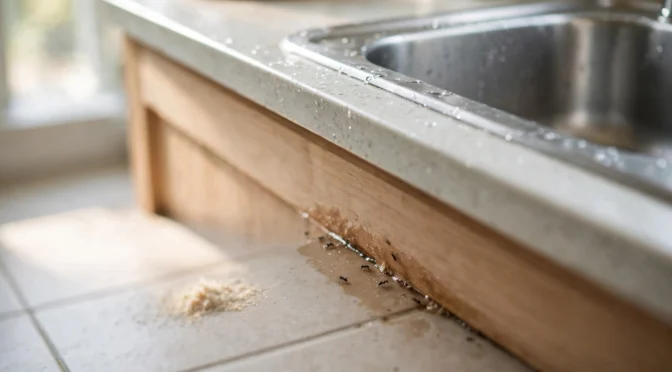
“Sugar ant” means a sweet-seeking ant, not a particular species. Carpenter ants can visit the same sugar bowl, but they are larger than most kitchen ants and can nest in wood. Size is your first clue; recurring sawdust-like debris is a reason to check for a nest.

If you have tried everything and ants keep returning behind the sink, check for moisture before buying another product. A small kitchen trail is not automatically a structural problem. Large ants near damp wood, especially with fresh debris beneath it, deserve closer inspection.

Start With Size, Not the Name

Carpenter ant workers measure roughly 9.5 to 12.7 mm long. Odorous house ants measure about 2.4 to 3.3 mm, according to Bob Vila’s home-improvement guide, updated May 31, 2023. That difference is easier to judge than the tiny details of an ant’s waist.

Photograph an ant beside a ruler or coin. If you need magnification just to make out its body, it is probably not a carpenter ant. ScottsMiracle-Gro’s undated explanation of “sugar ants” confirms that the term covers several sweet-seeking species, including carpenter ants. The label on a bait box does not identify your infestation.

Does the Ant Have One Node or Two?

Start With Size, Not the Name Sugar Ant, surethingpc.com

Carpenter ants have one node, a small segment at the waist between the middle body and abdomen. Some small household ants have two, but others also have one. Node count can narrow the identification; it cannot confirm carpenter ants by itself.

You need a still ant and magnification to see that detail. Start with body size and where you found it.

Color Does Not Settle It Alone

Carpenter ants can be black or have reddish coloring, and many small household ants are dark too. A black ant on the counter is not enough evidence to choose a treatment.

Check the Wings on Winged Ants

Ants have front wings longer than their back wings; termites have four wings of roughly equal length, as Bob Vila’s May 31, 2023 guide explains. Winged ants indoors in spring can indicate a mature nest nearby. Save a specimen or take a clear photo for identification.

Do Carpenter Ants Eat the Wood or Clear It Out?

Carpenter ants clear out wood to make nesting galleries. They eat other foods, including sweets and insects, rather than the wood itself. Repeated excavation can still weaken structural wood over time.

Subterranean termites eat wood and often leave soil inside damaged areas or mud tubes along foundations. Carpenter ant galleries are generally clean. Mud tubes call for a different inspection, covered on our termite inspections and control page.

What Does the Sawdust Actually Look Like?

What Does the Sawdust Actually Look Like?, surethingpc.com

Carpenter ant debris, called frass, contains wood fibers and may include insect parts. Look for a small pile beneath an opening in wood or along a baseboard. Photograph it before cleaning, then watch whether fresh material appears in the same place.

Debris What it looks like Where it usually collects
Carpenter ant frass Sawdust-like fibers, sometimes with insect parts Beneath an opening in wood or along a sill or baseboard
Subterranean termite evidence Soil or mud tubes Foundations and routes between soil and wood
Drywood termite pellets Small, hard pellets Below openings in infested wood
Household dust Fine particles without recognizable wood fibers Exposed surfaces and corners

Why Is Sawdust Showing Up by the Sink?

A plumbing leak can soften wood and make it suitable for carpenter ant nesting. Finding ants does not prove there is a leak, but fresh debris beneath a sink makes the plumbing worth checking.

Look for moisture without taking the cabinet apart:

  1. Check supply lines and the drain for drips or water stains.
  2. Look for swollen cabinet flooring or accessible wood that feels soft. Avoid puncturing it or probing near pipes and wiring.
  3. Check nearby window sills for peeling paint or persistent dampness.

Greater Cincinnati’s humid summers and seasonal rain make moisture control especially relevant around older crawlspaces and wood framing. Repair the water source as part of addressing the nest. Ant treatment cannot repair a leaking drain.

Where Do Carpenter Ants Build Their Nests?

A colony may have a parent nest outdoors in decayed wood and satellite nests inside the building. Indoor nests can occupy wall voids or spaces behind tubs. The ants on your counter may be foraging well away from the nest, so treating that counter alone can miss the source.

Trim branches touching the house and store firewood away from the foundation. Wood in contact with siding or the roof can give ants a route indoors.

Why Sweet Bait and Sprays Can Miss the Nest

Bait can work when foraging ants carry an appropriate product back to the colony. It is not guaranteed: food preferences and placement matter. Killing visible workers with spray may leave the nest untouched, and some sprays can cause colonies to scatter.

For more on choosing between approaches, read our piece on ant control services vs DIY sprays, or see our ant control in Cincinnati. Confirm the ant before choosing a product, especially when wood debris is present.

When Should You Stop Guessing and Call a Professional?

Arrange an inspection when fresh frass returns or large ants repeatedly emerge from the same wall opening. The inspection should trace activity toward the nest and check nearby moisture, rather than stop at the visible trail.

Signs That Need an Inspection

These signs warrant a closer look, even if you see only a few ants:

  • Fresh debris appears after you clean the area.
  • Trails persist after obvious entry gaps are sealed.
  • Accessible wood feels soft or appears damaged.
  • Framing near plumbing remains damp.

Avoid pulling trim or drilling into walls to find the colony. You can damage concealed plumbing or wiring and still miss the nest.

What to Note Before the Visit

A few observations help the technician follow activity without unnecessary disturbance:

  • The opening where ants enter the room.
  • The location of recurring debris.
  • Nearby leaks or damp wood.
  • A clear photo with a coin or ruler for scale.

Treatment may require access to crawlspaces or wall voids and follow-up visits. Sure Thing Pest Control is locally owned and family-run, serving Greater Cincinnati and Northern Kentucky since 1997 with kid and pet friendly pest control. For a free estimate, call 513.247.0030 or visit our carpenter ant exterminators page.

Frequently asked questions

What is the difference between sugar ants and carpenter ants?

“Sugar ant” is a general name for ants attracted to sweets, and carpenter ants can fit that description. Carpenter ants are larger than many common kitchen ants and excavate wood for nests. Recurring sawdust-like debris is more useful evidence than an attraction to sugar.

Can carpenter ants cause structural damage to my house like termites?

Yes, established carpenter ant nests can weaken wood over time. They excavate it rather than eat it, while termites consume wood. Finding a few foraging ants does not establish that structural damage has occurred.

How do you know if you have carpenter ants or regular house ants?

Start with size: carpenter ant workers are roughly 9.5 to 12.7 mm long, considerably larger than odorous house ants. Look for recurring wood debris near their activity. A specimen or clear photo helps a professional confirm the species.

Are pest control services worth it for ants?

An inspection is worthwhile when ants keep returning or activity occurs beside damaged wood. Small household-ant trails may respond to sanitation and properly selected bait. Suspected carpenter ant nesting needs attention to the nest location and any moisture source.

Should I open the wall to find the nest myself?

No. Opening walls can damage concealed utilities without locating the colony. Record where ants emerge and photograph any debris so a technician can decide where access is needed.

Throw Away a Mattress With Bed Bugs? When to Keep It or Toss It

You usually do not need to throw away a mattress because of bed bugs. Most infested mattresses can be treated and kept; replacement makes sense when the mattress is already worn out or badly torn. Before moving anything, arrange an inspection. Carrying an unwrapped mattress through the house can spread bugs along the way.

If you have tried everything and are ready to put the bed on the curb, check the rest of the room first. Bed bugs also hide behind baseboards and in nearby furniture. A new mattress will not solve an infestation left untreated.

Are You Sure It Is Bed Bugs?

Bites alone cannot confirm bed bugs, and some people do not react to their bites. Look for physical evidence before deciding what to discard.

  1. Check mattress seams, especially the piping where the top meets the sides.
  2. Inspect the box spring, paying attention to its underside and staple lines.
  3. Run a flashlight along headboard joints and frame screw holes.
  4. Look for tiny dark spots about the size of a period or pale shed skins. Heavily infested rooms may also have a sweet, musty odor.

If your only clue is stains on the sheets, read what bed bug marks on sheets mean and what to check first. Stains need closer inspection, not an immediate trip to the curb.

Is the Mattress Already Due for Replacement?

Judge the mattress by its condition, not just the presence of bugs. Bed bugs do not damage furniture. Once treatment eliminates the bugs and eggs, an otherwise usable mattress can stay.

Badly torn fabric or exposed foam makes treatment harder and replacement more reasonable. Heavy staining or sagging may mean the mattress was already due for replacement anyway. A broken frame is a reason to replace the frame, not necessarily the mattress. An intact mattress in good condition is generally worth treating.

Can a Professional Treat the Mattress and Keep It?

Sure Thing Pest Control technician smiling in branded service van

Usually, yes. Treatment must account for eggs as well as live bugs. Many insecticides do not kill bed bug eggs, so chemical treatment commonly involves two or three visits spaced about 10 to 14 days apart. The exact schedule depends on the treatment method and inspection findings.

Resistance also matters. Bed bugs can resist commonly used pyrethroid insecticides, so repeatedly applying the same store-bought spray may leave the infestation active. A professional chooses methods based on where bugs are hiding and checks whether treatment worked.

Professional heat treatment is another option. It requires controlled temperatures throughout the treatment area, including hiding places. A hair dryer or space heater cannot substitute for that equipment and monitoring.

What a Treatment Plan Involves

An inspection should extend beyond the mattress to the frame and nearby hiding places. Adjacent rooms may need checking, too. Treatment then targets the locations found during that inspection, with follow-up appropriate to the method used.

Sure Thing Pest Control provides inspections and targeted treatments in Greater Cincinnati and Northern Kentucky. Our Cincinnati bed bug extermination service is the place to start before replacing usable furniture.

Where a Bed Bug Encasement Fits

A bed bug encasement encloses the mattress or box spring, trapping bugs inside and making activity on the outside easier to spot. Choose one specifically designed for bed bugs, with secure seams and a zipper that closes completely. Ask the technician when to install it and how long to leave it in place; an encasement does not treat bugs elsewhere in the room.

If the Mattress Must Go, How Do You Move It Without Spreading Bugs?

If the Mattress Must Go, How Do You Move It Without Spreading Bugs?, surethingpc.com

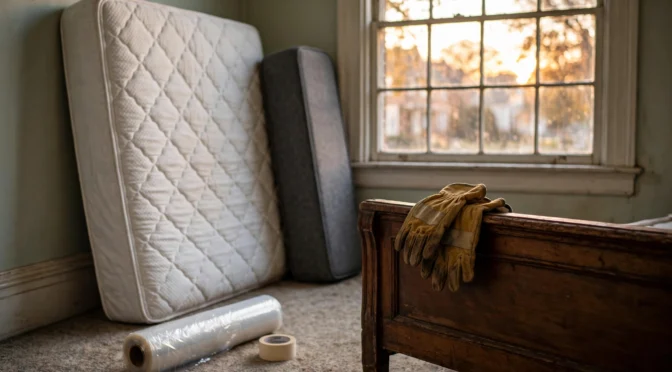
Seal the item before it leaves the bedroom. An unwrapped mattress can drop bugs along the route, creating hiding places far from the original bed.

  1. Wrap the item in the room where it sits, not in the hallway.
  2. Use heavy-duty plastic sheeting or furniture wrap. Narrow household plastic wrap can leave gaps or tear during handling.
  3. Tape every seam and check for openings before lifting.
  4. If discarding the frame, take it apart in the room and bag the screws and small parts separately.
  5. Carry the wrapped item straight out without resting it in a shared hallway.

Check the box spring especially carefully. Its corners and staple lines can leave openings even when the wrap looks tight from above.

Wrap It Where It Sits

Clear the route before wrapping so you do not have to set the item down while moving obstacles. Once sealed, write “BED BUGS” in large letters on more than one side of the plastic. The label warns collection crews and discourages someone from taking it home.

Carry It Straight Out

Move the sealed item directly to the collection location approved by your city or building manager. In an apartment, notify management before moving it through shared spaces, and check that handling has not torn the plastic.

What Does Your City Require Before Trash Day?

Call your city’s solid waste or public works office before putting an infested mattress outside. Ask what wrapping they require and when they pick up mattresses at your address. Do not assume the rules in one town match the next, or that your usual trash collection takes mattresses.

Who Do You Tell First in an Apartment or Shared Building?

Tell the landlord or property manager as soon as you suspect bed bugs. They can move between units through openings around shared walls and utility lines, so neighboring units may need inspection. Waiting until disposal day can delay that coordination.

For questions about treatment and disposal responsibilities in Ohio and Kentucky rentals, read the guide to pest control and landlord duties. Do not assume responsibility without checking the lease and applicable requirements.

What Has to Happen to the Room After the Mattress Is Gone?

The room still needs inspection and treatment. Bugs left in nearby furniture or behind baseboards can reach a replacement bed or follow you to another sleeping area.

  • Follow the technician’s specific re-entry instructions for people and pets.
  • Leave treated surfaces undisturbed for the period the technician specifies.
  • Ask when you can vacuum or clean baseboards without removing residual treatment.
  • Bag bedding before carrying it to the laundry, and follow the treatment plan’s laundering instructions.

Do not use a general waiting period in place of the instructions for your treatment. Products and methods differ, including how long treated areas must remain undisturbed.

Why Foggers and Store-Bought Sprays Often Fail

Foggers do not reliably reach the cracks where bed bugs hide and can scatter bugs into other areas. Store-bought products have other limitations, especially when used without a room-wide treatment plan.

Method What it does Main limitation
Foggers or bug bombs Release insecticide into the room Do not reliably reach hidden bugs and can spread them into other areas.
Store-bought sprays May kill exposed bugs Resistance can reduce effectiveness, and many products do not kill eggs.
Diatomaceous earth Dries out insects over time Works too slowly to control an active infestation on its own.
Rubbing alcohol Can kill bugs on direct contact Leaves no lasting control and creates a fire hazard.
Essential oils Are marketed as repellents or contact treatments Are not a dependable treatment for an established infestation.
Professional treatment Targets hiding places using methods selected after inspection May require preparation and follow-up visits rather than one application.

Before buying a replacement mattress, call Sure Thing Pest Control at 513.247.0030 for a free estimate. Explain what you found and ask about inspection and treatment options for keeping the bed.

Frequently asked questions

Will bed bugs go away if I throw away my bed?

No. Bed bugs can remain behind baseboards and in nearby furniture after the bed is removed. The room needs inspection and treatment even if you discard the mattress.

Do I need to wrap a mattress before putting it on the curb?

Yes, if it is infested. Seal it in heavy-duty plastic in the room where it sits, tape every seam and label more than one side “BED BUGS.” Confirm your city’s collection requirements before moving it outside.

Can I donate a mattress that had bed bugs?

Do not donate a mattress with an active infestation. If it was professionally treated, confirm that the infestation has been eliminated and ask the receiving organization about its acceptance policy before arranging a donation.

If bed bugs are only in one room, do I need to treat the whole house?

Not automatically. An inspection should establish where activity is present, including nearby rooms where appropriate. The treatment area should follow those findings rather than an assumption that the bugs stayed in one bed.

What do mattress encasements do for bed bugs?

Bed bug encasements trap bugs inside the mattress or box spring and make new activity easier to spot on the outside. They need intact seams and a securely closed zipper. They do not eliminate bugs hiding in the frame or elsewhere in the room.

Ant Control Services vs DIY Sprays: What Ends an Ant Colony

Professional ant control services start with finding where ants enter and treating the colony, not just killing the workers on your counter. Baits and non-repellent treatments let foraging ants carry material back to the nest. If you have tried everything and the kitchen trail keeps returning, the colony may still be untouched.

Why Dead Ants on the Counter Don’t Mean the Problem Is Gone

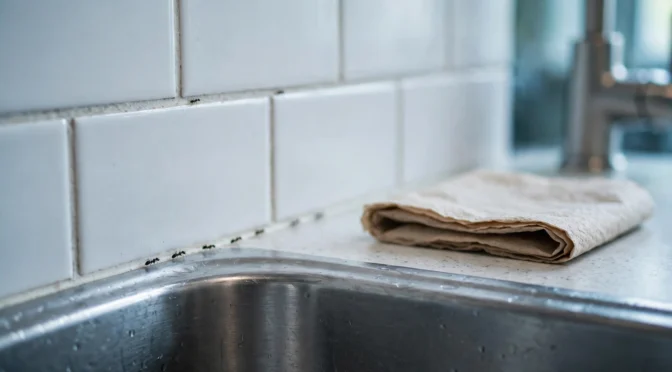
The ants crossing your backsplash are usually foragers searching for food and water. Killing them tells you little about the nest, which may be hidden inside a wall or outside near the foundation.

A contact spray can kill the workers it touches without reaching that nest. Another trail appears near the dishwasher because the colony still has access to food and moisture. Count fewer ants if you like, but don’t mistake that count for proof that the colony is gone.

Why a Repellent Spray Can Split One Colony Into Several

Why a Repellent Spray Can Split One Colony Into Several, surethingpc.com

Ants can detect repellent products and avoid treated surfaces. Spraying an indoor trail can scatter workers, sending them toward another route rather than solving the problem at its source. In some species, disturbing a colony can also encourage groups to establish separate nests, a process called budding.

That does not mean every sprayed trail becomes several colonies. It does mean repeatedly spraying a kitchen trail can make the problem harder to follow and treat. Stop adding repellent spray where ants are feeding on bait.

Contact Repellents and Non-Repellent Treatments Do Opposite Jobs

A contact spray targets exposed ants. A non-repellent treatment is designed to go unnoticed, allowing workers to pick up material and carry it back to the colony. Product choice and placement determine whether that transfer can happen.

What to compare Contact repellent spray Non-repellent transfer treatment
Can ants detect it? Ants can detect and avoid repellent material Formulated to go unnoticed
What happens to ants that touch it Exposed ants may die; surviving workers may scatter Workers can pick up material and carry it back
Where it travels Primarily treats the sprayed surface and exposed ants Can move through the colony by transfer
Effect on the nest May leave the nest untouched or disturb it Intended to reach the colony beyond visible workers
How it is placed Applied to surfaces permitted by the label Applied at selected travel routes or entry points, as the label permits

Non-repellent treatments and baits are not interchangeable. Baits attract ants to food containing a slow-acting material; non-repellent treatments rely on ants crossing a treated area.

How a Bait Travels From a Forager to the Queen

How a Bait Travels From a Forager to the Queen, surethingpc.com

Bait uses the workers’ food-sharing behavior to reach ants you cannot see:

  1. A forager finds an attractive bait and feeds on it.
  2. The worker returns to the nest with the material.
  3. It shares food with nestmates.
  4. The material moves through the colony and can reach the queen.

Baits act slowly on purpose.

Workers need time to share the material through the colony before it is eliminated. More ants gathering at a bait station can mean they have found it, not that the infestation has suddenly grown.

Don’t judge a bait by the number of ants visible the next morning. Follow the label’s directions for monitoring and replacement, and tell your technician if activity changes rather than spraying over the bait.

Is Professional Ant Treatment Safe Around Kids, Pets and Food Prep Areas?

Ask where the material will go and how children and pets will be kept away from it. A secured bait station in an inaccessible location limits access, but placement must follow the product label. Kid and pet friendly does not mean a product can be handled freely.

Sure Thing Pest Control offers kid and pet friendly treatments. Before treatment, ask what needs to stay clear and whether there is a drying or reentry period. Follow the label and your technician’s written instructions.

Don’t use bleach or ammonia as ant treatments. Neither reaches the nest, and mixing household cleaners can create dangerous fumes. Keep food-preparation surfaces clean, but avoid disturbing an active bait placement.

Our technicians are background checked and complete over 40 hours of additional training each year. Ohio and Kentucky license pesticide applicators through their departments of agriculture. You can read more about our licensing and training on the credentials page.

What Repeated Cans Cost Compared With One Inspection

Sure Thing Pest Control white service van parked in a residential driveway.

Add up what you have spent on sprays and replacement bait, along with the time spent treating returning trails. A store-bought bait can be a reasonable choice for a light problem. Repeated purchases without finding the entry point are a different calculation.

An inspection should establish where ants are entering and what is attracting them. The treatment needed depends on those findings, not simply on how many ants happen to be on the counter that day.

Sure Thing Pest Control offers free estimates. Call 513.247.0030 or send a request through the contact form. Our ant control page explains our inspection and extermination services.

Where Ants Get In and When to Call a Professional

Follow the trail backward before disturbing it. Start beneath the sink, then check nearby plumbing penetrations and damp areas. Useful places to inspect include:

  • Drain lines and openings beneath the sink
  • The dishwasher’s water supply
  • Pipes or wires passing through a wall or slab
  • Pet feeding areas where food remains overnight
  • Leaks that leave a surface damp

Fix drips and store food in sealed containers.

Around older Greater Cincinnati and Northern Kentucky homes, damp foundation edges and utility openings deserve attention. The opening ants use may be well away from the kitchen where you first notice them.

As overnight temperatures drop in October, ants still foraging may find indoor food sources. Don’t assume cooler weather will resolve an established indoor trail. Arrange an inspection if you notice:

  • Ants appearing in several rooms
  • Large numbers of winged ants indoors
  • Wood dust or wood that sounds hollow

Wood dust can point to carpenter ants, although an inspection is needed to identify the cause. Carpenter ants tunnel through wood and require a different treatment plan from a small household ant trail. Our carpenter ant page explains that service.

We serve Cincinnati, Lebanon and Springboro in Ohio, plus Burlington and Ft Mitchell in Kentucky. Check our service areas page for coverage. If you want scheduled prevention after the immediate problem is addressed, ask about The Sure Cure on our pest control programs page.

Frequently asked questions

What do exterminators use to get rid of ants?

Professionals may use baits or non-repellent treatments, depending on the ant species and where the colony is active. Workers can carry these materials back to the nest, reaching beyond the ants visible indoors. Inspection determines which approach and placement fit the problem.

How much does professional ant control cost in Cincinnati?

The cost depends on how many entry points the inspection finds and whether the colony is inside a wall, under a slab or outside near the foundation. Sure Thing Pest Control offers free estimates. Call 513.247.0030 and describe where you are seeing ants and what you have already tried.

How do I choose an ant control company in Cincinnati?

Choose licensed technicians who explain how they will find the entry points and treat the colony. Sure Thing Pest Control has been locally owned and family-run since 1997, and the owners bring over 80 years of combined pest control experience. Our licensed, certified technicians are background checked and complete over 40 hours of additional training annually.

Is a store-bought bait enough for a light kitchen ant trail?

A store-bought bait can help control a light trail if ants accept it and you follow the label. Don’t spray repellent products around the bait, because that can interfere with feeding. If trails persist or appear in several rooms, arrange an inspection rather than repeatedly changing products.

Are professional ant treatments safe for kids and pets?

Sure Thing Pest Control offers kid and pet friendly treatments, with safety depending on proper product use and placement. Ask your technician about keeping children and pets away from treated areas and bait stations, including any required drying or reentry period. Follow the product label and the technician’s written instructions.

Gnat Pest Control: How to Find and Stop Indoor Gnats Safely

Gnat pest control starts with finding where they breed, not spraying the flies you can see. For fungus gnats around houseplants, let the top inch or two of potting mix dry between waterings. If the flies gather at a sink instead, clean the drain before you touch the plants.

If you have tried everything and the flies keep returning, check the source again. A yellow sticky card set flat on the potting soil and another by the sink can help show within a few days where to focus.

Why Do Gnats Show Up After Houseplants Move Indoors?

Why Do Gnats Show Up After Houseplants Move Indoors?, surethingpc.com

Plants can bring fungus gnat larvae indoors in damp potting mix. The adults are weak fliers that hover and run close to the soil, so you may notice them more around indoor pots and nearby lamps than you did outside.

When you bring plants inside for colder weather in Greater Cincinnati or Northern Kentucky, check their drainage before continuing your usual watering routine. Saucers holding standing water, pots without drainage holes and dense mixes that stay wet for days give the larvae the moisture they need.

Most indoor fungus gnat problems start as a watering problem before they are a pest problem. Empty the saucers and check the bottom of each pot before you blame the plant.

How Do You Tell Fungus Gnats From Fruit Flies and Drain Flies?

Don’t treat every tiny fly as a fungus gnat. A soil treatment won’t remove drain buildup, and cleaning a sink won’t stop larvae living in a wet flowerpot.

Insect What it looks like Where you find it Likely source
Fungus gnat Slender, dark gray to black, long legs, wings held back over the body Hovering and running near potted plants and nearby lamps Damp potting soil
Fruit fly Tan, with red eyes Over ripe produce, open bottles, wet dish sponges Food and fermenting liquids
Drain fly Fuzzy, looks like a tiny moth Resting on walls near sinks and tubs Film inside drains
Phorid fly Humpbacked, runs in jerky, erratic paths Around sinks, drains and decaying organic matter Drains or rotting material

A small insect that jumps and bites people or pets may be a flea, not a fungus gnat. Our guide to professional flea treatment explains that separate problem.

How Do You Find Where the Swarm Starts?

How Do You Find Where the Swarm Starts?, surethingpc.com

Use sticky cards to compare activity near the pots and the drain before applying a product. Where the flies gather matters, but their appearance matters too.

  1. Set one yellow sticky card flat on the potting soil of an affected plant and another near the sink or tub drain. Keep them out of reach of children and pets.
  2. Check the cards over the next few days. Note which catches more flies and compare the insects with the descriptions above.
  3. If fungus gnats collect near the soil and hover around the pot, start with moisture and drainage.
  4. If drain or phorid flies gather near the sink, clean the drain and check for decaying material.
  5. While monitoring, look for standing water in saucers, pots that cannot drain and damp shelves or windowsills.

A card catching flies beside a sink is a clue, not proof that the drain is their breeding site. Confirm what the insect looks like before deciding what to treat.

How Do You Treat the Soil Without Harming the Plants?

Start with watering and drainage. A product cannot correct a pot that stays waterlogged.

Let the top inch or two dry out

Letting the top inch or two of potting mix dry between waterings is the most effective first step for fungus gnats. Their larvae depend on moist soil, so breaking that constant moisture interrupts breeding.

Check below the surface rather than watering because the calendar says it is time. Empty standing water from saucers, and make sure each pot drains. Keep the plant’s watering needs in mind rather than drying the entire root ball.

Use BTI exactly as the label says

BTI is a biological larvicide available in products labeled for fungus gnat larvae in soil. Choose one whose label lists both the pest and the intended plant use, then follow its application and repeat-treatment directions.

BTI targets larvae, not adults already flying around the room. Seeing adults after an application does not, by itself, tell you whether the larval treatment worked.

Treat hydrogen peroxide as a supplement

Hydrogen peroxide drenches can reduce larvae near the surface, but they do not reliably reach the whole root zone. Overuse can stress roots. They are not a substitute for correcting wet soil and poor drainage.

Repot only when the infestation is heavy

For a heavy infestation, rinsing the roots and repotting into fresh, sterile mix can help break the cycle. Bag the old soil and take it outside, away from the house. Correct the watering and drainage problem too, or the fresh mix can become another breeding site.

Why Don’t Aerosol Sprays Clear Indoor Gnats?

Aerosols kill exposed adults but leave larvae in the soil untouched. New adults can emerge while the breeding site remains wet.

Spray settles on counters and in pet bedding. That makes broad indoor spraying a poor first choice, especially in kitchens. Bug bombs are the wrong tool for larvae in potting soil or drain buildup; put the effort into removing the source instead.

When Do Indoor Flies Point to a Drain or Moisture Problem?

If flies cluster at a sink or tub, scrub the organic film out of the drain and fix any slow draining. Hot water alone is not a substitute for removing buildup. Drain and phorid flies can breed in decaying material that soil treatments never reach.

Look beyond the drain opening if flies persist. A leaking pipe under the sink, a damp basement or standing water in a crawlspace may point to a moisture source that needs plumbing or building repairs. Don’t enter an unsafe crawlspace to investigate.

When Should You Call a Pro for Indoor Flies?

Sure Thing Pest Control technician smiling in branded service van

You do not need to wait several weeks if the source is hidden or you cannot identify the flies. A professional inspection is appropriate when:

  • Flies persist after several weeks of consistent soil drying and drain cleaning.
  • They appear to come from inside a wall or a crawlspace.
  • You cannot locate the source after checking the pots and drains.

Before treatment, ask which product will be used, where it will go and how long people and pets need to stay away. Those instructions should be specific to the treatment, not a blanket assurance that every application is harmless.

Sure Thing Pest Control is locally owned and family-run, serving Greater Cincinnati and Northern Kentucky since 1997. For help identifying the source, call 513.247.0030 for a free estimate, review our Cincinnati fly control services, or request a pest control quote online.

Frequently asked questions

What insects kill gnats?

Some predatory insects and mites feed on fungus gnat larvae, but introducing them is not the first step for a household problem. Start by correcting wet potting soil and drainage. If larvae persist, consider a product labeled for fungus gnats on your plants.

How much does it cost to get rid of a gnat infestation?

The cost depends on the source and the work needed to correct it. Drying potting soil costs nothing, while sticky cards, labeled treatments or professional service add costs. Sure Thing Pest Control offers free estimates at 513.247.0030.

What is the difference between a flea and a gnat?

Fleas jump and bite people or animals; fungus gnats fly or run near damp potting soil and do not bite people. The source and treatment are different. Our flea exterminator article explains the approach for fleas.

Do I have to throw out the plant?

Usually, no. Start by improving drainage, emptying saucers and letting the top inch or two of mix dry as the plant tolerates it. A heavy infestation may justify repotting into fresh, sterile mix rather than discarding the plant.

What are these tiny black flies in my house?

Slender, dark flies hovering around pots are likely fungus gnats. Fuzzy, mothlike flies near sinks suggest drain flies, while humpbacked flies that run in jerky paths may be phorid flies. Check both their appearance and where they gather before choosing a treatment.

Rodent Exclusion: How to Seal Your Home for Winter

Rodent exclusion means sealing the structural gaps pests use to enter a building so you eliminate them at the source instead of just trapping individuals. A mature mouse can slip through an opening measuring one-quarter inch, roughly the diameter of a wooden pencil or a dime. Lasting perimeter exclusion requires replacing temporary expanding foam with chew-proof barriers like coarse knitted copper mesh and elastomeric sealants before freezing temperatures push wildlife indoors.

In the fall, rodents do not enter homes by accident. They follow rising drafts of warm air escaping through settling foundation seams or unsealed utility penetrations. Sealing those physical pathways is the only permanent solution.

Why October Is the Critical Window for Fall Rodent Exclusion

Autumn in the Ohio River Valley triggers an immediate survival shift for local pests. Field mice and Norway rats that spent the warm summer months outdoors face dwindling food and freezing nights. Dropping temperatures force them to seek heated basements and crawlspaces. According to property claim data reported by The Independent in October 2026, emergency rodent pest claims jump by 57% between September and October as cold weather sets in.

Waiting until late November or December usually means managing an active indoor colony rather than blocking an entry point. Scheduling seasonal winter pest control in Cincinnati during October allows foundation sealants and silicone compounds to cure against dry masonry before freezing winter weather arrives.

What Size Hole Can a Mouse Fit Through Around a Foundation

What Size Hole Can a Mouse Fit Through Around a Foundation, surethingpc.com

Homeowners often overlook hairline gaps because it seems impossible for an animal to fit through them. Skeletal structure, not body weight, determines entry. Rodentologist Dr. Bobby Corrigan explains in PCT Online that rodents have tapered muzzles lined with sensitive sensory nerve hairs that evaluate wall openings. Once the skull passes through a gap, the flexible spine and compressible ribcage slide right behind it.

The Quarter-Inch Rule for Field Mice

An adult field mouse requires a gap of only one-quarter inch. When checking a foundation, carry an ordinary wooden pencil. If the lead tip or eraser slips easily into a void around a pipe sleeve or siding joint, a mouse can enter. When an opening is slightly too narrow, rodents use their sharp incisors to gnaw through soft wood or mortar until they widen it.

Clearance Requirements for Norway Rats

Norway rats are larger than mice, needing an opening of roughly one-half to three-quarters of an inch wide, which is about the size of a quarter. Their powerful jaws easily shred light materials. When an unsealed utility sleeve leaks warm indoor air, rats chew through crawlspace vent screens or siding to widen the gap. Professional Cincinnati rodent control relies on heavy-gauge metal cloth and masonry backing rather than soft patches.

The Fall Perimeter Checklist for Foundation Gaps

Conduct a perimeter audit with a strong flashlight and a pencil to probe suspicious seams. Inspect ground-level openings first, moving methodically around the entire foundation across our Greater Cincinnati service areas.

Start with walkout basement entries and garage doors. Turn off the garage lights during the day and check for sunlight leaking beneath the door threshold. Even a quarter-inch gap invites mice inside. Pay special attention to the bottom corners of garage doors where the track meets the concrete; rodents chew through standard vinyl weatherstripping easily, so install reinforced door sweeps with integrated metal plates.

Next, inspect utility penetrations. Check the air conditioning refrigerant line set and natural gas entry points before looking at anything else. Mortar pulls away from these lines as older foundations settle. Escaping warm air drafts guide rodents directly to your basement or sill plates. Outdoor hose spigots and electrical conduit pipes also leave open channels behind decorative escutcheon plates.

Finally, examine the sill plates and mortar joints. Probe the mudsill where the wooden framing meets the foundation wall. In older neighborhoods like Lebanon and Springboro, lime mortar between fieldstones washes away over time, leaving deep pockets that run directly into crawlspaces.

Why Copper Mesh and Heavy Sealants Beat Expanding Foam

Why Copper Mesh and Heavy Sealants Beat Expanding Foam, surethingpc.com

The most common mistake homeowners make every fall is spraying yellow polyurethane expanding foam into a foundation hole and assuming the house is secure. Canned expanding spray foam used alone on an exterior foundation gap is useless against gnawing rodents. Mice and rats chew through cured foam in minutes, often using the shredded material to line their nests.

Reviewing the dos and don’ts of handling a pest problem yourself shows that exterior exclusion requires heavy materials designed for both rodent pressure and harsh weather.

Material Chew Resistance Weather Durability Best Structural Use
Standard Expanding Foam None (shredded in minutes) Degrades under UV sunlight Draft stopping only; never use alone for pests
Standard Steel Wool Moderate initially Rusts and dissolves in one wet season Temporary indoor emergency patches only
Knitted Copper Mesh High (cannot be gnawed) Will not corrode or rust in wet soil Utility penetrations, pipe sleeves, brick seams
Heavy Elastomeric Sealant High when paired with mesh Stays flexible through freezing winters Exterior masonry joints, conduit perimeters

The Problem with Canned Expanding Foam

Spray foam cures with porous internal air pockets. Rodents easily detect heat escaping through the cell structure and gnaw straight through it. If you use foam at all, treat it purely as a weather seal applied on top of tightly packed, chew-proof metal cloth.

Why Knitted Copper Mesh Outlasts Steel Wool

Hardware store steel wool works temporarily indoors, but Ohio River Valley humidity will rust and disintegrate ordinary steel wool within a single wet season. For exterior work, pack gaps with coarse knitted copper mesh or stainless steel wire cloth. These metals never corrode when exposed to wet winter weather, keeping tension inside the masonry void.

Backer Rods and Elastomeric Sealants

Pack narrow masonry gaps with closed-cell backer rods or copper wire, then seal the seam with a polyurethane or elastomeric compound. Standard caulk easily fails during winter freeze-thaw cycles, but high-grade elastomeric sealants remain pliable while locking in scent trails.

How to Seal Brick Weep Holes and Exterior Utility Conduits

Sealing exterior wall penetrations requires careful prep work. Closing gaps incorrectly traps wall moisture or leaves behind scent cues that bring rodents right back to the exact same seam.

  1. Scrub the masonry with an enzymatic wash. Rodents follow touch and pheromone trails along exterior ledges. Scrub the brick or pipe sleeve with an enzymatic cleaner to erase the scent highway, or incoming mice will spend hours gnawing relentlessly at the exact same seam.
  2. Clear deteriorated material. Use a stiff wire brush to pull out loose mortar, old spray foam, and dirt down to clean masonry.
  3. Install weep hole covers. Brick weep holes provide crucial wall cavity ventilation and drainage. Never caulk or mortar weep holes shut. Instead, install friction-fit stainless steel or copper weep hole inserts that maintain airflow while presenting an impenetrable barrier to rodent snouts.
  4. Pack utility gaps with copper mesh. For gaps around AC lines, gas pipes, and conduit, pack knitted copper mesh firmly into the void with a wooden dowel until it is packed two inches deep.
  5. Cap the repair with elastomeric sealant. Apply a thick bead of exterior elastomeric sealant over the packed mesh, tooling it flush with the foundation face to keep water out.

Closing these pathways stops pests before they reach your floor joists. For steps on dealing with animals already indoors, read our guide on how to get rid of a rodent infestation.

Why Interior Trapping Must Accompany Exterior Foundation Sealing

A serious mistake homeowners make is sealing exterior gaps while rodents are still inside the house. Municipal field trials published by PR Newswire in August 2026 demonstrated that physical perimeter management combined with integrated pest management reduced rodent activity by 43% over six months. Trapping rodents without physically sealing exterior structural gaps is an endless cycle of catching newcomers that walk through the same openings.

However, trapping them inside is equally dangerous. If you execute complete exterior exclusion while mice are nesting in the basement or attic, you trap them in wall cavities. Panicked rodents cut off from outdoor water will chew through interior drywall, baseboards, and electrical wiring. Exterior exclusion must always be paired with interior snap traps along baseboard runways to capture existing rodents quickly. Learn more about how professional rodent removal keeps your home safe.

When Structural Foundation Voids Require Professional Exclusion

Simple utility gaps around PVC pipes take an afternoon to fix, but complex architectural voids need specialized tools. Historic rubble and sandstone foundations common to Greater Cincinnati often have washed-out mortar across crawlspace bays that are impossible to reach from outside.

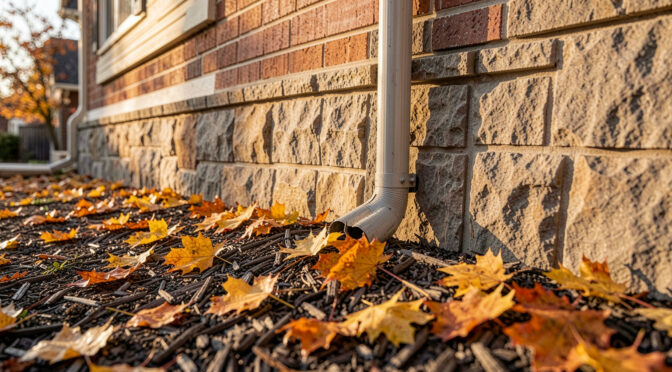
Rats and field mice are also agile climbers. They run up rough stone, downspouts, and low-hanging tree limbs to enter soffits, attic vents, and roofline joints. When gaps sit high on the roofline or deep within hidden crawlspaces, patchwork repairs fall short. Sure Thing Pest Control brings over 80 years of combined owner leadership. Our licensed, background-checked technicians complete over 40 hours of annual continuing education, setting up interception zones that stop pests outside before they enter.

For kid- and pet-friendly solutions that eliminate rodents at the source, review our residential pest control programs, including The Sure Cure. Request a free estimate through our contact page or call 513.247.0030 to protect your foundation this fall.

Frequently Asked Questions

What size hole can a mouse fit through around a home foundation?

An adult mouse can squeeze through a gap measuring one-quarter inch wide, which is roughly the width of a pencil or a dime. Because its skull is narrow and its ribs compress, any opening large enough for the head lets the rest of the body through.

Can mice chew through expanding spray foam?

Mice chew straight through cured polyurethane spray foam in minutes. Standard expanding foam dries into an airy, soft matrix that offers no defense against rodent incisors. It should only be used as a draft stop over tightly packed copper mesh.

Why should I use copper mesh instead of steel wool for exterior sealing?

Standard steel wool rusts and dissolves quickly in the damp climate of the Ohio River Valley. Knitted copper mesh will not corrode in wet conditions or soil contact. It retains its spring tension inside masonry voids, keeping a chew-proof barrier intact year-round.

Should I seal my foundation if I already hear mice scratching in my walls?

Do not seal the exterior without placing traps inside the living areas at the same time. Closing outdoor entry points while rodents are active inside traps them in wall voids, forcing them to gnaw through interior drywall, baseboards, and wiring to find food and water.

How do I seal brick weep holes without blocking drainage?

Never fill brick weep holes with caulk, mortar, or spray foam because trapped water will damage the wall assembly. Instead, install friction-fit stainless steel or copper weep hole inserts. These allow water and air to escape freely while blocking mice from entering.

Termite Prevention in Cincinnati, Ohio: Tips to Protect Your Home

Termites are one of the most destructive pests for homeowners in Cincinnati, Ohio. These wood-eating insects can silently damage floors, walls, and structural components, leading to costly repairs if left unchecked. The good news is that with proper preventive measures and professional help from Sure Thing Pest Control, you can protect your home from termites year-round.

Why Termite Prevention Matters in Cincinnati

Cincinnati’s warm and humid climate provides an ideal environment for subterranean termites, the most common termite species in the area. Termites often go undetected until significant damage has occurred, making termite prevention Cincinnati a crucial step for homeowners.

Signs of Termite Risk in Your Home

Before an infestation begins, termites look for:

  • Moisture around foundations, basements, or crawl spaces
  • Wood in contact with soil, including decks, fences, and firewood
  • Cracks and gaps in foundations or exterior walls

Recognizing these risk factors allows you to take action before termites can invade your home.

Top Termite Prevention Tips for Cincinnati Homes

1. Remove Wood and Debris from Around Your Home
Termites are attracted to wood and cellulose materials. Store firewood at least 20 feet from your home, remove tree stumps, and avoid piling mulch against foundations.

2. Control Moisture
Termites thrive in damp conditions. Fix leaking pipes, ensure gutters direct water away from your home, and maintain proper grading to reduce moisture around your foundation.

3. Seal Entry Points
Inspect your home for cracks in the foundation, gaps around windows and doors, and spaces where utility lines enter. Sealing these areas makes it harder for termites to gain access.

4. Maintain Wooden Structures
Keep siding, decks, and fences in good condition, and consider using treated wood or termite-resistant materials for structures in contact with soil.

5. Schedule Professional Inspections
Even with preventive measures, termites can still find their way inside. Professional termite inspections are essential to detect activity early. Sure Thing Pest Control provides comprehensive termite inspections for Cincinnati homes, identifying vulnerable areas and implementing targeted treatments.

6. Consider Termite Protection Plans
Long-term termite prevention often includes monitoring systems, bait stations, or warranty programs. These plans offer ongoing inspections, preventive treatments, and rapid response if termites are detected, keeping your Cincinnati home protected year-round.

Why Choose Sure Thing Pest Control for Termite Prevention in Cincinnati

Sure Thing Pest Control has extensive experience protecting Cincinnati homes from termites. Our services include:

  • Comprehensive termite inspections to detect activity early
  • Customized prevention plans tailored to your property
  • Long-term monitoring and treatment programs to maintain protection
  • Expert guidance on reducing termite risk and protecting your investment

Conclusion

Preventing termites in Cincinnati starts with proactive measures, moisture control, and professional inspections. By following these tips and partnering with Sure Thing Pest Control, homeowners can safeguard their property from destructive termites and maintain a safe, pest-free home.

Spring Pest Prevention Tips for Cincinnati Homes with Sure Thing Pest Control

Spring in Cincinnati, Ohio, is a time of growth, warmer weather, and — unfortunately — increased pest activity. As temperatures rise, ants, spiders, mosquitoes, and other pests start seeking food, water, and shelter, making spring the perfect time to take preventive action. With help from Sure Thing Pest Control, homeowners can protect their property and keep pests at bay all season long.

1. Inspect and Seal Entry Points

Pests often enter homes through small cracks, gaps, and openings around doors, windows, and foundations. Spring is a great time to:

  • Seal gaps around doors and windows
  • Repair damaged screens on windows and vents
  • Inspect your foundation and exterior walls for cracks

These preventive steps can stop ants, spiders, rodents, and other seasonal pests from invading your home. Sure Thing Pest Control can perform a professional inspection to identify less obvious entry points and provide targeted solutions.

2. Keep Yards and Landscaping Maintained

Spring cleaning isn’t just for your home’s interior — it’s crucial for your yard too. Piles of debris, tall grass, and dense vegetation provide perfect hiding spots for pests. To reduce infestations:

  • Remove leaves, branches, and clutter from your yard
  • Trim bushes and trees away from the house
  • Keep mulch and soil beds away from direct contact with your home’s foundation

Proper yard maintenance not only improves curb appeal but also helps prevent ants, spiders, and other pests from moving indoors.

3. Protect Food and Water Sources

Pests are drawn to accessible food and water. In the spring, sugary ant baits, bird feeders, pet food, and open trash cans can attract unwanted guests. Simple preventive steps include:

  • Store food in sealed containers
  • Keep trash bins tightly closed
  • Clean up standing water to reduce mosquito breeding

Sure Thing Pest Control also provides barrier treatments that minimize pest access to these attractants around your home.

4. Use Professional Spring Pest Control Services

While DIY measures help, professional pest control is the most effective way to prevent infestations. Sure Thing Pest Control offers:

  • Exterior barrier treatments for ants, spiders, and other seasonal pests
  • Inspections to identify early signs of infestations
  • Customized prevention plans for Cincinnati homes and businesses

5. Monitor and Maintain

Even after initial treatments, ongoing vigilance is key. Schedule regular inspections, monitor potential problem areas, and address minor issues before they become major infestations.

Conclusion

Spring is a beautiful season in Cincinnati, but it’s also prime time for pests. Taking preventive measures now can save you headaches, damage, and unnecessary costs later. Partnering with Sure Thing Pest Control ensures your home is protected with professional inspections, barrier treatments, and ongoing monitoring for a pest-free spring.

Winter Home Preparation Tips for Cincinnati, Ohio Residents

Winter in Cincinnati, Ohio, can bring cold temperatures, snow, and ice — along with increased risks for home damage and pest problems. Preparing your home ahead of the season not only protects your property but also keeps your family safe and comfortable. Here are some essential tips to get your home ready for winter.

1. Inspect and Seal Your Home

Start by inspecting your home for gaps, cracks, and openings where cold air, moisture, or pests could enter. Pay close attention to:

  • Windows and doors (install weatherstripping if needed)
  • Baseboards and crawl spaces
  • Exterior vents and utility penetrations

Sealing these entry points helps reduce heating costs and prevents winter pests, like mice and spiders, from finding a cozy spot indoors.

2. Maintain Your Heating System

Before the coldest months arrive, have your heating system checked by a professional. Replace filters, clean ducts, and schedule a tune-up to ensure efficient operation. A well-maintained heating system keeps your home warm and reduces the risk of carbon monoxide leaks.

3. Inspect Roofs and Gutters

Snow and ice can cause damage if your roof and gutters aren’t properly maintained.

  • Remove leaves and debris from gutters to prevent ice dams
  • Check for missing shingles or damaged flashing
  • Ensure downspouts direct water away from your foundation

Proper roof and gutter maintenance prevents leaks, water damage, and foundation issues during winter storms.

4. Protect Pipes from Freezing

Cincinnati winters can be harsh, and frozen pipes are a common problem. To prevent pipe damage:

  • Insulate exposed pipes in basements, attics, and crawl spaces
  • Disconnect and drain garden hoses
  • Keep cabinet doors open under sinks to allow warm air circulation

5. Prepare for Winter Pests

As temperatures drop, pests like mice, rats, and spiders seek shelter indoors. Take preventive steps to minimize infestations:

  • Seal gaps around doors, windows, and foundations
  • Store firewood away from your home
  • Keep attics and basements organized and dry

Professional pest control inspections and treatments can provide extra protection and peace of mind during the winter months.

6. Winterize Outdoor Spaces

Prepare your outdoor areas to reduce hazards and extend the life of your property:

  • Drain and store outdoor hoses, sprinklers, and irrigation systems
  • Protect sensitive plants with mulch or covers
  • Store patio furniture and grills

Conclusion

Winter in Cincinnati can be challenging, but with proper preparation, you can protect your home from damage, stay comfortable, and reduce the risk of pest problems. Start early, inspect thoroughly, and consider professional services — like heating system maintenance or pest prevention — to make this winter safe and worry-free.

The Early Invasion of Stink Bugs in Cincinnati

Over the weekend while I was out doing some work around the house, I noticed what looked to be a couple of stink bugs trying to make their way in. It seems they have already started the search for a location to overwinter. If you’ve had issues with stink bugs in the past, now is the time to start preparing and pest-proofing your home before they make their way in.

As you’ve probably noticed the days have been getting shorter and shorter which is the trigger for many insects including stink bugs, ladybugs, and boxelder bugs to begin searching for areas to overwinter in Great Cincinnati. Like your home or business! While treatment will help to greatly reduce the number of these over winter pests that make it into your home the best way to deal with them is prevention: pest-proofing your home to keep them from making their way in.

In the Cincinnati area, we have a great number of insects that try to make your home their overwintering hotel including the brown marmorated stink bug, Asian lady beetle, boxelder bug, and cluster flies just to name a few. Brown marmorated stink bugs are usually the first to start searching followed by the Asian lady beetle a few weeks later. If your home has had issues in the past than you should expect the same problem again this year.


You may ask, what measures should I take to prevent these overwinter pests?

Pest control treatment is a great start. At Sure Thing, we can perform a fall application to your home to prevent a large majority of the stink bugs, boxelder bugs, and other pests from making their way in. While this is a great method for greatly reducing the chances of these pests from entering your home or business some exclusions measures should also be taken to have the best results.

Another great method for stopping them before they make it into your home is to properly pest-proof your home. Here are some tips that you can do at home to reduce problems with fall insect invasions:

  1. Seal cracks around doors, windows, and dry vents with caulk. Cracks as small as 1/8” will allow some insects to fit through.
  2. Replace torn or damaged window screens.
  3. Seal openings around pipes and wires in the foundation and siding with caulk. For larger openings use expandable foam or other suitable materials.
  4. Check the seal/ weather stripping under the doors. While lying on the floor, look to see if you can see light coming from under or around the door.
  5. Adding a chimney cap to exclude Stink bugs and also other wildlife. Make sure to leave your damper closed when not in use.
  6. *Cover attic and roof vents with hardware cloth. The cloth should be 1/6 inch or smaller to exclude stink bugs*
  7. Remove window AC units if possible.
  8. Apply a residual insecticide to the exterior of the home. Treating underneath and around doors, windows, utility openings, and where there is a change of material.

What To Do Once They’re Inside

Once overwinter pests have made it inside your Cincinnati home or business, you’ll generally them in various places. They are commonly seen around chimneys, closets, window air condition units, attics, on shelves, and around windows and doors.

Once Stink bugs have already made it into your home a chemical treatment is not recommended as they are going to be in wall voids and other areas that can’t be accessed so you may still continue to find insects. Besides prevention, the best way to remove overwintering pests is simply to suck them up with a vacuum. Another great control measure in dark areas such as attics and basements is to use some variation of a light-baited/ funnel trap and soapy water traps.


Got Questions? Need help? Don’t want the Stink Bugs to invade your home? Feel free to reach out! We’re here to help!

How to Get Rid of a Cockroach Infestation

Cockroaches are resilient and resourceful pests. They are skilled at getting into homes through very small breaches and generally spend their time out of sight. They are also capable of living in a variety of environments. If your home is one of the environments where cockroaches have set up residence then you are likely looking for a way to get rid of them. They can be difficult to eradicate but you can be successful by combining professional intervention with consistent cleaning and proper home maintenance.

Bring in professional help

There are a variety of DIY options out there for treating cockroaches. You can see an example of the options available by visiting the pest control section of your local hardware store. You can kill off some of the cockroaches in your home with these methods. But, it is extremely difficult to fully eradicate a cockroach infestation on your own. These pests can get into the deepest, darkest nooks and crannies of your house. Many DIY methods come up short when it comes to killing off all of the roaches. Bringing in professional help will allow you to fully eradicate the infestation. A pest control professional will have the tools and expertise to completely get rid of a cockroach infestation.

Keep things clean

As a part of the process of eradicating a cockroach infestation you need to look at the condition of your house. If you have clutter lying around it can give cockroaches easy places to hide and move around. Overflowing garbage, spills, and dishes sitting around can provide cockroaches with food to eat. Take an honest look at the condition of your home and determine if you need to tidy up. Getting things in order can help you ensure that the cockroaches are gone and aide in preventing a re-infestation.

Catch up on home maintenance

Catching up on your home maintenance tasks can help you with the process of eradicating cockroaches. Check for areas within your home that have leaking water. Cockroaches are attracted to damp areas so it is important to address any leaks and subsequent damage caused by water. Cockroaches can squeeze into your house through small breaches. Check the perimeter of your home for cracks, shrinking caulk, or damaged weather stripping that may allow cockroaches inside. Make repairs to these areas as a part of your eradication process.

You can get rid of a cockroach infestation quickly by bringing in professional help. A top notch pest control professional will be able to effectively eradicate the infestation and provide you with a guarantee. You can maximize your chances of eradicating cockroaches and keeping them away by taking care of your house inside and out. Cockroaches can be difficult to get rid of but not impossible-with the right help.

How to Get Rid of a Cockroach Infestation

How to Get Rid of a Rodent Infestation

Rodents are pests that can cause serious issues for homeowners. If rodents get into your home they can damage your property and impact the health of your family. In order to protect your home and family you need to get rid of these pests as quickly as possible. Catching up on home maintenance, tidying up, and bringing in professional help will all work together to rid your home of a rodent infestation.

Catch up on home maintenance tasks

Catching up on home maintenance tasks is an essential part of protecting your house from rodents. Rodents can squeeze into your home through relatively small openings. In order to stop more rodents from moving in you need to close up areas that provide them with access. Take a walk around the perimeter of your home and check for breaches. Examine the eaves of your home, the attic, and the crawl space for signs of openings big enough for rodents. Seal up any breaches immediately. The other element of home maintenance you need to look at is the availability of water for the rodents. Rodents need water to survive and leaking pipes can provide them with the water they need. Check the water sources inside and around your house for any signs of a problem. Dealing with home maintenance tasks like these will help you in your efforts to get rid of a rodent infestation by taking away their access to shelter and water.

Tidy up your home

Tidying up your home can help you get rid of a rodent infestation for a couple of reasons. Rodents prefer to stay hidden and can do that in houses that are cluttered. If your home is packed full of things or stays in a state of disarray you may be providing rodents with ideal conditions. Lots of stuff lying around means plenty of places for rodents to hide. Messy spaces are also more likely to provide rodents with easy access to food. Forgotten crumbs, unwashed dishes, and overflowing trash cans are elements of a messy space that can give rodents plenty to eat. Eliminating the mess and decluttering your home are important steps toward getting rid of a rodent infestation.

Get professional treatment

The quickest and most effective way to get rid of a rodent infestation is to bring in professional help. A pest control professional will be able to use their training, experience, and tools to eradicate your rodent problem. Options for rodent control include traps and poison and will be tailored to the needs of your situation. Oftentimes a combination of traps and poison is used to effectively get rid of rodents.

Once you have eradicated rodents from your home you need to start thinking about how you will keep them away in the future. Staying on top of your home maintenance and cleaning duties will minimize your risk for future rodent infestations. You can also set your home up on regularly scheduled pest control services. Having a pest control professional treat your home for pests on a regular basis can help prevent a new infestation from occurring.

Termite Treatment Options in Cincinnati

The most effective way to deal with termites is to bring in professional help. In Cincinnati, you have a number of options when it comes to getting professional termite treatment. Two of the most effective options available in the area for eradicating termites are the Advance® Termite Baiting System and liquid Termidor® termiticide/insecticide treatment. Both of the options are effective choices for killing off active termites and protecting your home going forward.

Advance® Termite Baiting System

The Advance® Termite Baiting System provides an intelligently designed and high-quality defense against termites. This treatment option is less invasive than the typical liquid treatment options. The first step in the process of having an Advance® Termite Baiting System installed is to get a professional termite inspection. Once the infestation status of the home is determined, baiting stations are placed in the soil around the house. The locations of the baiting stations are determined by current termite activity in an area and the potential for activity in a given area. The Advance® Termite Baiting System stations are then checked regularly for signs of termites. When termites are discovered they are placed into a bait cartridge where they are exposed to termite bait. The pests feed on the bait, return to the colony, and send other termites to the bait stations. This process reduces the size of the colony in the beginning and completely kills it off over time.

Liquid Termidor® termiticide

Liquid Termidor® is an excellent termite treatment option for the people of Cincinnati and anywhere else. It has been named the #1 termite defense in America. Termidor® is undetectable to termites because they cannot see, taste, or smell it. This liquid termiticide is applied along the foundation walls or exterior perimeter of your home. Termidor® binds tightly to the soil and kills termites that come in contact with or ingest it. If a termite comes in contact with Termidor® it becomes a carrier and transfers the termiticide to others in the colony. Since termites do not die immediately upon contact they have time to spread it to others. This makes Termidor® a very effective option for fully eradicating a termite infestation.

There are additional termite treatment options on the market but the two mentioned here have proven to be the best available. Now the question is, ‘Which treatment option is right for my home in Cincinnati?’ The answer to that question depends on a number of factors including the construction of your home, the type of infestation, and your risk for developing more termite issues in the future. You and the termite professional you choose will work together to determine the option that will best address your current infestation and protect your home going forward.