Category Archives: Termite Swarmers

Termite Inspection Company in Cincinnati: What Buyers Should Ask

Choose a termite inspection company that explains what it checked and names the areas it could not reach. For an older Greater Cincinnati home, a useful written report goes beyond “no termites found.” It tells you where the inspection stopped and what still needs checking before you buy.

If you are under contract, ask these questions before booking. Your inspection contingency leaves a limited window to arrange access or get a treatment assessment, and unexplained findings can leave you making a purchase decision without enough information.

Is the termite report just a formality for my lender?

A Wood-Destroying Insect report helps you understand the property’s condition, not just satisfy a lender. Read it for evidence of infestation and damage, then check which areas the inspector could not access. No live insects found does not mean no damage exists.

Ask your lender early whether it requires a WDI report and which form it accepts. Requirements vary by lender and loan type. Then check the inspection deadline in your purchase contract with your real estate agent so there is time to address findings before you sign off.

Does any licensed pest company qualify to sign a termite report?

A license logo on a van is not enough to verify someone’s qualifications. Ask which license category covers the inspection and who will perform it. Check the current requirements through the Ohio Department of Agriculture at agri.ohio.gov or the Kentucky Department of Agriculture at kyagr.com, depending on the property’s location.

Sure Thing Pest Control’s technicians are licensed and certified. They are also background checked and complete over 40 hours of additional training annually. You should still ask us, or any firm you consider, for the information needed to verify the credentials relevant to your inspection.

Is a quick walk-through the same as a real termite inspection?

A walk through the basement with a flashlight does not cover the whole property, and most of the wood that matters sits out of sight. A thorough inspection follows possible termite entry routes outside, then checks accessible structural wood inside. Judge the inspection by its scope and written findings, not the price alone.

Outside first

The inspector should examine the foundation and the exterior trim where wood meets the house. Deck and porch framing need attention, particularly where wood meets soil. Mulch and shrubs against the house can conceal foundation surfaces, so ask whether anything prevented a close look.

Then inside

Inside, the inspection should include accessible sill plates and floor joists, along with support posts and plumbing penetrations. Accessible crawlspaces and attic areas also belong in the scope. Ask how the inspector will reach them; a room-by-room walk-through is not the same as checking the framing beneath it.

Does the inspector probe the wood or just look at it?

Does the inspector probe the wood or just look at it?, surethingpc.com

Termites can eat inside wood while leaving its surface intact. Inspectors tap suspect wood to listen for hollow areas and probe it where appropriate. A moisture meter helps identify damp conditions that deserve closer attention.

Ask the inspector to show you any suspect wood and explain the evidence. Mud tubes and discarded wings warrant attention, while bubbled paint or hollow wood need further evaluation because they can have other causes. Neither probing nor a visual inspection can reveal every concealed timber.

For the outdoor side of this, our piece on how to tell termite damage from rot on a deck explains the differences in more detail. Our five common termite signs can help you identify areas to point out at the appointment.

Can termites hide in an old stone foundation?

Can termites hide in an old stone foundation?, surethingpc.com

Stone does not feed termites, but gaps in masonry can give them a route to structural wood. Older homes in Cincinnati and established communities such as Lebanon and Springboro may have stone foundations or older crawlspaces. Ask how the inspector will check those features rather than treating a solid-looking wall as proof of protection.

Mortar joints and voids

Termite evidence can hide along mortar joints and in foundation voids. The inspector should check accessible joints and the wood supported above them. Concealed voids cannot always be inspected without opening the structure; the report should explain that limitation rather than imply they were checked.

Damp crawlspaces

Moisture makes a crawlspace more favorable to subterranean termites. Ask whether the findings address drainage around the foundation, including grading, and whether the crawlspace’s ventilation or vapor barrier needs attention.

Fixing moisture conditions helps address the source of the problem, but it does not replace treatment for an active infestation. Our termite prevention guide covers moisture control in more depth.

Does a clean report mean the house is termite-free?

A clean report means the inspector did not find reportable evidence in the areas inspected on that date. It cannot rule out termites behind finished walls or beneath inaccessible floors. Wood hidden behind a finished wall stays hidden in every season, which is why the limitation belongs in writing.

Termites can remain active inside structures year-round, while swarms are most often seen in spring. A late-autumn inspection in Greater Cincinnati is still useful, but the absence of swarmers is not proof that termites are absent. Ask whether moisture problems or blocked areas warrant a follow-up.

Will insurance or a home warranty pay for termite damage?

Homeowners insurance typically does not cover termite damage. Home warranties often exclude pre-existing damage, too, so read the actual exclusions before counting on either to pay.

If an inspection finds damaged framing, get the repair assessed before agreeing to a purchase adjustment. A termite treatment quote does not tell you what structural repairs will cost. Ask your real estate agent how repair requests fit your contract and contingency deadline.

Does a blocked area on the report matter?

Blocked areas leave unanswered questions about the house. Stored belongings may hide a basement wall, or a sealed panel may prevent entry into a crawlspace. Ask exactly what could not be checked and what would be needed to gain access.

Moving boxes is different from opening a finished wall. Discuss any invasive work with the seller and your agent before arranging it, and ask the inspector whether access would resolve the concern.

Do not let the contingency deadline turn an unexplained limitation into an accepted risk. A cheap inspection that leaves structural areas unchecked costs more later. On a house from the 1940s, the framing behind a sealed wall is often the part you most need to see.

Should the company that inspects also be the one that sells the fix?

A company may provide both inspection and treatment, but the written findings should support the treatment recommendation. Ask to see the evidence before reviewing a proposal. For a home purchase, getting an independent treatment assessment can help you evaluate the findings without relying on one company’s recommendation.

Choose an inspector who will explain the suspect wood and show you accessible problem areas, rather than choosing on price alone. Ask what the report establishes, what remains uncertain, and why any treatment is recommended.

Sure Thing Pest Control has been locally owned and family-run since 1997. Owners Jerry Zapf and Glenn Scherzinger bring over 80 years of combined pest control experience. We serve Greater Cincinnati, along with Lebanon and Springboro in Ohio and Burlington and Fort Mitchell in Northern Kentucky.

For a free estimate, call 513.247.0030 or use our contact form. Include the property address and inspection deadline so you can discuss your needs. Review our termite inspection and control services and our service areas before booking.

Frequently asked questions

Is a WDI report required to buy a house?

Not every home purchase requires a Wood-Destroying Insect report. The requirement depends on the lender and loan type, so ask your lender which report it needs before booking. Even when it is not required, an inspection can help identify damage and areas that need further investigation.

Can I do my own termite inspection?

You can look for mud tubes or discarded wings and point out damp or damaged wood to an inspector. Those checks do not replace a professional inspection or the written report your lender may require. Avoid breaking apart suspect wood or mud tubes before the inspector evaluates them.

How long should a termite inspection take?

There is no single duration that proves an inspection is thorough. The size of the property and its foundation type affect the time needed. Ask which exterior and interior areas are included and how blocked crawlspaces or concealed framing will be documented.

What should I do if the inspection finds termites?

Leave the evidence undisturbed and get a licensed treatment assessment. If floors sag or framing appears compromised, have a structural engineer assess the damage before closing. An independent treatment quote can also help you evaluate the proposed work.

What should I ask a termite inspection company before booking?

Ask how to verify the inspector’s qualifications and which areas the inspection covers. Confirm how suspect wood will be evaluated and how access limitations will appear in the written report. For a home purchase, also confirm that the report meets your lender’s requirements and can be completed within your contract’s inspection window.
Signs of Termites in a Deck: How to Tell Them From Rot

A soft spot on a deck is a reason to stop what you are doing, not a reason to reach for the stain can. The wood under your foot may be rotting from water, or termites may be eating it from the inside, or both. The fastest way to tell is a probe: push a flathead screwdriver gently into the suspect wood and compare it with sound wood a few inches away. If the screwdriver goes past the surface, the wood is already compromised, and a licensed pest professional should look at it before you do anything else.

Signs of termites in a deck usually show up at the points where wood meets soil: the ground line of each post, the post base, the top of each concrete pier, and the stair stringers. Termites eat wood from the inside out, so a board can look firm from above while the inside is hollow. That is why a visual check alone is not enough, and why every post and stringer that touches the ground needs to be checked.

Why a Soft Stair Stringer in October Calls for a Probe, Not a Brush

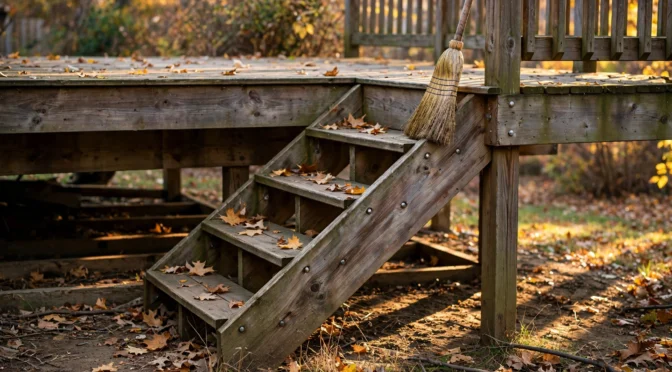
Think about the usual autumn routine. You are clearing maple leaves off the deck stairs, one foot comes down on the stringer, and it gives a little more than it should. The instinct is to sand it and seal it before the first freeze. That instinct makes sense for a weathered board, but it skips the question that matters: what is causing the softness?

Fungal rot and subterranean termites both leave wood that feels wrong, and from the top they can look almost identical. Termites are the one that hides. WebMD notes that termites eat wood from the inside out, so infested wood often looks normal on the outside, and serious damage usually takes three to eight years to develop. A clean-looking stringer can still have a lot of damage behind the surface. Test before you treat.

Find Every Post and Stringer in Contact With Soil First

Before you start poking, make a quick list of the wood that is most likely to be involved. Subterranean termites are the most common type across most of the United States, and they live in soil and in wood connected to soil. In Greater Cincinnati and Northern Kentucky, summer humidity and seasonal rain keep the ground around deck posts damp for long stretches, which is exactly the condition that holds moisture against wood. Walk the deck and mark:

  1. Every post set in soil or in a concrete footing that sits at grade.
  2. Every stair stringer that rests on the ground or sits close to it.
  3. Any wood buried in or touching mulch or landscape edging.
  4. Firewood stacked against the deck or the house.
  5. Any spot where deck framing touches the house wall.

Firewood and mulch matter more than most people expect. Wood that touches soil, or that sits against the house, gives termites a direct path from the ground into the structure. Wood that stays wet for weeks, as wood under a downspout line or in shade does, is easier for both rot and termites to work on.

Probe the Ground Line, Post Bases and Pier Tops

Probe the Ground Line, Post Bases and Pier Tops, surethingpc.com

The probe itself takes about ten minutes. You need a flathead screwdriver and a bit of patience. Work in this order so you are comparing like with like:

  1. Start at the spot that gave way, usually a stringer or the bottom of a post.
  2. Push the tip gently into the wood at the ground line. Do not stab or lever. Let the tip find its own way.
  3. Repeat at the post base where the post meets the bracket or pier.
  4. Check the top of each concrete pier, where it meets the wood.
  5. Move outward from the damaged spot to sound wood, and probe a few inches away from the suspect area.
  6. Compare the feel. Sound wood resists the tip. Suspect wood gives way.

The point is contrast. A soft spot means little on its own, because weathered wood feels soft at the surface everywhere. What matters is whether the suspect area is noticeably softer than the wood right next to it. If the screwdriver goes in past the surface layer, that is the signal to stop and call. The EPA recommends this same first detection step, probing exposed wood for hollow spots with a flathead screwdriver or similar tool.

Tell Fungal Rot From Termite Galleries

Once you have a probe result, the next question is what it means. Fungal rot and termite damage look different when you know what to look for. Use this as a reading guide, not a diagnosis. A pro confirms it.

What you see or feel Fungal rot Subterranean termite damage
Texture on the surface Soft and spongy throughout the affected area Firm outside, with a thin shell of wood left on top
Colour Darkened, often brown or grey, stringy Wood colour is near normal on the outside
How it breaks Crumbles in cubes or pulls apart along the grain Gives way suddenly once the outer shell is breached
Inside the wood Uniform decay with no defined tunnels Smooth-walled galleries tunnelled along the grain, often packed with soil or mud
Where it sits Worst where water sits: post bottoms, under downspouts, low spots Where wood touches soil or the foundation, often in hidden spots

Rot follows moisture and tends to be widespread in a damp area. Termite damage can be patchy and hidden, with the tunnels doing most of the work. If you open a suspect board with a pry bar and see packed soil or mud in smooth tunnels, that is a strong sign of termites, not rot.

Check the Mud Tubes on Piers, Post Bases and Stair Skirts

Check the Mud Tubes on Piers, Post Bases and Stair Skirts, surethingpc.com

Mud tubes are often the most visible sign, and the one people most often miss because they are in shaded spots. Subterranean termites build these tubes from soil and wood particles to travel safely between their colony and their food. WebMD notes they are often found on foundation walls, fences, sheds, cracks between boards and crawl spaces.

On a deck, look at these spots in particular:

  • The concrete pier, especially the shaded gap where the post meets it.
  • The post base and the bracket around it.
  • The edges of footings and the underside of stair stringers.
  • The stair skirt and any space under the stairs.
  • Cracks between boards and along the joints where wood meets masonry.

A mud tube is a route map. It shows where the colony is travelling, which is why it matters more than the damage itself. If you see one, photograph it with a coin or ruler for scale, and leave it in place. Knocking it down does not remove the colony, and the termites will rebuild it. A technician needs to see where the tube starts and where it runs.

Inspect the Ledger Board From Both Sides

The ledger board, where the deck bolts to the house, is the highest-stakes spot on the whole structure. It is the joint where deck wood meets house framing, and it is the point where a deck problem can become a house problem. If there is a gap, or if the flashing has failed, wood can sit against wood or soil at that joint. That gives termites a bridge toward the band joist and then the subfloor. WebMD also notes that termites can enter through cracks in concrete and seams where plumbing and electrical lines run, so the house side needs checking too.

Inspect the joint in two passes:

  1. From the deck side: Look along the ledger for gaps between the ledger and the house wall, for flashing that is torn, missing, or lifting, and for soft or darkened wood where the ledger meets the house. Probe the lower edge of the ledger where it sits closest to the ground.
  2. From the house side: Check the rim joist or band joist behind the ledger. Look for mud tubes on the foundation, cracks in the masonry, staining, and any soft wood. If you can access a basement or crawl space, check the subfloor and joists directly above the ledger.

You are not trying to diagnose the whole house from this inspection. You are looking for evidence that the deck and the house are connected by damaged wood or open paths. If you find either, that is a call to a licensed inspector, not a weekend repair.

What Most People Skip on a Deck Check

Most homeowners do a reasonable job on the obvious spots and still miss termites. These are the mistakes that matter most:

  • Waiting for frass. Pellet-shaped droppings are characteristic of drywood termites. Subterranean termites, the common type in this region, usually do not leave that kind of frass. On a deck with ground contact, do not wait for droppings to confirm an infestation. Mud, packed soil and hollow galleries are the more reliable signs.
  • Trusting one clean board. A single sound-looking board does not clear the deck. Termites eat from the inside, so check every post and stringer that touches soil or sits near it.
  • Knocking down the mud tube. It feels like progress, but it removes the evidence a technician needs and the colony rebuilds it anyway.
  • Ignoring mulch, firewood and debris. Wood buried in mulch or stacked against posts holds moisture against the structure and creates a path from the ground.
  • Confusing carpenter ants with termites. Carpenter ants excavate damp or softened wood to build nesting tunnels, and they can expand existing voids and speed up deterioration. They need a different fix, and they often appear where wood is already wet. Identify what you have before you treat it. Our carpenter ant extermination page covers that case.

General trade knowledge also says that a deck check done once in spring and forgotten misses the fall season, when many homeowners are cleaning up and noticing damage for the first time. Make the check part of your autumn routine.

What to Do If a Check Fails

Sure Thing Pest Control technician smiling in branded service van

If the probe finds soft wood, galleries or mud tubes, work through the steps below in order. The first two protect the evidence an inspector needs, and the last one gets a licensed professional on the job.

None of these steps asks you to dig, treat or diagnose anything yourself. They are about not making the damage harder to read or the situation worse while you wait for help.

  1. Stop the DIY work. Do not seal, stain, sand or replace boards over suspected damage. That hides the evidence and does nothing to a colony in the soil.
  2. Photograph everything. Take pictures of each probe spot and each mud tube, with a coin or ruler for scale. Note the location on the deck. This helps the inspector know exactly where to start.
  3. Keep weight off the affected area. Do not load the stairs or the deck near soft spots until someone has looked at them.
  4. Do not treat the soil yourself. Soil-applied termiticides and baits are licensed professional treatments. The EPA states that termiticide application can in most cases only be properly performed by a trained pest management professional, and that improper barrier treatment can contaminate the home and nearby drinking water wells and still fail to protect against termites.
  5. Book a licensed inspection. Sure Thing Pest Control is locally owned and family-run, operating since 1997, with owners bringing over 80 years of combined pest control experience. Technicians are licensed and certified, background-checked, and complete more than 40 hours of additional training each year. Call 513.247.0030 for an immediate free estimate, or request a quote through the contact page. You can learn more about the termite inspection and control service before you call.

What Actually Stops a Subterranean Colony

A fall stain or a surface sealer will not stop a subterranean colony. Coatings can slow the wood from drying out and make the deck look better, but they do not reach the soil where the colony lives. Treat them as maintenance, not termite control.

The EPA lists the approved treatment categories: liquid soil-applied termiticides, termite baits, termiticide-impregnated building materials, and wood treatments. The two common forms are conventional barrier treatments and termite baits. Baits use cellulose with a slow-acting insecticide, and they work by drawing the colony in over time. Which approach fits depends on the structure and what the inspection finds, which is why it belongs to a licensed professional.

Prevention is in your hands now, and it lowers the risk whatever treatment you choose. Based on EPA prevention guidance:

  • Keep soil around the posts and foundation dry through grading and drainage.
  • Keep gutters and downspouts working, and direct water away from the deck footings.
  • Fill cracks in concrete and around utility penetrations.
  • Keep trees and shrubs from growing against wood.
  • Do not stack firewood or wood debris against the deck or the house.
  • Fix leaks promptly, and keep vents clear.

Do these things this month, before the ground freezes and the chance to see the damage properly is gone. If your probe test found soft wood, mud or hollow galleries, the next step is an inspection, and the sooner that happens, the less of the structure is at risk. For a fuller picture of your options, see our guide to termite inspection and control options in Cincinnati.

Frequently asked questions

How is termite damage on a deck different from wood rot?

Termite damage feels firm on the surface and gives way inside, with smooth tunnels often packed with soil or mud. Rot is soft and dark, and it follows moisture. Compare suspect wood with sound wood a few inches away, then have a pro confirm.

Are mud tubes on a deck always a sign of termites?

Subterranean termites build mud tubes from soil and wood particles to travel between their colony and their food. Tubes on piers, post bases and stair skirts are a strong reason to call a licensed inspector. Photograph them and leave them in place rather than knocking them down.

Can termites from a deck get into the house?

Yes, through direct wood-to-home contact, through cracks and utility seams, and through the ledger joint where deck wood meets the house framing. Check that joint from both the deck side and the house side.

Does staining or sealing the deck stop termites?

No. Stain and sealer are cosmetic maintenance and do not reach the soil where a subterranean colony lives. Soil-applied termiticides and baits are licensed professional treatments.

What time of year are termites most active?

Subterranean colonies feed year-round in the soil, so damage can be progressing whatever the season. Many homeowners notice it during fall deck maintenance, which is a good time to check. If you have a specific concern about timing, ask the inspector when you call.

Termite Prevention in Cincinnati, Ohio: Tips to Protect Your Home

Termites are one of the most destructive pests for homeowners in Cincinnati, Ohio. These wood-eating insects can silently damage floors, walls, and structural components, leading to costly repairs if left unchecked. The good news is that with proper preventive measures and professional help from Sure Thing Pest Control, you can protect your home from termites year-round.

Why Termite Prevention Matters in Cincinnati

Cincinnati’s warm and humid climate provides an ideal environment for subterranean termites, the most common termite species in the area. Termites often go undetected until significant damage has occurred, making termite prevention Cincinnati a crucial step for homeowners.

Signs of Termite Risk in Your Home

Before an infestation begins, termites look for:

  • Moisture around foundations, basements, or crawl spaces
  • Wood in contact with soil, including decks, fences, and firewood
  • Cracks and gaps in foundations or exterior walls

Recognizing these risk factors allows you to take action before termites can invade your home.

Top Termite Prevention Tips for Cincinnati Homes

1. Remove Wood and Debris from Around Your Home
Termites are attracted to wood and cellulose materials. Store firewood at least 20 feet from your home, remove tree stumps, and avoid piling mulch against foundations.

2. Control Moisture
Termites thrive in damp conditions. Fix leaking pipes, ensure gutters direct water away from your home, and maintain proper grading to reduce moisture around your foundation.

3. Seal Entry Points
Inspect your home for cracks in the foundation, gaps around windows and doors, and spaces where utility lines enter. Sealing these areas makes it harder for termites to gain access.

4. Maintain Wooden Structures
Keep siding, decks, and fences in good condition, and consider using treated wood or termite-resistant materials for structures in contact with soil.

5. Schedule Professional Inspections
Even with preventive measures, termites can still find their way inside. Professional termite inspections are essential to detect activity early. Sure Thing Pest Control provides comprehensive termite inspections for Cincinnati homes, identifying vulnerable areas and implementing targeted treatments.

6. Consider Termite Protection Plans
Long-term termite prevention often includes monitoring systems, bait stations, or warranty programs. These plans offer ongoing inspections, preventive treatments, and rapid response if termites are detected, keeping your Cincinnati home protected year-round.

Why Choose Sure Thing Pest Control for Termite Prevention in Cincinnati

Sure Thing Pest Control has extensive experience protecting Cincinnati homes from termites. Our services include:

  • Comprehensive termite inspections to detect activity early
  • Customized prevention plans tailored to your property
  • Long-term monitoring and treatment programs to maintain protection
  • Expert guidance on reducing termite risk and protecting your investment

Conclusion

Preventing termites in Cincinnati starts with proactive measures, moisture control, and professional inspections. By following these tips and partnering with Sure Thing Pest Control, homeowners can safeguard their property from destructive termites and maintain a safe, pest-free home.

Signs of Termites in Cincinnati and Northern Kentucky

Springtime in Cincinnati and Northern Kentucky brings warming temperatures, blooming flowers, outdoor sports, and gardening! This is also the time that a lot of homeowners realize they have a termite infestation.


Why worry about Termites?

Termites in Cincinnati are a sneaky and destructive insect. They have been compared to a silent wrecking crew because of the amount of serious damage they can cause. Each year, termites cause about $5 billion worth of damage and treatment cost in the United States. This damage can add up to thousands and typically isn’t covered by homeowner’s insurance. Additionally, termites and termite damage can cause serious problems when you go to sell or purchase a home which we’ll discuss in a later blog post.


What are the warning signs of Termites?

The first obvious signs of a termite issue are mud tubes (shelter tubes). These tubes are about the width of a pencil but can be as wide as a sheet of paper. Termites in Cincinnati build shelter tubes because they don’t have a hard exoskeleton like ants so they need something to protect them from the elements when they leave the soil. Not seeing shelter tubes? See the 2nd picture below.

The next sign you want to look for our wings. When termites swarm (the next generation) they shed their wings and then try to go back into the soil to form their own new colony. If you have a swarm inside your home, you’ll typically find thousands of wings by a door or window as they’re going to the light to get back outdoors. See the 3rd picture below.

The last visual sign is mud on walls or the floor, termites don’t know which way is up, down, left or right so they’ll end up poking out of the wall or floor and then place some mud over this area to seal the hole. See the 1st picture below.

See any of the signs mentioned above or pictured below reach out to us at 513-247-0030 or sales@surethingpc.com to get your termite issues solved with the Sure Cure. Not seeing any of the signs mentioned above but still worried about termites don’t hesitate to reach out for a termite inspection.

Termite damage to the drywall and baseboard.

Mud tubes (shelter tubes) that subterranean termites are using to climb these block supports.

Subterranean termite wings


Spring Time is Termite Swarming Time in Cincinnati

Springtime doesn’t only bring April Showers and May flowers but it also brings out termite swarmers in Cincinnati. Termite swarmers are one of the most visible signs of a termite infestation. Swarmers are flying termites and typically come out in hundreds to thousands. These winged termites emerge in the spring in search of a mate to begin a new colony.

Most termites in a colony are workers termites. They are soft-bodied, creamy-white in color and spend nearly all of their time in the soil looking for a food source. Worker termites don’t have a hard exoskeleton so when exposed to sunlight or air they can dry out easily. This is why these workers create shelter tubes. Swarmers, on the other hand, are designed to leave the soil and strike out in search of mates in the hope of starting a new colony. They are dark in color with four wings of equal size and shape.

When termite colonies swarm indoors, the insects are attracted to light sources, this is why home and business owners may find piles of swarmers on windowsills or around other light sources. Soon after emerging, termite swarmers shed their wings, so it’s not uncommon to see piles of wings on windowsills or countertops.

Nearly all termite swarmers in Cincinnati will die off if they emerge inside of a structure. Just because these termite swarmers die off doesn’t mean there is no longer an infestation. Termite swarming inside indicate an underlying infestation that may not be visible.  If you’re seeing swarmers inside your home or business or suspect you may have termites in or around your structure contact us so we can come out and perform an inspection to let you know what’s happening.

Flying Ants or Termites Swarmers?

Happy Spring! Springs marks the beginning of baseball season, but also the beginning when we start to see the signs of termites emerging from their wintering over here in Cincinnati and Northern Kentucky. In the early part of spring, one of the first and most obvious signs of a termite infestation in our region is the emergence of termite swarmers.

It’s very common for home and business owners in Cincinnati to mix up flying ants for termite swarmers unless you know what you’re looking for to distinguish the difference between the two. Continue reading to help inform yourself of the major differences to be looking for if you see a swarm of flying insects inside or outside your home.

From a Distance:

When flying ants or termites appear it’s often in a swarm of hundreds to thousands. If it happens at night you’re going to see them flying or congregating around interior or exterior lights on your home or business. If it happens during the day you’re going to see them congregating on the inside of your windows. Both insects are attracted to light so what’s happening is they’re trying to get to the sunlight outside. When swarming happens inside this is a sign that you have a mature ant or termite colony inside your home or business and that they’re being forced out by the colony as it matures.

You may also see a bunch of wings laying around, both ants, and termites lose their wings when they mate. Another indication of termites and not ants is that termite swarmers have white colored wings that are stacked on top of each other. This ends up making the white color bold and appearing as if they only have one set of wings.

Getting Up Close and Personal:

When looking at the ant or termite the first thing to look at is the wings. If the wings are about 1/3″ to 1/2″ longer than the body and completely rounded on the ends this means you’re looking at a termite swarmer. Where with ants you’ll notice 2 sets of unequal length wings and wings that are more pointed at the ends.

Next, when you look at the bodies there are three major differences to look for. Ant’s will have the distinct, pinched in waist and look segmented, while termites do not have this pinch and appear to have more of a cigar shaped body.

The second thing to look at is their antennae, ant antennae have an elbow in them and have a stick-like quality. While termite antennae are straight and look like they are made up of many segments.

The last difference is the size, termite swarmers are considerably smaller than carpenter ant swarmers. But since it’s very rare to be finding both insects inside your home or business swarming at the same time it’s good to remember that carpenter ant swarmers are about 13mm to 17mm in length. So if you’re seeing winged insects that are much smaller, you probably have termite swarmers.

Check out our termite page for more information and details about termites.

If you’re finding winged insects inside your home or business and determine them to be termite or ant swarmers, it’s important that you do something about it. While carpenter ants are less of a threat than termites, they can still do quite a bit of damage to your structure. Carpenter ants are also a warning sign that your home is being damaged by water. Carpenter Ants prefer soft or rotted wood to create tunnels and channels to nest in.

Sure Thing Pest Control is your hometown partner in dealing with termites or carpenter ants in Cincinnati and Northern Kentucky. If you’re ever worried that your home may have an ant or termite infestation feel free to reach out to us. You can trust our educated team to protect your home or business from wood-destroying insects.