Brown recluse spiders are rare in Ohio, with established populations mainly in the southwest near the Indiana border. A brown spider in a Cincinnati basement is more likely to be a harmless lookalike. Check the eyes before deciding: a brown recluse has six, arranged in three pairs, while most spiders have eight.
Finding a spider while moving a storage box is reason to pause, not to assume the worst. Keep your hands clear and get a photograph if you can do so safely. Color alone will not tell you what you found.
Are Brown Recluse Spiders Really Found in Cincinnati?
Yes, but they are uncommon. Ohio’s established populations are mainly in the southwestern corner near Indiana, and Cincinnati sits in that part of the state, so a recluse here is possible. Being closer to the population still does not make it common. That does not make every tan basement spider a likely recluse.
When brown recluses are found in Ohio, they are usually indoors, where sheltered storage spaces provide places to hide. They avoid people and generally bite when pressed against skin, such as inside clothing or gloves. Identify the spider before deciding what treatment, if any, is needed.
Why the Eyes Matter More Than Color
The eye arrangement is the most reliable field mark, but it takes a clear, magnified view. Six eyes alone do not confirm a brown recluse; other features must match too. Do not handle a live spider to get a closer look.
- Use good light and magnification. A sharp close-up photograph may be easier to examine than a moving spider.
- Count the eyes. A brown recluse has six, arranged in three pairs at the front of the head.
- Check the arrangement. The pairs form a tight arc. Eight eyes rule out a brown recluse.
- If the eyes are unclear, leave the identification open. Follow the photo and specimen steps below rather than guessing.
Find the Violin on the Front Body Section, Not the Belly
The violin marking is on the cephalothorax, the front body section where the legs attach. It is not on the abdomen. Looking for a pattern on the spider’s rear body section can send the identification in the wrong direction.
A violin-like mark does not confirm a recluse, and a faint marking is not enough to rule one out. Check the eyes and legs together rather than relying on a shape that lighting can make difficult to read.
Compare Legs, Body and Web Against the Usual Lookalikes
Wolf spiders, funnel weavers and cellar spiders account for many mistaken sightings. A heavy body or obvious leg spines points away from a recluse. A nearby web can help, but do not assume a spider built a web just because it is beside one.
| Feature | Brown recluse | Wolf spider | Grass or funnel weaver | Cellar spider |
|---|---|---|---|---|
| Eyes | Six, in three pairs in a tight arc | Eight | Eight | Count varies by species; do not identify by count alone |
| Legs | Long and thin, with fine hairs and no obvious spines or dark bands | Thicker, hairy and spiny | Slender; appearance varies by species | Extremely long and thin |
| Body | Pale brown to reddish brown | Heavier-bodied | Flat and brownish | Small compared with its legs |
| Web | Irregular silk in sheltered spaces | Hunts on the ground rather than using a prey-catching web | Sheet web with a funnel | Loose, tangled web in a corner |
| Behavior | Hides in dark, sheltered spots and avoids people | Runs across floors and retreats from people | Moves quickly across floors | Usually stays near its web; rarely bites |
Mahoning County Public Health in northeast Ohio, as quoted by WKBN, calls the brown recluse the most commonly misidentified spider. That warning is useful in Cincinnati too: a brown color and quick movement are not enough to identify one.
What to Do When You Still Cannot Tell
A clear photograph is more useful than a crushed specimen. Keep your distance if capturing the spider would mean reaching into clutter or handling it.
- Photograph it from above and from the front. Use bright light and include an object for scale without placing your fingers beside it.
- If you can safely contain it without touching it, use a clear, sealed container. Ask a pest professional or local extension office about identification.
- Note where you found it. Repeated sightings in one storage area give an inspector somewhere specific to start.
Recurring spiders usually point to an insect food supply, not to the spider itself. An inspection should look beyond the spider to moisture, clutter and entry gaps, rather than treating only the spot where it appeared. A single spider in a basement corner is a lead for the inspector, and a pattern of sightings in one storage area is a stronger one.
When Is a Spider Bite a Reason to See a Doctor?
A recluse bite may not hurt at first. If a suspected bite becomes increasingly painful or the redness spreads over the following hours, seek medical care promptly. A skin lesion alone cannot identify the spider responsible.
- Wash the area with soap and water and apply a cold pack wrapped in cloth.
- Record when you noticed the bite and photograph changes.
- Seek medical advice if symptoms worsen rather than waiting to confirm the spider.
- Call emergency services for trouble breathing or another severe reaction.
Bring a safely contained specimen or a clear photograph if you have one, but do not delay care to catch the spider. For a child, contact their medical provider; for a pet, call a veterinarian. Avoid diagnosing a bite from an online photograph.
Why Spiders Show Up in Basements in October
An October sighting does not establish that a spider just moved indoors for winter. Basements provide shelter and insect prey, and moving seasonal storage can expose a spider that was already there.
Cardboard and stored clothing
Cardboard and undisturbed clothing give spiders places to hide. Clutter also shelters insects they eat. Wear gloves when moving stored items, and shake out clothing or shoes that have been left in sheltered outdoor spaces before putting them on.
Moisture and the insects spiders eat
Damp conditions support some of the insects spiders follow. Check for leaks and condensation, and use a dehumidifier where needed. Reducing that food supply does more over time than repeatedly spraying visible spiders.
For entry gaps, see our guide to rodent exclusion and sealing your home before winter. Smaller openings around pipes or doors also deserve attention because insects and spiders can use them.
How to Cut Spider Food Without Fogging
If you have tried everything and spiders keep returning, start with the storage area rather than another spray. Clearing cardboard and reducing moisture address the conditions that keep the problem going.
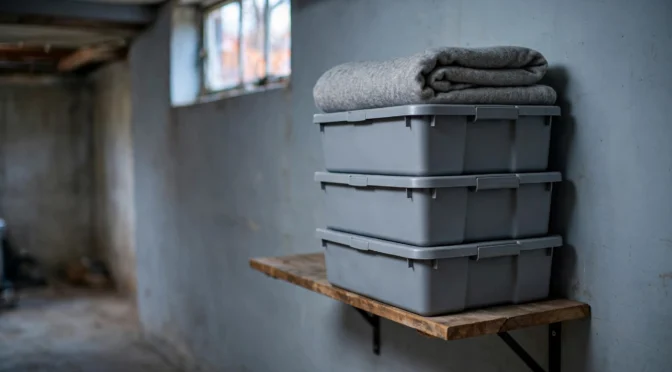
- Replace cardboard boxes with sealed plastic bins.
- Keep storage off the floor and away from walls so you can inspect and clean behind it.
- Correct leaks and reduce basement dampness.
- Vacuum webs and the undisturbed edges of storage areas.
- Seal accessible gaps around pipes and other entry points.
Skip broad-spectrum aerosol foggers. They do not reliably reach the cracks where spiders hide and can leave pesticide residues on exposed surfaces. Targeted treatment, when needed, should follow identification and inspection.
Sure Thing Pest Control has been locally owned and family-run since 1997. Our two owners bring over 80 years of combined pest control experience. Our licensed, certified technicians are background checked and complete over 40 hours of additional training annually.
For recurring spiders in Greater Cincinnati or Northern Kentucky, call 513.247.0030 for a free estimate, or review our Cincinnati spider control services. We offer kid and pet friendly treatments, with ongoing scheduled protection through The Sure Cure among our pest control programs.
Frequently asked questions
Does living in Northern Kentucky change how I identify a suspected recluse?
No. The identifying features are the same on either side of the Ohio River: six eyes in three pairs, slender legs without obvious spines, and fairly uniform coloring. Location alone cannot confirm a recluse, so get a clear photograph or professional identification if you are unsure.
Are brown recluse bites dangerous to children and pets?
A suspected recluse bite deserves medical or veterinary advice because tissue injury can develop after the bite. Contact a child’s medical provider or your veterinarian if symptoms appear or worsen. Trouble breathing or another severe reaction requires emergency care.
What should I do if I think I found a brown recluse in my house?
Keep your hands clear and photograph it from above and from the front if you can do so safely. Contain it only if that does not require touching it or reaching into a hiding place. Ask a pest professional or extension office to help identify it before choosing treatment.
Are there any poisonous spiders in Ohio?
Ohio has spiders with medically significant venom, including brown recluses and black widows. “Venomous” is the accurate term because they deliver venom through a bite. Most spiders found in Ohio homes are not harmful to people, and a brown spider is not automatically a recluse.
Do cardboard boxes attract spiders?
Cardboard provides hiding places for spiders and some insects they eat. Undisturbed boxes against basement walls are especially difficult to inspect and clean around. Replace them with sealed plastic bins and leave enough space to vacuum behind stored items.