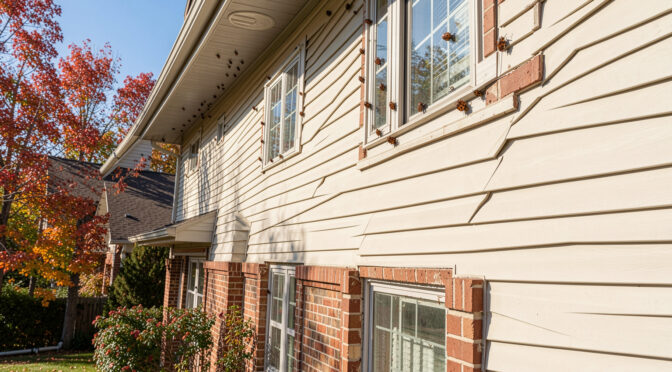
Brown marmorated stink bugs first came to Ohio in December 2007, when state entomologists confirmed the initial specimen in Franklin County. If you have wondered when stink bugs came to Ohio, that Franklin County detection marked the start of their statewide spread. These shield-shaped invaders swarm warm exterior siding across Southwest Ohio in mid-October before slipping through roofline gaps into attic insulation, where they remain dormant until winter heating wakes them up.
Standing in the driveway looking at dozens of mottled brown insects crawling along second-story trim is a common autumn frustration in the Ohio River Valley. These pests do not bite people or reproduce indoors. Left unaddressed before the first hard freeze, however, they settle deep into wall voids and crawl spaces until early spring.
When Did Brown Marmorated Stink Bugs First Reach Ohio
Homeowners asking when stink bugs reached Ohio usually remember when these shield-shaped pests never congregated on autumn siding. The brown marmorated stink bug (Halyomorpha halys) is native to eastern Asia and was first identified in the United States in Allentown, Pennsylvania, in September 1998, according to Penn State Extension entomology records. From that initial eastern foothold, the pest spread through shipping corridors and interstate transit.
The insect officially crossed into Ohio in December 2007, when the first confirmed specimen was collected in Franklin County. Once established in central Ohio, the population climbed quickly. According to data reported in 2026 by the Ohio Farm Bureau, brown marmorated stink bugs have established documented populations in at least 62 of Ohio’s 88 counties. They present a major seasonal headache for neighborhoods bordering open fields and deciduous tree lines.
The Spread Across the Ohio River Valley
The river basin climate in Southwest Ohio offers optimal breeding conditions for this pest. Female stink bugs lay clusters of 20 to 30 barrel-shaped eggs on leaf undersides throughout the summer. Larvae mature out of sight in farm fields and dense suburban tree canopies. When regional crops are harvested and deciduous leaves drop in October, those woodland populations lose their natural cover. Millions of adult stink bugs take flight across Greater Cincinnati, moving toward warm residential structures.
How to Identify the Invasive Marmorated Species
Adult brown marmorated stink bugs measure 0.5 to 0.67 inches long and display the classic heraldic shield shape. You can separate them from native bugs by checking three traits:
- Banded antennae: Dark antennae feature distinct, alternating white bands.
- Abdominal edges: Outer abdominal margins show alternating light and dark markings along the folded wing borders.
- Smooth shoulders: Thoracic margins are rounded, lacking the sharp shoulder spines found on native predatory species.
Why Stink Bugs Swarm South Facing Siding in Mid October
Stink bugs do not choose surfaces by accident.
In mid-October across our Greater Cincinnati and Northern Kentucky service areas, daytime temperatures routinely reach 65 degrees while nights drop close to freezing. Stink bugs are cold-blooded insects whose activity depends entirely on exterior ambient heat.
South- and west-facing siding absorbs afternoon sun. Dark vinyl siding holds onto that warmth, creating gentle thermal updrafts. Stink bugs land directly on these sun-soaked walls to keep their body temperatures elevated before nightfall. This gathering behavior precedes diapause, an overwintering dormant state where insects suspend development to survive freezing temperatures.
As siding cools at sunset, the bugs crawl upward toward architectural openings along eaves and trim. They simply follow heat gradients. A warm afternoon on the patio pulls pests out of the canopy and places them inches from attic entry points.
The Pheromone Myth and What Stink Bug Secretion Really Does
One common myth claims that squashing a stink bug releases an aggregation pheromone that calls hundreds of other bugs to the house. That confuses defensive stress fluids with natural grouping cues.
The foul odor released when an insect is crushed comes from scent glands between the legs on the underside of the thorax. This liquid contains trans-2-octenal and trans-2-decenal, compounds functioning as a bitter deterrent against birds and other predators. It smells pungent, similar to rancid cilantro. Natural aggregation pheromones, on the other hand, are airborne chemicals emitted by living bugs over long distances to coordinate winter shelter.
| Trait | Defensive Scent Secretion | Aggregation Pheromone |
|---|---|---|
| Biological Purpose | Deters predators when the bug is crushed or attacked | Coordinates overwintering shelters with other stink bugs |
| Source Glands | Thoracic scent glands between the legs | Specialized abdominal glands |
| Attracts More Pests? | No. Does not call or recruit additional insects | Yes. Directs airborne adults toward sheltered cavities |
| Surface Impact | Leaves greasy dark spots on trim and drywall | Leaves no visible surface residue |
| Human Reaction | Can irritate sensitive skin and mucous membranes | Undetectable to human senses |
Defensive Chemical Compounds Versus Aggregation Pheromones
Crushing an insect on your porch will not act as a beacon. The real issue is the oily secretion. Trans-2-octenal and trans-2-decenal can cause localized contact dermatitis or eye irritation in sensitive individuals. Indoors, this oily fluid stains painted drywall and fabrics with dark marks that standard soap rarely lifts.
The Real Consequences of Crushing Bugs Indoors
Crushing bugs inside causes lingering problems. The bitter odor settles into carpets and upholstery for days. Dead stink bugs inside walls or baseboards also provide an abundant food source for carpet beetles and dermestids during late winter. For practical steps on avoiding common pest mistakes, review our guide on the dos and don’ts of handling a pest problem yourself.
Are Black Stink Bugs Dangerous to People or Pets
Dark, near-black shield bugs on siding often make homeowners worry about aggressive biters. Ohio is home to several harmless native shield bug species alongside the brown marmorated variety.
The rough stink bug (Brochymena quadripustulata) and the predatory spined soldier bug (Podisus maculiventris) are common examples. Neither species bites people or pets. They have piercing-sucking mouthparts built exclusively for plant juices or garden grubs, lacking the physical structure to break human skin. They do not transmit diseases, nor do they chew structural wood or damage wall framing.
| Species | Appearance | Diet & Behavior | Risk to Structure & Family |
|---|---|---|---|
| Brown Marmorated Stink Bug | Mottled brown, banded antennae, smooth shoulders | Feeds on tree fruit and plants; invades homes in swarms | No structural damage; significant indoor nuisance and odor |
| Rough Stink Bug | Dark charcoal gray, rough, bark-like texture | Feeds on tree sap; overwinters in loose bark | None; harmless and rarely enters buildings |
| Spined Soldier Bug | Mottled brown-black with sharp, pointed shoulder spines | Predatory; eats grubs, caterpillars, and garden pests | Beneficial to yards; does not invade attics or living areas |
If a dog or cat swallows a stink bug, the insect contains no toxins. The bitter secretions will, however, often trigger temporary drooling or an upset stomach from the foul taste.
How Stink Bugs Move from Siding into Attics and Living Rooms
Stink bugs do not chew through wood siding or brick to enter a home. They slip through narrow gaps created by thermal settling or unsealed ventilation channels. Understanding their physical path shows why bug bombs fail to solve the source problem.
- Perimeter Landing: Insects swarm warm, sunlit siding during bright October afternoons.
- Structural Infiltration: As night temperatures drop, bugs crawl behind loose soffits, unsealed ridge vents, and fascia trim.
- Attic Harboring: Insects bury themselves under loose attic insulation, entering diapause inside cold structural voids.
- Winter Emergence: Running the central furnace in December warms upper wall voids and attic subfloors, tricking dormant bugs into waking early.
- Interior Entry: Believing spring has arrived, disoriented bugs crawl toward ceiling fixtures, bathroom exhaust fans, and window casings.
High Interception Zones on Upper Stories
Because stink bugs focus their flight paths on the upper half of residential homes, ground-level foundation sprays alone will not prevent an invasion. Primary interception zones sit where the roof meets the exterior siding, particularly along upper roofline transitions. Blocking these high pathways prevents insects from reaching structural insulation voids where exterior treatments cannot reach them.
Sealing Fascia and Louvers Before Freezing Weather
Physical exclusion is the most reliable long-term defense against fall invaders. Check our guide on winter home preparation tips for Cincinnati residents for structural sealing steps. Seal exterior gaps wider than a dime with durable materials:
- Fasten bronze or stainless steel wire mesh behind attic gable vents and ridge openings.
- Apply high-grade exterior silicone-acrylic caulk along fascia joints and second-story window trim.
- Replace worn weatherstripping on upper doors and repair torn window screens before mid-autumn flights begin.
Safe Indoor Removal and Timed Exterior Barrier Protection
Reaching for a standard vacuum cleaner or chemical fogger indoors creates secondary issues. Bug bombs fail to penetrate wall cavities, leaving piles of dead insects inside framing voids that draw carpet beetles. Sucking live bugs through an uncovered vacuum motor distributes the bitter scent into your living spaces for months.
The Nylon Stocking Vacuum Trap
Live bugs can be removed from walls and drapes cleanly with an easy wand adjustment:
- Insert a knee-high nylon stocking into the vacuum extension wand.
- Stretch the elastic band of the stocking back over the exterior rim of the wand nozzle.
- Secure the cuff firmly around the wand using a heavy-duty rubber band.
- Vacuum the pests directly into the mesh trap, keeping them clear of the internal motor and canister.
- Slide off the stocking and submerge it in a bucket of soapy water to eliminate them without odor.
Timed Professional Exterior Barrier Treatments
Stopping stink bugs requires intercepting them on exterior building surfaces before they slip beneath the siding. Direct sunlight and UV exposure break down exterior surface treatments within several days to a week, meaning applications must be timed right as autumn congregation begins.
Our leadership brings over 80 years of combined pest control experience to Greater Cincinnati homes. Through targeted Cincinnati stink bug control and seasonal exterior applications, our licensed, background-checked technicians treat high-risk interception zones along upper exterior walls. This barrier neutralizes insects on contact as they land, stopping the overwintering cycle before pests reach your attic insulation.
If stink bugs are gathering on your siding this week, address them before freezing weather drives them into your attic. Submit a quote request on our contact page or call Sure Thing Pest Control directly at 513.247.0030 to arrange a free estimate for a seasonal barrier treatment.
Frequently Asked Questions
When did stink bugs come to Ohio?
Brown marmorated stink bugs were officially documented in Ohio in Franklin County in December 2007. They spread from their original 1998 US detection site in Allentown, Pennsylvania. Populations have now been documented across at least 62 of Ohio’s 88 counties.
Does squashing a stink bug attract more stink bugs to your house?
No. Crushing a stink bug releases defensive aldehydes like trans-2-octenal from its scent glands, not aggregation pheromones. It does not call more pests to the home, but it leaves a pungent odor and stains painted finishes.
Are black stink bugs dangerous to humans or pets?
Native black and dark shield bugs, including rough stink bugs and spined soldier bugs, are harmless to people and pets. They cannot pierce human skin and do not feed on structural wood. Swallowing one may cause a pet to drool or vomit briefly from the foul taste, but the bugs are non-toxic.
What causes the foul odor when a stink bug is disturbed?
Disturbed or crushed stink bugs secrete defensive organic chemicals, primarily trans-2-octenal and trans-2-decenal, from glands located between their legs on the thorax. This liquid serves as a deterrent to make the bug unpalatable to birds and reptiles.
What is the best way to remove stink bugs inside without causing an odor?
Push a knee-high nylon stocking into a vacuum wand, secure the cuff around the nozzle exterior with a rubber band, and vacuum the bugs into the mesh pocket. Submerging the stocking in soapy water neutralizes the insects without running defensive oils through the hot vacuum motor.